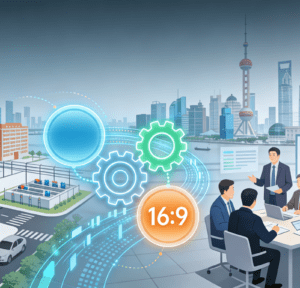
Recently, the Ministry of Housing and Urban-Rural Development held a national promotion meeting on urban renewal work in Wuhu, Anhui Province, clearly defining urban renewal as a comprehensive and strategic initiative to drive the high-quality development of cities. This meeting not only pointed out the direction for future urban development work, but also marked that urban renewal has shifted from the scattered “project-based” transformation in the past to a new paradigm emphasizing systematization, sustainability and integrity. For the smart city industry, this is not only an unprecedented broad market, but also a role-upgrading challenge from being technology suppliers to urban co-builders. Faced with this historic opportunity, relevant enterprises need to deeply understand the core of the policy and realize the strategic upgrading from “tool empowerment” to “model co-creation”.
Accurately Grasping New Requirements: Entering the Systematic Battlefield from Four Dimensions
To participate in this drive, smart city enterprises must first accurately interpret the four key focus areas emphasized at this meeting, which will be their main battlefield.
In the Planning Dimension
The meeting stressed the guiding role of “urban physical examinations”. This means that enterprises should not only focus on the construction phase, but also intervene in the early stage. By leveraging their technological advantages, they can help the government build an integrated decision-making mechanism of “urban physical examination – renewal planning – project implementation”. Through the construction of City Information Modeling (CIM) platforms and the application of big data and artificial intelligence algorithms, multi-dimensional and dynamic diagnosis and evaluation can be conducted on urban population, industries, facilities, environment and other aspects. This enables the accurate identification of urban “problems”, providing quantitative basis and dynamic simulation for the scientific formulation of special urban renewal plans, and avoiding arbitrary decision-making from the source.
In the Funding Dimension
Faced with the core pain point of large investment and long payback period of urban renewal projects, enterprises should not limit their thinking to project bidding. Instead, they should actively explore innovative business models compatible with the “sustainable investment and financing system”. For example, integrate technical solutions with financial tools such as policy-based finance and ultra-long-term special treasury bonds. By improving project operation efficiency and revenue expectations, they can help government projects better attract capital. At the same time, they can explore long-term cooperation models of “investment + operation”, and share value-added benefits through participating in the long-term operation of assets after renewal, so as to achieve commercial sustainability.
In the Operation Dimension
The meeting clearly pointed out the need to “establish a sustainable operation model”. This requires enterprises to completely abandon the project construction mindset of one-off transactions, and shift the focus of their business from “delivering hardware” to “providing operation services”. Smart city enterprises need to consider how to use the Internet of Things, big data and intelligent platforms to help the government or operation entities reduce long-term operation and maintenance costs, improve space utilization efficiency, and activate commercial vitality. This will realize a qualitative change of the updated areas from “physical renovation” to “vitality regeneration”, ensuring that every cent invested can generate long-term value.

In the Governance Dimension
The ultimate goal of urban renewal is to improve the modernization level of urban governance. The solutions provided by enterprises must be able to sink to the grassroots community level and deeply integrate with governance requirements such as “urban management extending to communities” and “property services reaching households”. This requires building a collaborative governance platform connecting the government, the market and citizens. It should not only realize the intelligent management and control of facilities and equipment, but also support public participation, public opinion feedback and community co-governance, transforming technological empowerment into governance efficiency and consolidating the bottom line of urban safety and resilience.
Strategic Upgrading and Path Transformation: From “Project-based Contractors” to “Ecological Partners”
Based on the requirements of the above four dimensions, smart city enterprises must promote three major strategic transformations to gain an advantage in this systematic campaign.
First, the Transformation of Role Positioning: Upgrading from Technology Suppliers to “Urban Partners”
Enterprises should no longer be satisfied with passively responding to bidding needs, but take the initiative to align with urban development and become strategic partners of the government in the long journey of urban renewal. This means they need to have top-level design consulting capabilities, be able to understand and integrate local industrial, cultural and social ecology, provide comprehensive solutions integrating planning, investment, construction and operation, and grow together with the city.
Second, the Transformation of Capability Model: Evolving from “Single-point Technology” to “Scenario Integration”
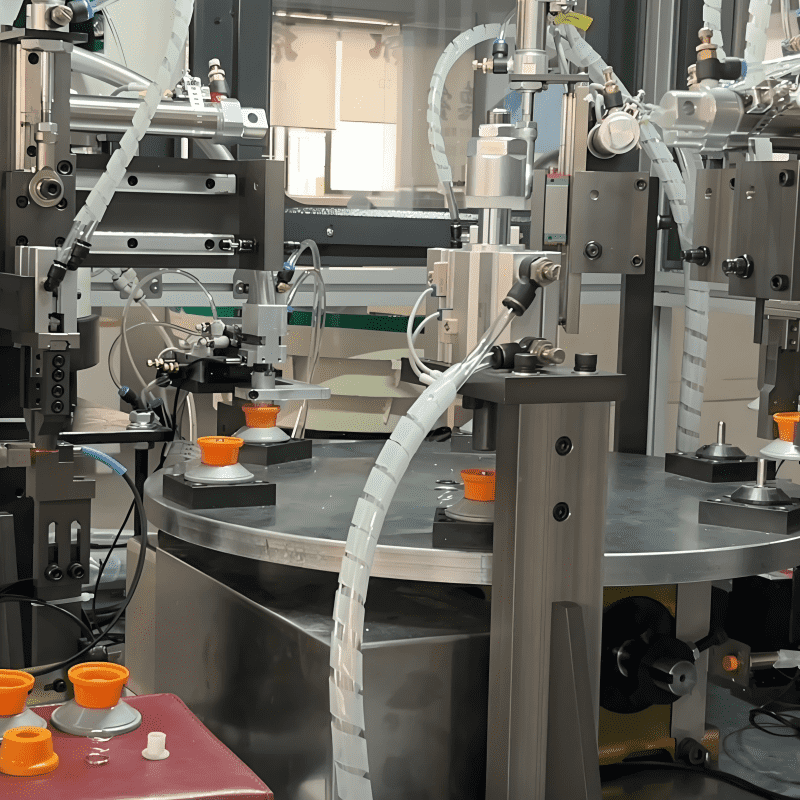
Simply providing cameras, sensors or software platforms is no longer sufficient to meet complex needs. The core competitiveness of enterprises lies in their ability to deeply integrate various technologies such as cloud computing, the Internet of Things, BIM/CIM and AI algorithms with specific renewal scenarios including old residential area renovation, historical block protection, industrial heritage revitalization and infrastructure upgrading. They need to create integrated solutions that can effectively solve pain points and enhance user experience. For example, in the renovation of old residential areas, it is necessary to package aging-friendly smart home, smart security, smart parking and property services into a implementable and operable “product package”. For the revitalization of industrial heritage, a typical scenario in urban renewal, enterprises can integrate the CNC Lathe Automatic Loading and Unloading System into the intelligent upgrading of retained traditional manufacturing workshops—this system realizes automatic material feeding, processing and unloading, which not only preserves the industrial heritage value of the workshop by retaining its core manufacturing functions, but also significantly improves production efficiency and intelligent operation level, forming a characteristic development model of “heritage protection + intelligent production” that balances cultural inheritance and industrial upgrading.
Third, the Transformation of Business Model: Moving from “Project Settlement” to “Value Sharing”
Faced with the government’s financial pressure, enterprises need to innovate their business models. They can explore the “asset-light operation” output model, collecting long-term service fees by providing technical platforms and operation services. They can also adopt the “pay-for-performance” model, linking part of the income with the social benefits (such as the reduction rate of potential safety hazards), economic benefits (such as regional rent growth) or management efficiency improvement (such as case disposal timeliness) brought by the project after completion. This will form a community of shared interests and risks with the government.
Conclusion: Sailing Through the Deep Waters of Urban Renewal with Smart Technology
The convening of the National Urban Renewal Work Promotion Meeting has announced that China’s urban development has officially entered the second half, focusing on stock quality improvement. This vast field provides an excellent historical stage for smart city enterprises. However, opportunities always favor the prepared mind. Only those enterprises that can deeply understand the laws of urban development, take the initiative to upgrade their strategies, and truly transform from “enablers” to “co-builders” can cross the shallow shoals of project-based thinking, play a key role in this profound urban transformation, and move towards a more intelligent, livable and resilient future together with our cities.