
The Fourth Plenary Session of the 20th Central Committee of the Communist Party of China clearly stated that we should “promote the integrated development of education, science & technology and talent, and further advance the construction of Digital China”, providing fundamental guidelines for higher education and digital talent cultivation in the new era. Recently, the National Development and Reform Commission and the National Data Administration, together with multiple departments, jointly issued the Opinions on Strengthening the Construction of Data Factor-related Disciplines and Specialties and Digital Talent Teams (hereinafter referred to as the Opinions), mapping out a grand blueprint for China’s digital talent training.
Inevitability of the Era: The Historical Status of Data as the Fifth Factor of Production
In October 2019, the Fourth Plenary Session of the 19th Central Committee of the Communist Party of China listed data as a factor of production alongside labor, capital, land, knowledge, technology and management for the first time, marking a major innovation in China’s political economy. This definition reflects the Party’s renewed understanding of production relations in the new era and represents the latest achievement in adapting Marxism to the Chinese context. The evolution of data from a by-product of production activities to a core factor of production has not been smooth, but a tortuous process of exploration guided by the Party’s theories and policies. As a new factor of production, if data is combined with capital in an unregulated manner, it may exacerbate social differentiation. Therefore, socialist China must explore a governance model with Chinese characteristics that can both unleash the value of data and uphold fairness and justice.
The transformation of data into a production factor is not only a technical issue, but also a major proposition at the economic and philosophical levels. For a long time, the concept of “data as a basis” has dominated practice—data was regarded as a by-product, and the prevailing mindset was “the less the better”. Today, “data as a factor of production” means “the more the better”, and its value urgently needs to be proactively explored and released. Past data mining and business intelligence can be seen as “turning waste into treasure unconsciously”. The establishment of the National Data Administration and the issuance of the Opinions on Improving the Market-oriented Allocation System and Mechanism of Factors of Production indicate that China has started to “consciously unleash the value of data”. To achieve this goal, it is necessary to break through the traditional technical perspective and conduct in-depth discussions on the ownership, rights and interests, and distribution of data.
Empowerment by Technology: Data as the Core Premise for the Development of Artificial Intelligence
Current artificial intelligence (AI) is essentially data-driven intelligence, also known as “data intelligence”. The evolution from AlphaGo to ChatGPT shows that AI has realized the “automation of intelligence” envisioned by John McCarthy in complex tasks such as Go and natural language processing, marking a major breakthrough in intelligent technology. The development of AI has gone through three major schools: symbolism, behaviorism and connectionism. Symbolism centers on logical reasoning; behaviorism emphasizes the “perception-action” feedback mechanism; connectionism is characterized by neural networks learning from data. Today’s AI is the success of connectionism. Although this approach has the weakest mathematical foundation, it has risen to prominence by virtue of massive data and computing power.
This reveals a new change in the development path of science and technology: it is no longer a linear model of “scientific theory first, followed by technological application”, but a reverse drive of “technological breakthrough forcing scientific theoretical innovation” has emerged. Deep learning is essentially “machine empiricism”, training models through data (the representation of human experience). Both the game process data relied on by AlphaGo and the human language result data learned by ChatGPT illustrate that high-quality, large-scale data is the “experience” and “premise” for training specialized and efficient AI models (deep neural networks, i.e., artificial brain models).

Empowerment by Data: Data as the Energy Driver in the Digital Economy Era
As a new economic form, the digital economy is characterized by data resources as the key factor of production, modern information networks as the main carrier, the integrated application of information and communication technologies, and the digital transformation of all factors as an important driving force, promoting a greater unity of fairness and efficiency. Following agricultural economy and industrial economy, the digital economy, as a brand-new economic form, is driving profound changes in production methods, economic structures and lifestyles. The new round of scientific and technological revolution has accelerated this process, bringing about unprecedented changes in the global landscape in a century and providing a historic opportunity for the great rejuvenation of the Chinese nation. In the history of human civilization, the replacement of power sources has often triggered qualitative leaps in productivity and reshaped the world pattern: the era of horsepower corresponded to agricultural civilization; steam power and electric power led the industrial revolution successively. In the digital economy era, data has been defined as the fifth factor of production. Data is Power—data is a kind of energy, a driving force just like electricity.
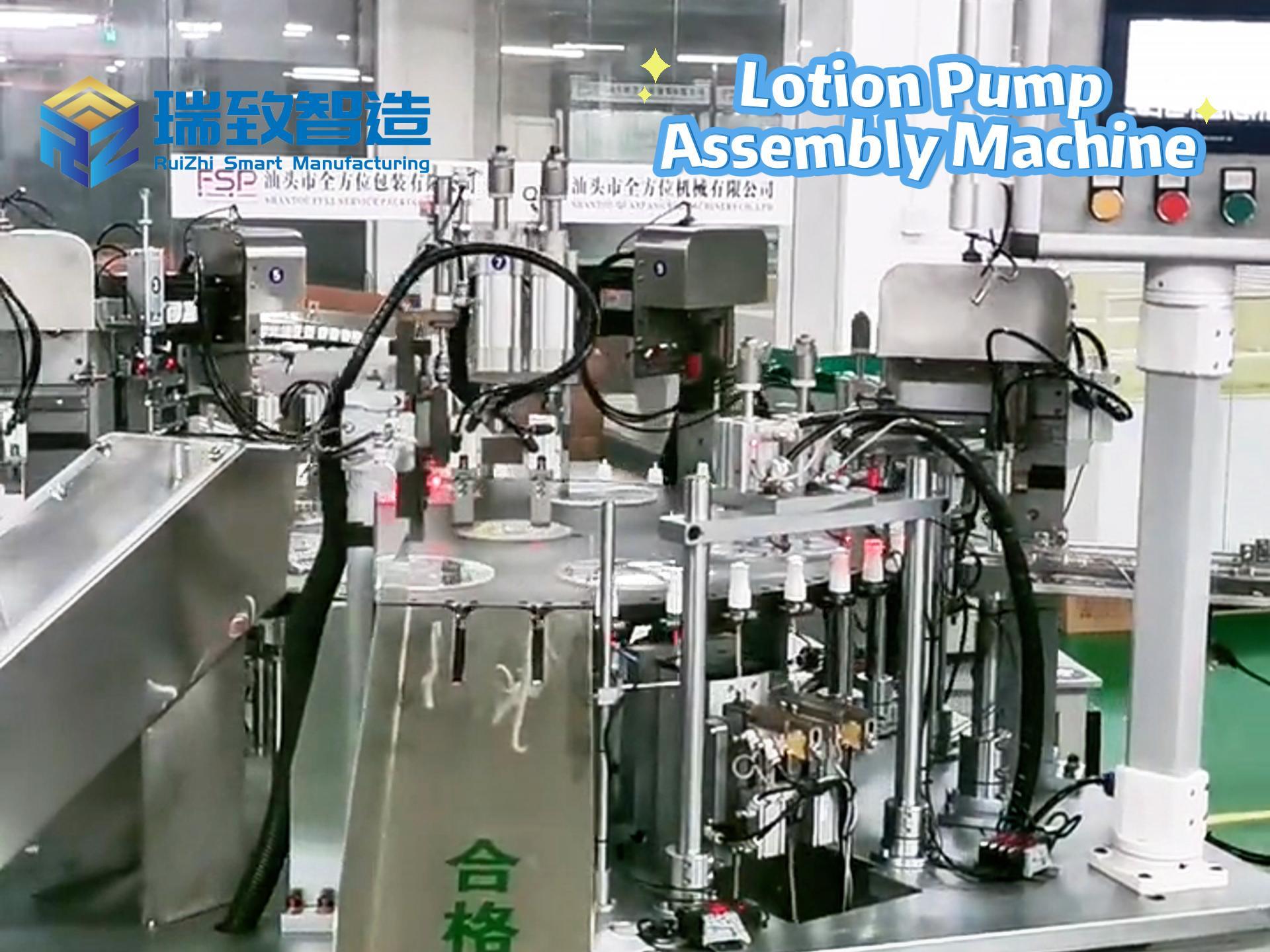
Analogizing data to electricity, data governance and data technology serve the construction of the “data grid”, and AI is a data-driven machine (data motor) just like an electric motor. With electricity and equipment equipped with various electric motors, electrification was realized, which brought about the second industrial revolution. Making data usable is like building a power grid; using data well—i.e., developing various AI models and equipping them on intelligent agents—can turn tasks that previously required well-trained and experienced people into tasks that machines can do (i.e., the automation of intelligence). A typical example is the CNC Lathe Automatic Loading Unloading System, where data on machining parameters, material characteristics and equipment status is collected and analyzed in real time to realize intelligent scheduling and unmanned operation, which not only improves production efficiency and stability but also fully demonstrates how data energy drives industrial digital transformation. This will bring about a great improvement in productivity, which is also the underlying logic of new-quality productive forces. Data is to digitalization what electricity is to electrification; data will lead humanity to digital civilization. In this process, it is also necessary to build a compatible ethical and legal system simultaneously to ensure the steady and long-term development of the data industry.
Disciplinary Exploration: The Path of Outstanding Talent Cultivation and Disciplinary Innovation at East China Normal University
The Opinions point out that “the construction of data factor-related disciplines and specialties and digital talent teams shoulders the important mission of cultivating various types of talents needed for deepening the reform of the market-oriented allocation of data factors and empowering the high-quality development of AI with data”. Therefore, the construction of data factor-related disciplines and specialties and the cultivation of digital talents are important foundations for the planning and construction of Digital China, the digital economy and the digital society. As one of the first domestic institutions to systematically carry out the construction of data science and engineering disciplines/specialties and talent training, the School of Data Science and Engineering of East China Normal University has, through 12 years of exploration, blazed a distinctive development path integrating disciplinary innovation and outstanding talent cultivation. In September 2013, East China Normal University established the Institute of Data Science and Engineering, taking the lead in launching disciplinary construction and postgraduate training in this field. Initially, data science and engineering was a self-established secondary discipline under the first-level discipline of software engineering; in 2022, after independent review by the university, it was officially established as a first-level discipline under the interdisciplinary category. In September 2016, the institute was officially transformed into the School of Data Science and Engineering, and undergraduate enrollment was launched in the same year. Up to now, the school has trained six cohorts of undergraduate graduates and ten cohorts of postgraduates, forming a complete talent training system. Over the past decade, with the advancement of the national AI strategy, the deepening of digital transformation, and the proposal of concepts such as data as a factor of production and new-quality productive forces, we have become more determined to continuously promote the construction of data science and engineering disciplines and talent training. We are convinced that strengthening the construction of data factor-related disciplines/specialties and digital talent teams not only conforms to the general trend of global scientific, technological, economic and social development, but also is an urgent requirement for realizing the great rejuvenation of the Chinese nation.
To respond to the Opinions and implement the call of “supporting organized scientific research to prosper academic research in the data field”, on December 13, 2025, the school will take the lead in establishing the “Collaborative Mechanism for the Innovation Knowledge System of Data Science and Engineering Disciplines”. By uniting data enterprises, industrial parks and government data management departments, centering on industrial needs and talent training practices, we will systematically build a complete knowledge system for data disciplines, providing solid support for the long-term development of the disciplines.
Implementation Path: Promoting Disciplinary Construction and Talent Training in an Integrated Manner
Faced with the new situation and new tasks, we must adhere to a systematic concept and carry out integrated deployment and promotion.
First, adhere to the tripartite coordinated development of education, science & technology and talent. To seize the initiative in the new scientific and technological revolution represented by AI, we must adhere to the coordinated promotion of “application scenarios + technological innovation + industrial development”. Institutions of higher education should actively adapt to the needs of the digital era, break disciplinary barriers, and optimize the layout of data factor-related disciplines and specialties. We should closely integrate national strategic needs, industrial development practices and talent training processes to comprehensively improve the quality of independent digital talent training.
Second, adhere to the interconnection of scenarios, applications, innovation and development. Follow the logical chain of “scenarios drive applications, applications drive innovation, and innovation drives development”. The academic community should step out of the “ivory tower” and delve into real application scenarios; the industrial community should be good at summarizing and refining to form technical systems and academic concepts. Both sides should collaborate to refine scientific issues in practice and promote industrial development through innovation.
Third, adhere to building an independent knowledge system of data disciplines with Chinese characteristics. We must implement the Opinions and “build a practice-based independent knowledge system and scientific research system of data factors in China”. The research on data factors has distinct epochal and institutional attributes, and there is no mature experience to follow in the West. We must base ourselves on national conditions, adhere to the guidance of Marxism, integrate knowledge from multiple disciplines such as philosophy, economics, computer science and law, uphold the concept of “unity of knowledge and action”, and gradually build a disciplinary knowledge system and technical system of data factors that embodies Chinese characteristics, style and features through the cycle of practice, cognition, re-practice and re-cognition.
The construction of data factor-related disciplines/specialties and digital talent teams is the key to the development of China’s data cause. It is related to the development of China’s digital economy and the digital transformation of all industries, and is related to the great rejuvenation of the Chinese nation. It is a pioneering undertaking with a long way to go. Su Shi, a renowned ancient Chinese litterateur, once said, “Commit to the hardest tasks and strive for the farthest goals”. Although the road is long, we will reach the destination if we keep going; although the task is arduous, we will succeed if we keep working.