As the terrestrial photovoltaic industry mires in the vicious cycle of price wars, the cross-border integration of commercial aerospace and photovoltaics is opening up an entirely new incremental market.
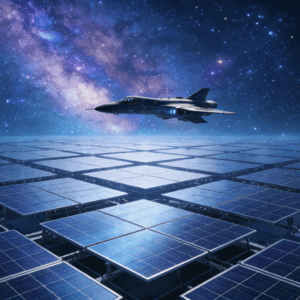
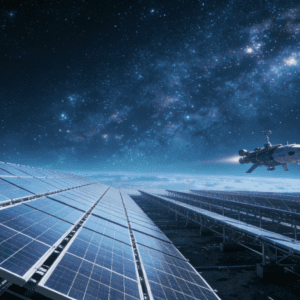
In the space environment, photovoltaic power generation systems can achieve all-weather and uninterrupted energy supply. Data shows that the average solar irradiance intensity in space is more than 1.5 times that on the ground, with annual equivalent power generation hours far exceeding terrestrial levels and energy density increased by 7 to 10 times. This means that space photovoltaic systems can deliver truly all-weather, high-stability power output, emerging as a “New Continent” for energy development.
Space PV Advantages & Enterprise Layouts
Faced with this vast blue ocean, many listed enterprises have therefore identified the layout of the space photovoltaic sector as a key part of their strategic development.
On January 20, 2026, Zhonglai Co., Ltd. stated in a response to investors on the investor relations platform that the company’s perovskite-silicon tandem products are currently under research and development. Upon successful development, these products are expected to be expanded to diverse new fields such as space, in addition to conventional photovoltaic power generation scenarios.
On December 30, 2025, Gao Jifan, Chairman of Trina Solar, proposed in his New Year address that the company will accelerate the mass production and commercialization of perovskite technology in 2026, ushering in a new era of interstellar computing powered by space photovoltaics.
On December 8, Aerospace Hongtu Information Technology Co., Ltd. and Wuxi Zhongneng Optical Storage Technology Co., Ltd. officially signed a strategic cooperation agreement to conduct in-depth cooperation on “novel perovskite energy technologies for space computing and space energy applications”, and co-initiated the establishment of a joint venture, “Beijing Aerospace Super Energy Aerospace Power Technology Co., Ltd.”.
Key Technologies & Demand-Side Scenarios
At present, the industry’s focus is gradually shifting toward technologies with high radiation resistance and high power-to-mass ratio. A recent research report by Kaiyuan Securities points out that within the crystalline silicon technology system, P-type silicon-based cells have significantly better radiation resistance than N-type cells. HJT (heterojunction) cells, with their low-temperature manufacturing processes, low temperature coefficients, low attenuation characteristics and excellent thin-slicing potential, have become one of the more suitable options for the space environment. For this reason, “P-type HJT” is regarded as a feasible technical path for space photovoltaics at the current stage. Perovskite cells, meanwhile, are highly anticipated by the industry due to their advantages such as flexible fabrication, high power-to-weight ratio and low-cost potential, and they show considerable application prospects especially in forming tandem structures with silicon-based cells to further improve conversion efficiency.
From the demand side, the initial market for space photovoltaics is mainly focused on energy supply for spacecraft. Whether it is low-orbit communication satellites, deep space exploration spacecraft, or future space stations and lunar bases that may be constructed, all require efficient, reliable and long-life power systems.
In the medium and long term, space photovoltaics may also support a more revolutionary concept – the Space Solar Power Station (SSPS), which involves constructing large-scale photovoltaic arrays in orbit and wirelessly transmitting electrical energy to the terrestrial power grid in the form of microwaves or lasers.
Long-Term Visions, Challenges & Strategic Value
Of course, the commercialization of space photovoltaics is still fraught with uncertainties. Technologically, breakthroughs are still needed in radiation hardening, lightweight packaging and on-orbit maintenance. Industrially, it is necessary to establish a testing and certification system, cost control model and insurance cooperation mechanism suitable for space scenarios. Policy-wise, international rules on frequency band resource allocation, orbit management and energy transmission also need to be clarified. However, it is certain that with the continuous decline in aerospace launch costs, the steady progress of material technologies and the increasingly prominent demand for the integration of computing power and energy, space photovoltaics has moved from science fiction to a strategic priority, emerging as a promising “new frontier” at the intersection of the photovoltaic and aerospace industries.
Looking to the future, space photovoltaics is not only a technical path or a market supplement, but may even redefine the temporal and spatial dimensions of human energy utilization. While terrestrial photovoltaics continues to serve as the main force in the energy structure transformation, space photovoltaics is quietly becoming an important energy cornerstone for humanity’s march into deep space and the construction of interstellar civilization.