Amid the tide of technology, we are witnessing the rise of an entirely new paradigm: smart space. No longer confined to scenes in science fiction movies, it is rapidly evolving into a reality integrated into our work, daily lives, and the fabric of cities. Today, let us step into the world of smart space and explore its development together.
Smart Space: The Leap from “Automation” to “Intelligence”
In essence, a smart space is a physical environment that can actively perceive, analyze, make decisions, and interact with humans through the in-depth integration of technologies such as the Internet of Things (IoT), artificial intelligence (AI), big data, and edge computing. It is not merely simple “automation” (e.g., lights with timer switches), but a higher level of “intelligence”.
Its core characteristics are reflected in three aspects: First, the space is equipped with comprehensive perception capabilities. Sensors deployed throughout the space collect real-time data on temperature, illumination, personnel activity, equipment status, etc., forming a “digital sensory system”. Second, reliable interconnection is achieved through technologies like 5G and IoT, ensuring high-speed data transmission between the “sensory system” and the “brain”. Finally, an AI platform acts as the “digital brain”, analyzing and learning from data, understanding human intentions, predicting needs, and enabling precise execution and natural interaction through actuators (e.g., smart switches, display screens). The ultimate goal of smart space is to make technology invisible, allow services to proactively adapt to humans, and create an environment that truly understands you.
Multiple Driving Forces Behind the Rise of Smart Space
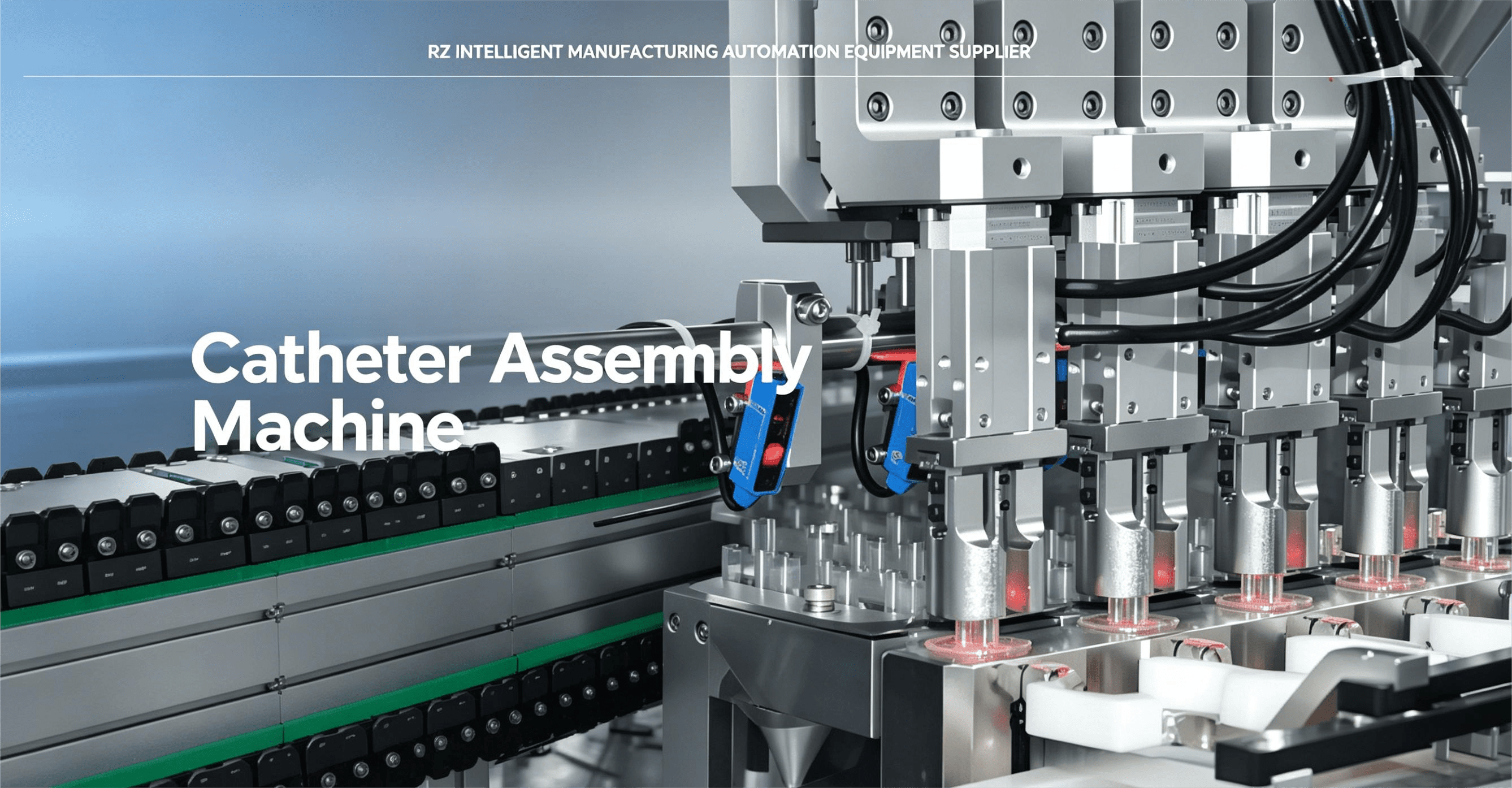
Smart space has become a global focus due to the powerful driving forces behind it. From a technological perspective, core technologies such as AI, IoT, and 5G have moved beyond the conceptual phase and entered large-scale commercial application. Reduced costs have made large-scale deployment feasible. At the economic and social levels, smart space provides practical solutions for both enterprises (to cut costs and boost efficiency) and urban refined governance. For example, smart buildings can automatically optimize energy consumption, and smart factories can implement predictive maintenance—both directly improving operational efficiency. Notably, the hardware foundation of such smart scenarios relies on high-precision manufacturing equipment; for instance, the Contactor Assembly Machine, which produces key control components for smart space actuators, ensures the reliability of terminal execution devices through automated, precise assembly processes.
Meanwhile, the extension of the experience economy is also driving the development of smart space. Both consumers and enterprises crave more convenient, comfortable, and personalized experiences, and scenarios such as smart offices and smart homes precisely meet this demand. More importantly, as a core carrier for the integration of the digital and physical worlds, smart space is not only the “soil” for developing the digital economy but also a key path to achieving the “dual carbon” goals through the precise management of energy resources. In terms of safety and resilience, smart space enables faster responses in areas such as security and emergency management, enhancing the governance capabilities of cities and communities.
Industrial Deconstruction: Ecosystem and Value Chain of Smart Space
The smart space industry is not a single industry but a complex ecosystem, whose structure can be roughly divided into four layers:
Bottom Layer: Technology Support Layer
It provides “chips and hardware” (sensors, chips), “networks and connectivity” (5G/6G, IoT), and “platforms and computing power” (cloud computing, edge computing, AI platforms, digital twins). This is the cornerstone of the entire industry. Within the hardware supply chain, specialized equipment like the Contactor Assembly Machine plays a vital role—it manufactures contactors that are widely used in smart building electrical control systems, smart factory equipment circuits, and other key links, forming an indispensable part of the smart space hardware foundation.
Middle Layer: Solution and Platform Layer
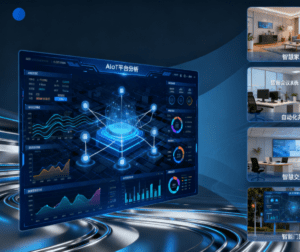
This is the “brain” and “neural hub” of the industry. Enterprises integrate underlying technologies to build universal AIoT platforms or vertical industry solutions, realizing the aggregation, analysis, and application of data.
Upper Layer: Scenario Application Layer
It implements solutions in specific scenarios, including smart buildings (home/office/park), smart cities (transportation/security/government affairs), smart industry, smart healthcare, smart retail, etc. This is the layer where value is ultimately realized.
Peripheral Layer: Service and Ecosystem Layer
It includes services such as system integration, consulting and planning, operation and maintenance, as well as industrial alliances and ecosystems formed by various partners, jointly promoting the standardization of technologies and the popularization of applications.
Competitive Landscape: Strategic Layouts and Paths of Relevant Enterprises
Faced with this vast blue ocean, different types of enterprises are leveraging their own advantages to enter the market through diverse paths, forming a diversified competitive landscape:
Platform and Ecosystem Giants: Building Underlying Operating Systems
Representative Enterprises: Terminus Group, Huawei
Layout Logic: They are committed to building city-level or space-level intelligent agent operating systems or platforms. For example, Terminus Group has proposed the “Spatial Intelligence” strategy, with the Spatial Intelligence Large Model at its core, empowering various scenarios such as buildings, communities, and cities. Huawei, through its “City Intelligent Body” architecture, provides integrated digital infrastructure. Their goal is to become the “foundation” of the industry and enable partners to develop applications on top of their ecosystems.
Vertical Solution Providers: All-Round Experts Deeply Rooted in Industries
Representative Enterprise: Das Intellitech
Layout Logic: Such enterprises are deeply rooted in specific industries and provide full-life-cycle services from design and construction to operation and maintenance based on independently developed platforms (e.g., Das Intellitech’s AIoT platform). They have a profound understanding of industry pain points and can offer highly customized solutions for hospitals, factories, subways, etc., emphasizing in-depth services of “professionalism + sincerity”. Some of these providers even integrate high-precision manufacturing equipment resources, such as collaborating with Contactor Assembly Machine manufacturers to ensure the quality of key components in customized solutions.
Smart Hardware and Entrance Specialists: Reshaping Spatial Interaction Nodes
Representative Enterprise: Philips Commercial Display
Layout Logic: They start with specific hardware products but their strategies go beyond hardware itself. For instance, Philips Commercial Display is upgrading its display devices from “information screens” to “spatial intelligence hubs”. By deeply integrating hardware such as foldable giant screens and AI conference tablets with scenarios, they aim to seize the “visual entrances” and “interaction nodes” of smart space, realizing the transformation from “selling equipment” to “empowering space”.
Cutting-Edge Technology R&D Pioneers: “Dreamers” Defining the Future
Representative Enterprises: World Labs, SuperMap Software
Layout Logic: They focus on providing more underlying core technologies for future smart spaces. For example, World Labs is dedicated to developing large-scale world models that can understand and interact with the 3D physical world; SuperMap Software combines geographic information technology with AI to provide spatial digital basemaps for smart cities and industrial design. They are the technological engines for the long-term development of the industry.
Conclusion
The evolution of smart space is a profound transformation from “Internet of Everything” to “Intelligence of Everything”. It is no longer about simply stacking technologies, but about making the physical environment perceivable, thinking, and evolvable through an organic system, ultimately serving humans. From the underlying Contactor Assembly Machine that ensures hardware reliability to the top-tier scenario applications that deliver user value, every link in the ecosystem contributes to the realization of smart space.
Currently, platform providers, service providers, hardware manufacturers, and technology pioneers are competing on the same stage, jointly drawing the future blueprint of smart space. The core of this competition is no longer the contest of a single technology, but a comprehensive test of the ability to deeply understand scenarios, build ecosystems, and create value. With the continuous maturity of technologies and the deepening of applications, an era of smart space that truly “knows you, understands you, and assists you” is accelerating towards us.