In recent years, the rapid development of artificial intelligence technologies such as ChatGPT-5, o4-mini, Grok, Gemini and China’s DeepSeek is profoundly reshaping the field of intelligent manufacturing. From intelligent production lines to collaborative operations of embodied intelligent robots, driven by the wave of AI-enabled digital transformation and intelligent upgrading, the demand for traditional manufacturing positions has undergone drastic changes, while emerging occupations such as AI engineers, intelligent manufacturing engineers and additive manufacturing engineers have been created. This transformation not only tests enterprises’ capability in implementing intelligent upgrading, but also calls for interdisciplinary talents who possess both in-depth AI technology expertise and manufacturing know-how, injecting new impetus into the intelligent manufacturing ecosystem.
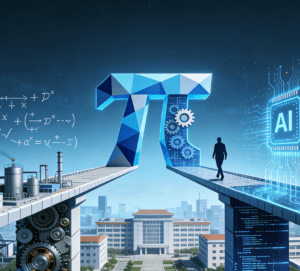
In 2024, the author published an article titled π-shaped Talents Empower the High-quality and Sustainable Development of China’s Intelligent Manufacturing on the official WeChat account of the National Committee on Intelligent Manufacturing. The article proposed the concept of π-shaped talents based on the changes in talent demands amid enterprise transformation and briefly analyzed approaches to cultivating such talents.
T-shaped talents are interdisciplinary professionals with both professional depth (the vertical line) and knowledge breadth (the horizontal line). π-shaped talents represent a further upgrade from T-shaped talents, with digital technology added as an enabling technology. They not only have professional technical capabilities, but also master digital enabling technologies, and are able to form a π-shaped competence structure based on the professional skills required for cross-industry positions. This talent model emphasizes the comprehensive integration of “professional competence + enabling technical competence” and holds great potential for becoming future leading talents.
Decoupling and Restructuring of the Knowledge and Competence System
Traditional knowledge systems such as mechanical engineering, electronic information and automation often suffer from problems like knowledge barriers, redundant or missing content, and unclear mapping with competence objectives. Driven by the new-generation information technology, industrial transformation and new occupational competence requirements, we systematically sort out 8 key links including factory construction, product R&D, process design, production management, production operations, operation management, product service and supply chain management, as well as 40 typical scenarios such as factory digital planning, product digital design and workshop intelligent production scheduling. Combined with technology development trends and the new occupational standards for intelligent manufacturing engineers—such as the development and application of intelligent equipment and production lines, intelligent production control, intelligent operation and maintenance of equipment and production lines, and intelligent manufacturing system architecture engineering—we decouple the knowledge systems of traditional majors from the dynamic competence systems required by the industry, break down course boundaries, and extract core knowledge points and competence points that support talent development, forming smaller, more flexible, and more easily reconfigurable and traceable modular units.
The decoupled knowledge modules and competence modules become building blocks that can be freely combined and called as needed. Based on this, driven by AI algorithms, the platform can dynamically generate highly personalized learning paths according to learning and training objectives, real-time competence diagnosis results, and preset knowledge dependency relationships. Whether focusing on robot technology, industrial big data analysis or system integration, different sequences can be flexibly combined to form customized solutions.
Enterprise Practices
The aforementioned “deconstruction” and “restructuring” of the knowledge and competence system is by no means an empty theoretical concept. At the level of “enterprise practices”, the rapid development of new technologies such as artificial intelligence is profoundly reshaping the talent demands and training paradigms of the manufacturing industry.
“One Person, Multiple Roles” and “Multiple Persons, One Role”
The traditional training mode of “single-skill workers” based on fixed positions can no longer meet the agility requirements of intelligent manufacturing. Enterprises’ employment logic is evolving from “one person, one role” to the parallel implementation of “one person, multiple roles” and “multiple persons, one role”.
“One person, multiple roles” requires employees to break through professional barriers and possess cross-position working capabilities. For example, a steel manufacturing enterprise has implemented compound positions such as “integrated operation and maintenance” and “integrated inspection and maintenance”, realizing flexible allocation of human resources and maximizing efficiency. “Multiple persons, one role” means that within a team, multiple members have the general competence and enabling technologies to be competent for core positions, forming team resilience for collaboration and backup.
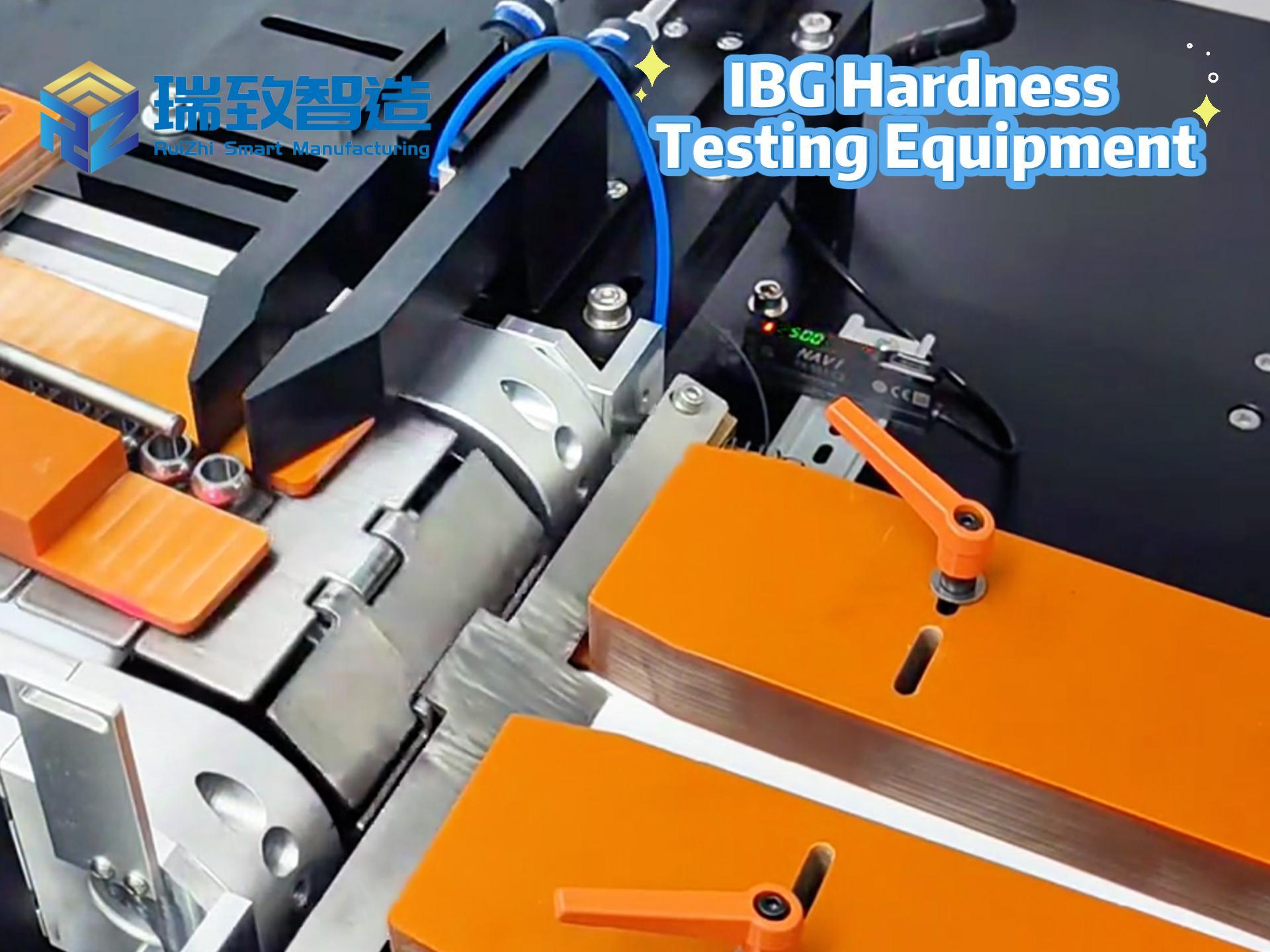
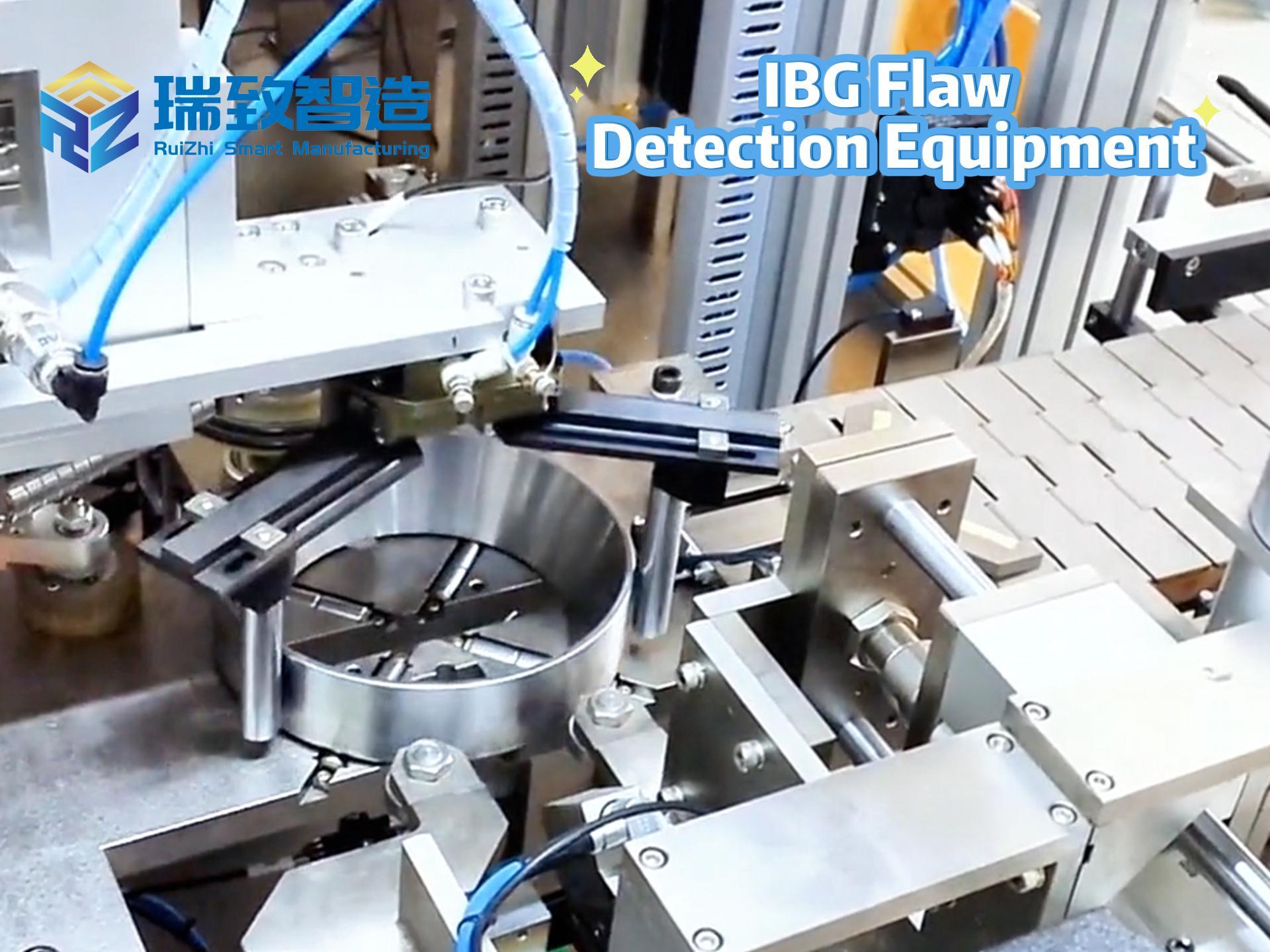
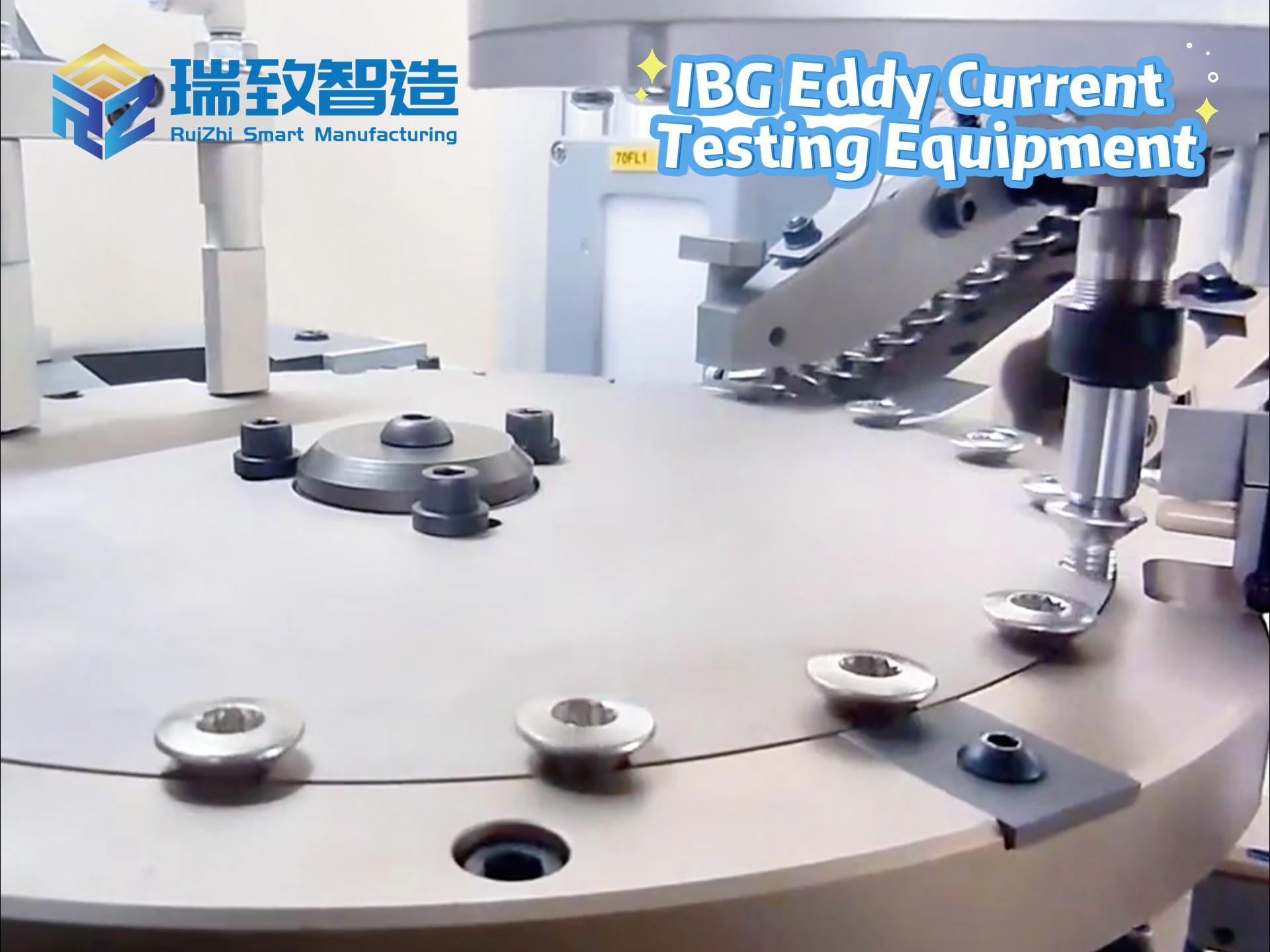
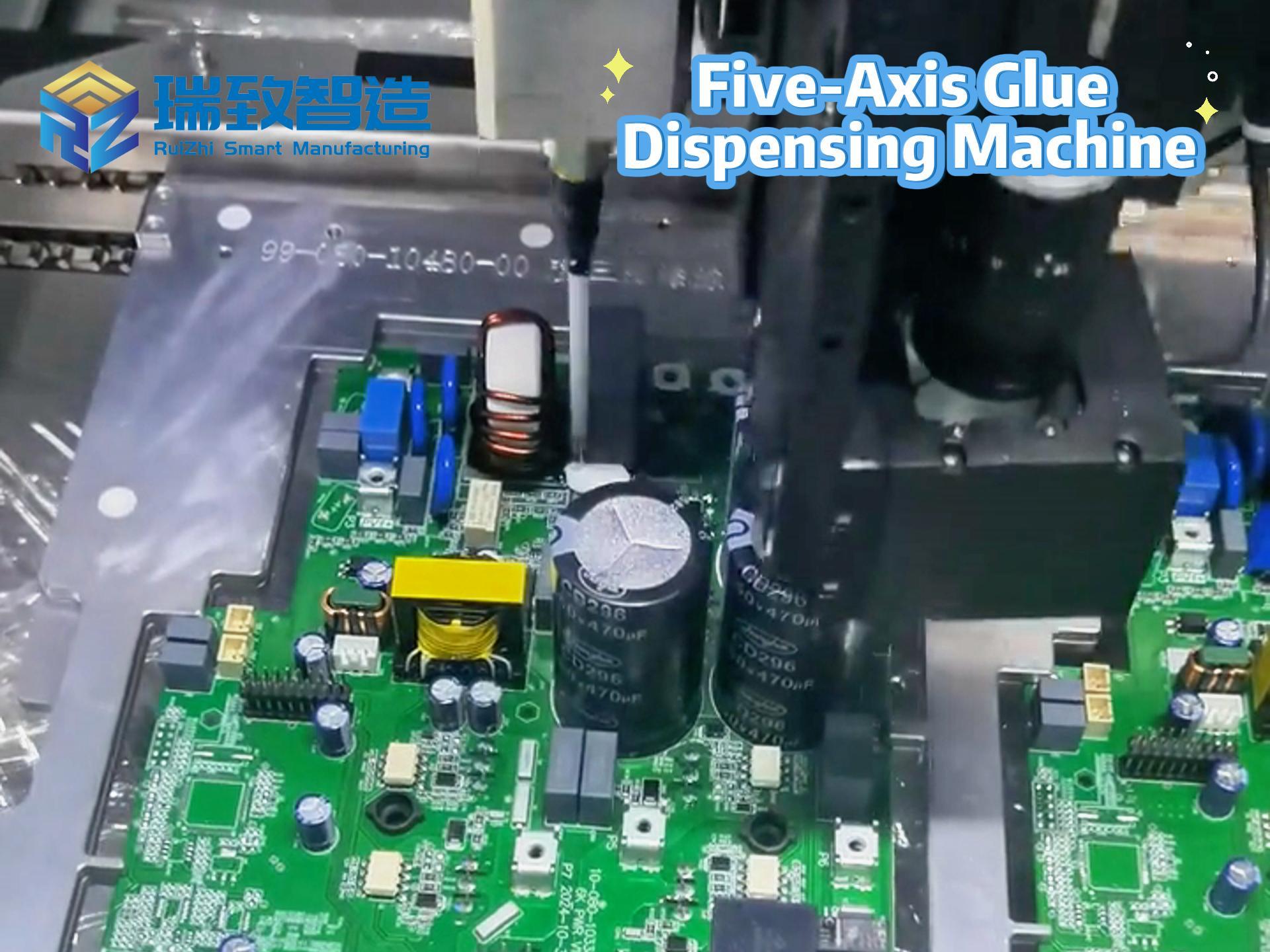
A typical practice of this transformation is the cultivation of the “intelligent maintenance engineer” team. Through a dual-track training system of “engineers + technicians”, enterprises aim to break the career development ceiling for technical and skilled talents. It not only requires employees to have the systematic thinking and innovative spirit of engineers, but also hones their craftsman-like exquisite skills and the persistent pursuit of excellence. They have a solid professional foundation in production processes, equipment management and lean improvement, as well as proficiency in digital enabling technologies such as data analysis and intelligent operation and maintenance. For example, in the fuse production workshop, these intelligent maintenance engineers can not only rely on their professional manufacturing knowledge to adjust the assembly precision parameters of the Fuse Assembly Machine, optimize the feeding and bonding processes to reduce product defect rates, but also use industrial Internet of Things technology to collect real-time data such as temperature, pressure and operation speed of the Fuse Assembly Machine, analyze the data through Python-based algorithms to identify abnormal operation trends, and carry out predictive maintenance before equipment failures occur, effectively connecting professional equipment operation with digital intelligent management.
Ultimately, these talents are trained to be able to base themselves and lead the integrated “operation, inspection, maintenance and adjustment” work across disciplines and fields, perfectly embodying the π-shaped talent structure with the deep integration of “professional competence + enabling technical competence”, and providing a solid talent foundation for enterprises to build a new type of intelligent operation and maintenance and production team oriented towards the future.
Employee Training: Bridging Competence Gaps
At the level of employee training, the core strategy of enterprise practices has shifted to an integrated thinking of “bidirectional empowerment and collaborative progress” between new and old employees. Specifically:
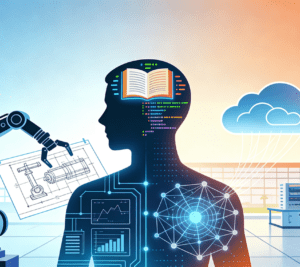
For new employees of the “digital native generation”, although they have inherent digital literacy and are familiar with emerging technologies, their weakness lies in the lack of in-depth understanding of specific production processes, equipment operation and industry standards. The key to training is to combine their digital advantages with technical practices to fill the gaps in professional competence.
For senior employees of the “experienced powerhouse generation”, they possess valuable on-site experience and problem-solving capabilities, but their challenge is to cope with the technological disconnect brought about by digital transformation. The focus of training is to design low-threshold and highly relevant digital enabling courses to help them master digital tools and transform experience into sustainable and replicable digital assets.
To achieve the in-depth integration of the capabilities of new and old employees, the “digital-technology mixed team” model has been created. Under this structure, new employees lead tasks such as data modeling and analysis, while senior employees guide process optimization and decision-making. Both sides achieve knowledge feedback and capability symbiosis in joint research and tackling of problems. This is not only a simple superposition of skills, but also the construction of a self-evolving organizational ecosystem that continuously nurtures π-shaped talents.
Cultivating π-shaped Engineering and Technical Personnel in Universities
In 2017, universities officially launched the construction of emerging engineering disciplines, and in 2019, they began piloting micro-majors. These two reforms have taken important steps in the field of higher education. Emerging engineering disciplines focus on restructuring the professional system, while micro-majors focus on the rapid iteration of skills, jointly promoting the innovation of talent training models.
Emerging Engineering Disciplines: Restructuring the Professional System
With emerging fields such as intelligent manufacturing and AI as the core, and the cultivation of “π-shaped” talents as the goal, the professional system is restructured in the following aspects:
Emerging Majors: Data Science and Big Data Technology, Intelligent Manufacturing Engineering, Artificial Intelligence, Robotics Engineering, Additive Manufacturing Engineering, etc., directly meet the needs of industrial digital transformation and intelligent upgrading;
Traditional Upgrading: Old majors such as Mechanical Engineering are integrated with artificial intelligence, digital twins, industrial internet technologies, forming upgraded majors such as Mechanical Design, Manufacturing and Automation, and Mechatronic Engineering;
Industry Customization: Majors such as Integrated Circuit Design and Integrated Systems, Agricultural and Forestry Intelligent Equipment Engineering, Intelligent Vehicle Engineering, Intelligent Aircraft Technology, and Marine Robotics realize the precise matching of technology chains and industrial chains. Through in-depth cross-integration, the dual-pillar capabilities of professional vertical line (engineering technology) and digital horizontal line (AI empowerment) are strengthened.
Micro-majors: Rapidly Responding to Enterprise Demands
To adapt to the profound digital transformation, supply chain restructuring and rapid evolution of the global industrial chain, universities must flexibly transform the “dynamic changes” of the industry into the “dynamic adaptation” of teaching.
Micro-majors, based on the major of study, take “15-20 credit course groups” as the carrier, integrating cutting-edge knowledge and technologies of multiple disciplines and majors to cultivate π-shaped talents. They focus on:
Interdisciplinary Integration: For example, the “Industrial AI” micro-major integrates machine learning and automation technologies;
Dynamic Adaptation: Real-time absorption of new industrial technologies such as edge computing and embodied intelligence;
Targeted Competence Enhancement: Through modular courses such as “Intelligent Operation and Maintenance + Python” and “Digital Factory Simulation”, the gap between traditional majors and digital skills is quickly bridged.
Industry-University Integration Activates π-shaped Potential
A three-tier industry-university integration practice system is constructed:
On-campus Training: Introduction of real enterprise projects into classrooms, such as digital twin training of intelligent production lines;
Internship Closed-loop: Tutorial system + industrial cloud platform practical training, simultaneously improving engineering capabilities and data thinking;
Order-based Training Channel: Jointly designing the promotion path of “Intelligent Manufacturing π-shaped Talents” with leading enterprises, realizing the π-shaped coupling of technical capabilities and industrial demands.
The cultivation of π-shaped talents for intelligent manufacturing requires building a collaborative innovation system of knowledge, enterprise practices and higher education reform. First, restructure the modular knowledge system based on industrial demands to realize the organic integration of professional capabilities and digital technologies; second, create a talent capability training ground through enterprise flexible position allocation and practical models such as “digital-technology mixed teams”; at the same time, promote the construction of emerging engineering disciplines and micro-major reforms in universities to form a training mechanism that rapidly responds to industrial demands. Ultimately, through in-depth industry-university integration, a new ecosystem for cultivating intelligent manufacturing talents with continuous evolution capabilities is built.