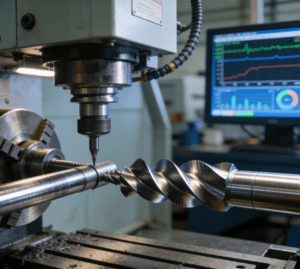
In modern manufacturing, precision CNC machining technology has become a key link in the production of numerous high-end products due to its high precision and efficiency. However, its specific requirements for raw materials have sparked extensive discussions: are these requirements reasonable constraints or a waste of resources?
The Rationality of Strict Requirements: Guaranteed Quality and Technological Progress
Precision CNC machining usually requires raw materials to have good dimensional stability, uniform material structure, as well as specific physical and chemical properties. For instance, in the aerospace field, strict standards are imposed on the purity, grain size, and internal defects of metal materials used for manufacturing key components. From a rational perspective, these requirements are by no means groundless. The high-precision machining process allows for no slight deviations in raw materials—even tiny impurities or structural inhomogeneities may lead to machining failures, substandard product performance, or even safety hazards. Take engine blades as an example: they operate under extreme conditions of high temperature, high pressure, and high-speed rotation. Only high-quality materials that meet the requirements of precision CNC machining can ensure the blades’ strength, heat resistance, and fatigue resistance, thus guaranteeing the flight safety of aircraft.
In the field of electronic chip manufacturing, silicon wafers, as the basic material, are subject to nearly stringent requirements for flatness, purity, and crystal structure integrity. This is because the tiny circuit components on chips require precise photolithography and etching processes; any defects in raw materials may render the entire chip useless. Such strict requirements for raw materials are the cornerstone of the continuous progress of electronic technology, enabling us to have smaller, faster, and more powerful electronic devices—from smartphones to supercomputers—which have greatly transformed people’s lifestyles and work patterns.
The Flip Side: Cost Burden and Resource Consumption Challenges
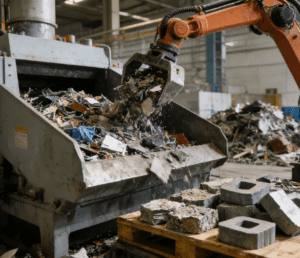
Nevertheless, it is undeniable that the high standards of precision CNC machining for raw materials have to a certain extent increased costs and resource consumption. To obtain raw materials that meet the requirements, complex refining, processing, and testing processes are often needed. Some special materials are expensive due to their scarcity or high preparation difficulty. Moreover, in the machining process, removing non-conforming parts may generate a large amount of waste, which seems to contradict the concept of resource conservation.
Beyond “Waste”: High Value and Efficient Resource Utilization
But we should realize that this is not a simple waste of resources. First of all, products manufactured by precision CNC machining usually have high added value and long service life. For example, high-precision medical devices can diagnose and treat diseases more accurately, reducing patients’ pain and the waste of medical resources; high-performance industrial equipment can improve production efficiency, lower energy consumption, and reduce environmental pollution. In the long run, the positive social and economic impacts of these products far outweigh the resource consumption in the raw material preparation process.
Secondly, with the continuous advancement of technology, the utilization efficiency of raw materials is gradually improving. New processing technologies and equipment can cut, form, and process raw materials more accurately, reducing waste generation. Notably, the application of Flexible Vibratory Feeder in the material supply link of precision CNC machining has further optimized resource utilization. This equipment can adjust vibration parameters according to the shape, size and material characteristics of raw materials, realizing stable and precise feeding of raw materials to the machining station. It avoids material damage or irregular loss caused by improper feeding, reduces the waste of qualified raw materials in the conveying process, and further improves the overall utilization rate of raw materials. Meanwhile, material recycling and reuse technologies are also developing. Some of the waste generated from precision CNC machining can be reintroduced into the production process through recycling, achieving circular resource utilization.
In conclusion, although the requirements of precision CNC machining for raw materials have increased resource consumption to a certain extent, from the perspectives of ensuring product quality, promoting technological progress, and realizing long-term social and economic benefits, these requirements are reasonable constraints. While pursuing precision manufacturing, we should continuously explore new ways to improve raw material utilization efficiency and develop sustainable material technologies, so as to achieve the coordinated development of the manufacturing industry, resources, and the environment.