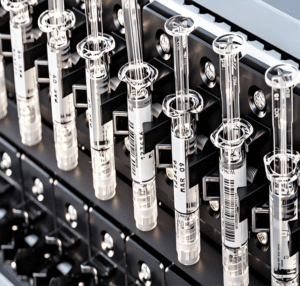
The global syringe market is expanding at an unprecedented pace. The overall syringe market was valued at $10.64 billion in 2026 and is projected to reach $15.09 billion by 2034, while the prefilled syringes segment — the fastest-growing category — is expected to climb from $8.65 billion in 2026 to $14.53 billion by 2031, registering a 10.9% CAGR [16†L3-L8].
For manufacturers, this growth is a double-edged sword. More orders mean more revenue. But if your assembly line cannot keep up, those orders will go to someone who can.
The arithmetic of manual assembly.
A typical manual syringe line employs six to eight workers per shift. Together, they produce roughly 800 to 1,200 units per hour. The defect rate? Between 3% and 5%. Misaligned plungers. Poorly seated gaskets. Improperly capped barrels. Each defect means rework, wasted materials, and — in the worst cases — regulatory findings that can delay shipments or trigger audits [16†L10-L13].
Now run those numbers across three shifts. Across six days a week. Across a full year. The cumulative cost of inefficiency and quality drift is staggering.
One machine. Two operators. 3,000 units per hour.
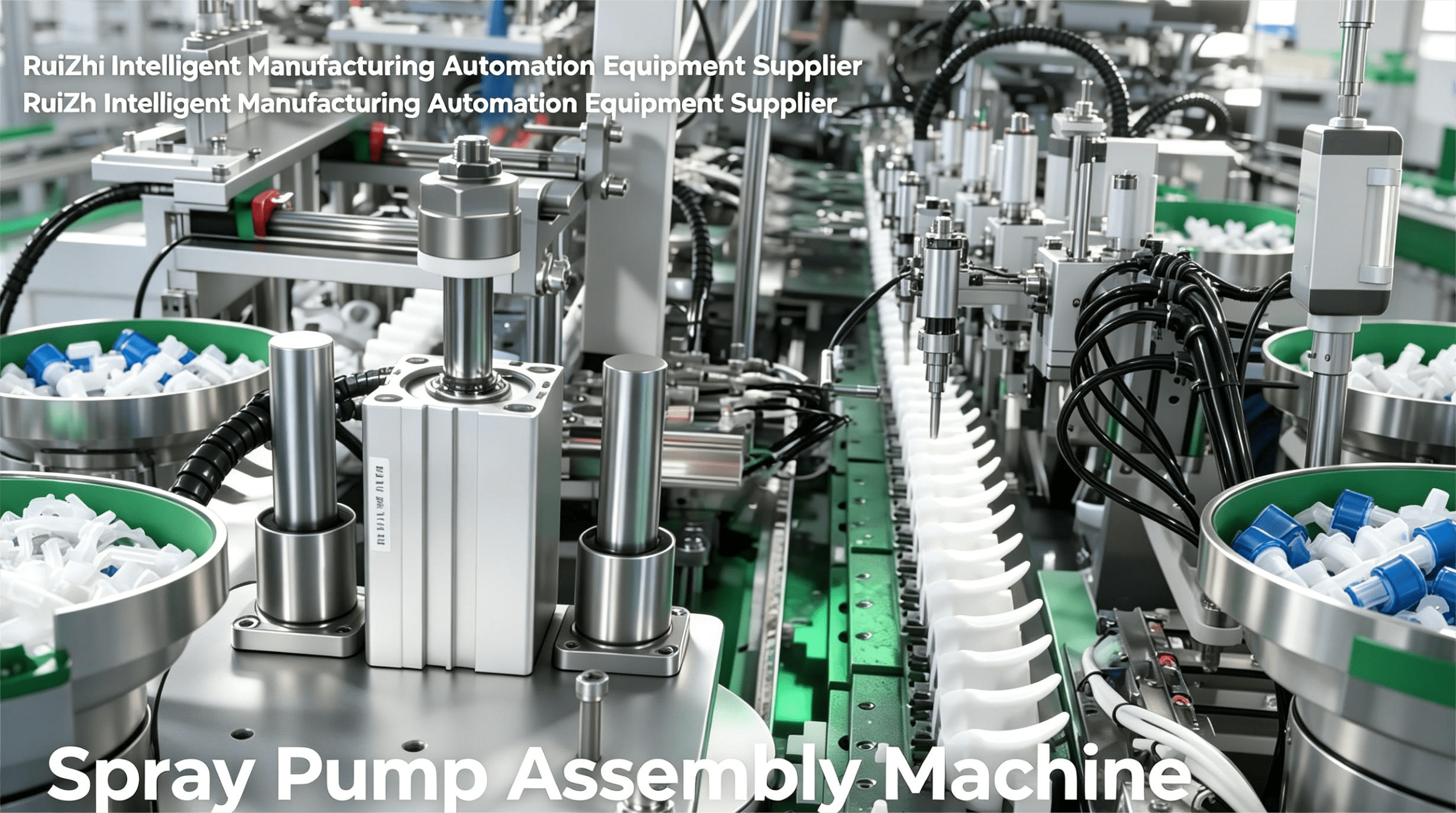
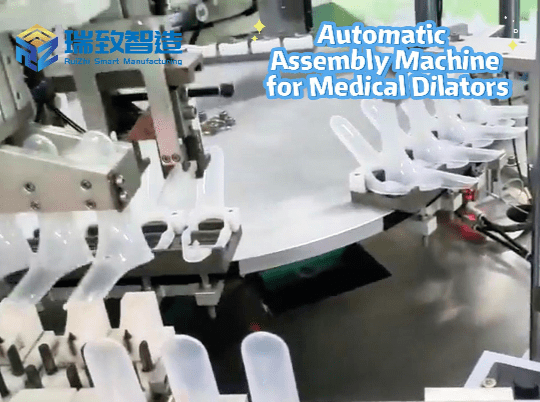
The fully automatic syringe assembly equipment from RuiZhi Intelligent Manufacturing consolidates the entire assembly process into a single, continuous workflow. Barrel feeding. Plunger insertion. Gasket seating. Needle hub attachment. Cap tightening. Every step is automated, synchronized, and monitored in real time.
The key specifications:
-
Output: 2,000–3,000 units per hour
-
Operators required: 2 (vs. 6–8 on manual lines)
-
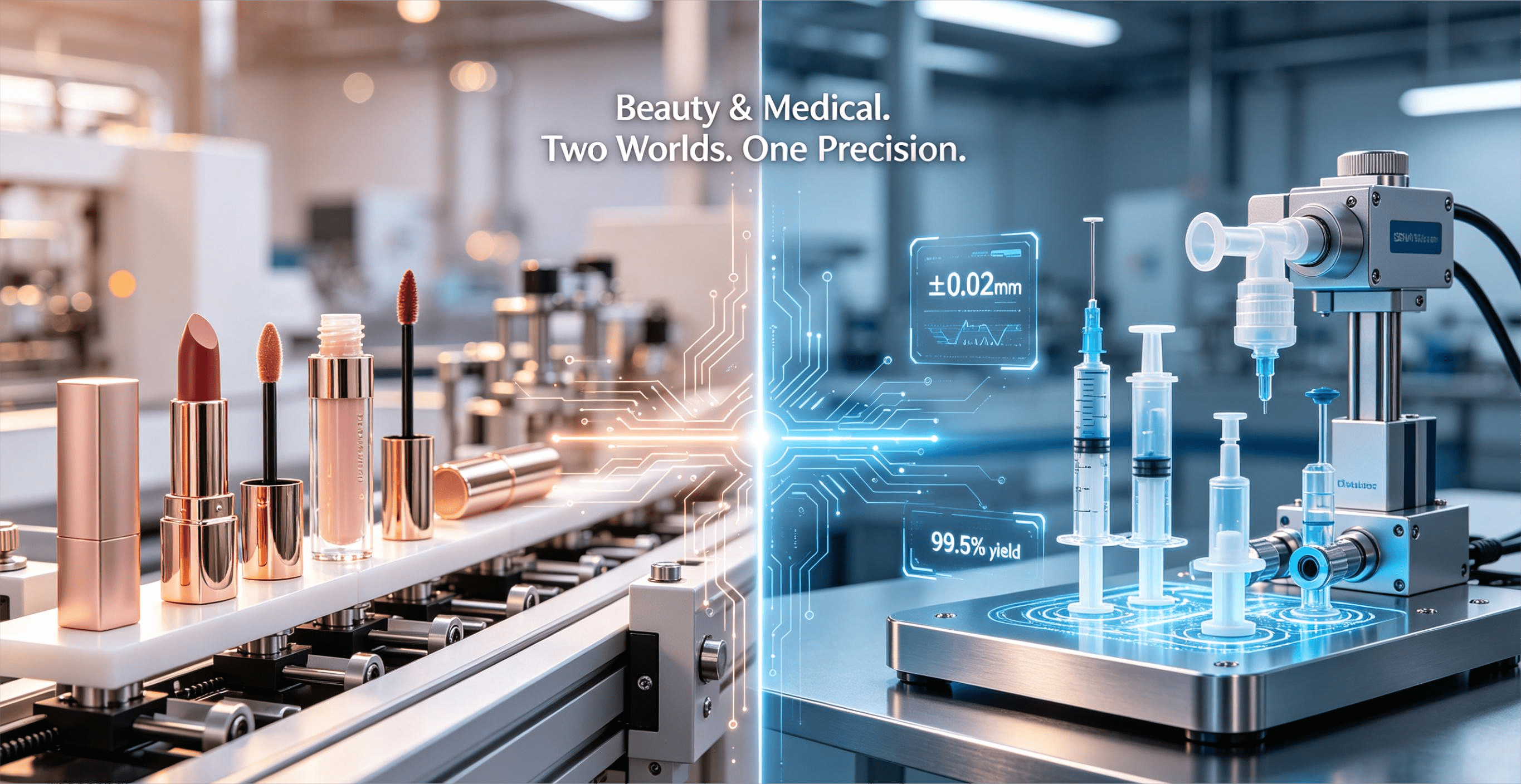
Positioning accuracy: ±0.02 mm (servo-driven precision)
-
First-pass yield: >99.5%
-
Labor cost reduction: 70%
The machine integrates PLC-based control systems, servo-driven positioning, and AI-powered visual inspection into one seamless platform. High-resolution cameras inspect each component at every station — verifying alignment, detecting defects, and rejecting faulty units before they progress further [16†L14-L20].
Closed-loop compliance, not afterthought.
Regulators are not getting less demanding. FDA 21 CFR Part 11 (electronic records and signatures), EU MDR (unique device identification and traceability), and ISO 13485 (quality management systems) all require manufacturers to maintain auditable, tamper-proof production data [16†L23-L28]. Manual assembly lines struggle to meet these requirements. Spreadsheets and handwritten logs do not constitute compliance.
The RuiZhi system is MES-integrated from the ground up. Every assembly parameter — insertion force, applied torque, seal integrity test results — is automatically logged, timestamped, and stored. When an auditor asks to see batch records, you do not scramble to compile paper forms. You pull the data. Instantly.
Flexibility that does not punish you for variety.
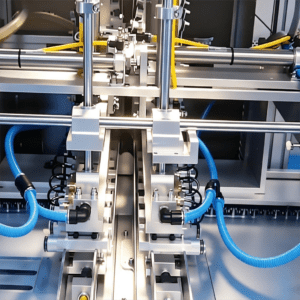
Syringe designs are anything but uniform. Luer slip. Luer lock. Safety syringes. Auto-disable. Prefilled. Different sizes. Different materials. Different customer specifications. On a manual line, changing between these configurations takes hours — sometimes an entire shift — and introduces new opportunities for error.
On the RuiZhi system, modular tooling and parameter memory reduce changeover time to under 20 minutes. Store configurations for dozens of SKUs. Recall any setup with a few taps on the touchscreen HMI. Switch production runs without costly downtime [16†L30-L33].
The ROI is not theoretical.
-
Manual line: 6–8 operators, 800–1,200 units/hour, 3–5% defect rate, rising labor costs, zero traceability.
-
Automated line: 2 operators, 2,000–3,000 units/hour, >99.5% yield, 70% labor cost reduction, audit-ready production data.
Payback period: 12 to 18 months [16†L34-L37]. After that, every shift delivers higher output at lower unit cost — with fewer quality complaints and zero traceability gaps.
Built for medical-grade environments.
The machine is constructed with 316L stainless steel and food-grade materials, designed for cleanroom operation, and compliant with GMP standards. On-site installation, operator training, and lifetime technical support are included [16†L38-L43].
Why RuiZhi?
Since 2014, RuiZhi Intelligent Manufacturing has delivered custom automatic assembly solutions for the global medical device industry. We do not sell generic machines. We engineer systems that match your specific syringe designs, production targets, and compliance requirements.
The market is growing. Your competitors are automating. The question is not whether you can afford to invest in automation.
It is whether you can afford not to.
#SyringeAssemblyEquipment
#MedicalDeviceAutomation
#PrefilledSyringeProduction
#FDACompliantManufacturing
#Industry40