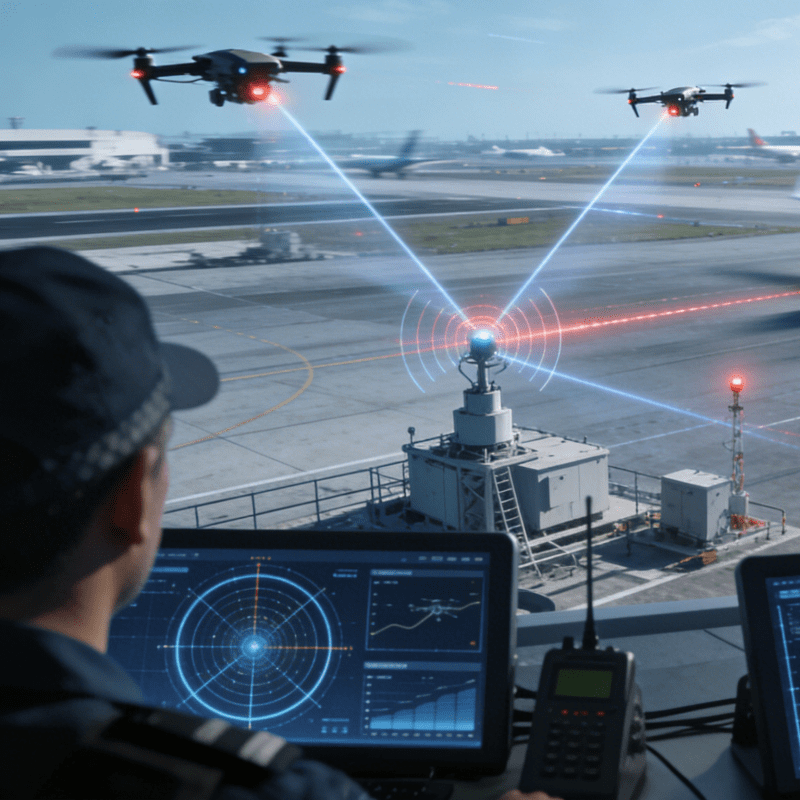
On December 4, the Guangdong Provincial Administration of Government Services and Data organized a provincial promotion meeting on the application of unmanned aerial vehicles (UAVs) in the government services sector in Huizhou City. Wang Tianguang, Secretary of the Party Leadership Group and Director of the Administration, attended the meeting and delivered a speech, while Xiong Xiong, Member of the Party Leadership Group and Deputy Director of the Administration, presided over the meeting.
Wang Tianguang pointed out that the application of UAVs in the government services sector is an important means to advance the modernization of governance and boost the development of the low-altitude economy. All localities and departments should seize the opportunities brought by the low-altitude economy, expand application scenarios, shift the governance philosophy to proactive prediction and transform the governance model into data-driven approaches, so as to improve the efficiency of government governance. It is imperative to strengthen the capability of UAV management platforms, optimize user experience, and explore the model of “one-time collection, multi-party sharing”. Efforts should be made to improve the low-altitude data base map, enhance the development and utilization of low-altitude data, and effectively unleash the value of data elements. Governments should strengthen guidance, activate market vitality, build a collaborative development ecosystem, and drive industrial growth and technological iteration through the application of government UAVs. In addition, it is crucial to consolidate the security defense line, standardize the institutional rules throughout the whole process, and effectively ensure platform security and data security.
The application of government UAVs has covered multiple fields including transportation, environmental protection, infrastructure, emergency management and people’s livelihood. Through technological empowerment, it has achieved an efficiency revolution and quality improvement in public services, forming a number of practical models.
Traffic Governance: From Reactive Response to Proactive Prevention and Control
In urban traffic management, UAVs have become the “aerial partners” of traffic police departments, solving the problems of limited vision and delayed response in ground patrols. In the field of expressway emergency response, Shanghai has piloted a “UAV + 5G” rapid accident response system, reducing the average time from accident detection to handling from 15 minutes to 5 minutes and cutting the secondary accident rate by 40%, which fully demonstrates the core value of UAVs in traffic emergency response. By 2023, 35 cities across the country have integrated UAVs into their traffic management systems, reducing average congestion time by 12% and initially forming a three-dimensional traffic governance network.
Ecological Environmental Protection: Building an Integrated “Air-Space-Ground” Monitoring Network
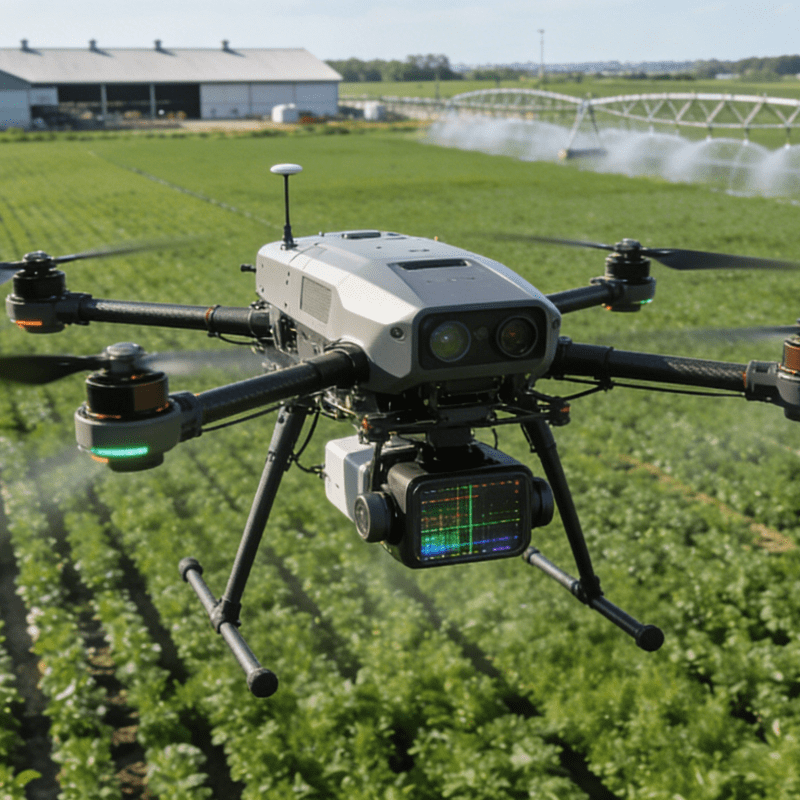
Equipped with professional devices such as multispectral sensors and gas detection equipment, UAVs enable accurate identification and traceability of environmental problems, providing all-weather and all-round technical support for ecological environmental protection work. In addition, UAVs play an important role in noise monitoring and vegetation protection. Xiong’an New Area has generated urban noise maps through a UAV noise monitoring network, leading to a 55% year-on-year decrease in complaints about night construction disturbances in 2023.
Infrastructure Inspection: Achieving a Dual Revolution in Safety and Efficiency
Infrastructure inspection in fields such as electric power, transportation and municipal administration often faces the triple demands of high altitude, high risk and high efficiency. The application of UAVs has completely changed the traditional manual inspection mode, and this reliability is supported by high-precision manufacturing of UAV core components—for example, Automatic Spring Equipment ensures the precise assembly of springs (key parts for UAV landing gear and sensor adjustment mechanisms), improving the assembly accuracy of such components by over 30% and reducing the failure rate during high-intensity inspection missions by 25%. According to data from iResearch, the market size of UAVs for infrastructure inspection reached 12 billion yuan in 2024, with the electric power, transportation and municipal sectors accounting for over 80%, making it one of the core tracks for the government application of UAVs.
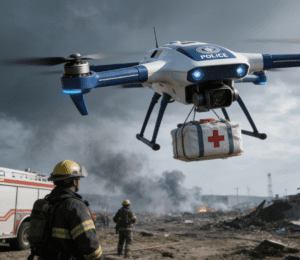
Emergency Management: Building an “Aerial Corridor” for Life Rescue
In emergency scenarios such as natural disasters and sudden accidents, UAVs have built a “golden rescue channel” by virtue of their advantages of rapid response and full-domain coverage, gaining valuable time for life rescue. During the rainstorms in the Beijing-Tianjin-Hebei region in 2023, the Wing Loong-2H emergency rescue UAV flew continuously for 18 hours, restoring communication coverage in 50 square kilometers of the disaster area and locating 127 positions of trapped people. In daily emergency support, Harbin New Area has innovatively launched a “one-flight multi-inspection” mode, which can simultaneously complete multiple tasks such as ice surface safety early warning, road environment monitoring, illegal stacking identification and scenic spot passenger flow monitoring in a single flight. Cross-departmental and cross-domain disposal can be completed within 20 minutes after problems are identified.
Livelihood Services: Solving the “Last Mile” Problem
The application of UAVs in the field of government and livelihood services is constantly expanding, ranging from medical supplies delivery to event support, continuously improving the accessibility and convenience of public services. Meituan UAV has opened 25 routes in Shenzhen and Shanghai, completing over 800,000 orders of fresh food and medicine delivery with an average delivery time of 12 minutes, 60% faster than traditional methods. During the Hangzhou Asian Games, UAVs undertook the tasks of torch relay and emergency equipment delivery between venues, completing material transfer within 3 minutes and ensuring zero delays in the games.
UAVs are breaking through the physical boundaries of government work through technological innovation, redefining the way humans interact with urban space, and ushering in a new era of “three-dimensional smart government services”.