Syringe Automatic Assembly Equipment
ネブライザー組立機
Automatic Assembly Machine for Medical Dilators
Lipstick Assembly Machine
Lip Gloss Applicator Assembly Machine
Beauty & Medical. Two Worlds. One Precision.
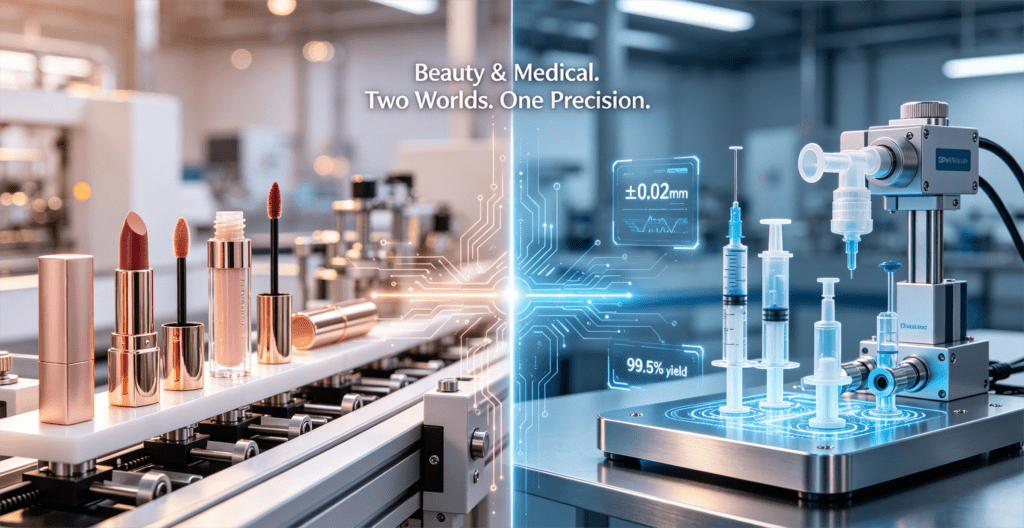
2026 marks a turning point for manufacturing. AI and automation are no longer “nice to have” — they are competitive necessities. Across industries, the push toward smart factories, digital twins, and AI‑driven inspection is reshaping how products are made [15†L11-L16]. Nowhere is this shift more urgent than in cosmetics and medical devices — two sectors where precision, compliance, and speed directly impact brand reputation and patient safety. The numbers tell the story. The global cosmetic packaging machinery market is projected to grow from $4.37 billion in 2026 to $7.23 billion by 2034 (6.48% CAGR) [8†L6-L7]. Beauty manufacturers are racing to adopt fully automated, sustainable, and flexible lines capable of handling […]
8 Workers Make 1,200 Syringes an Hour. One Machine Makes 3,000.
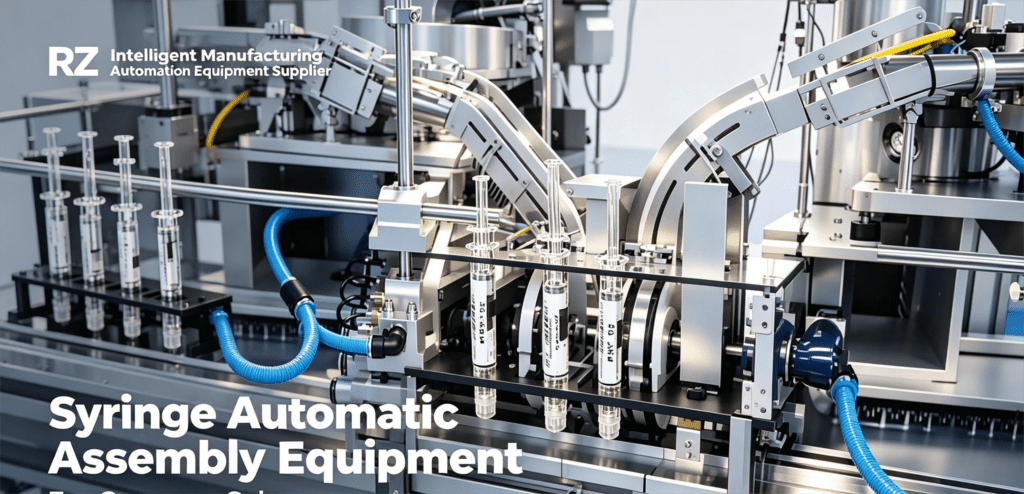
The global syringe market is expanding at an unprecedented pace. The overall syringe market was valued at $10.64 billion in 2026 and is projected to reach $15.09 billion by 2034, while the prefilled syringes segment — the fastest-growing category — is expected to climb from $8.65 billion in 2026 to $14.53 billion by 2031, registering a 10.9% CAGR [16†L3-L8]. For manufacturers, this growth is a double-edged sword. More orders mean more revenue. But if your assembly line cannot keep up, those orders will go to someone who can. The arithmetic of manual assembly. A typical manual syringe line employs six to eight workers per shift. Together, they produce roughly 800 to 1,200 units […]
From Gloss to Wand. One Machine.
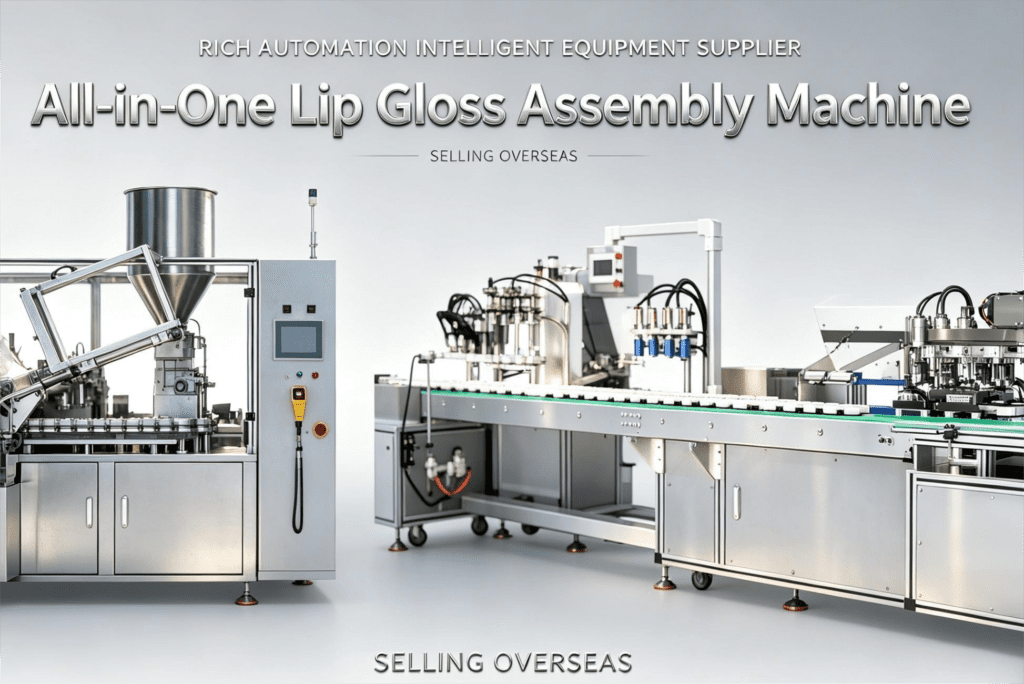
The global cosmetic packaging machinery market is accelerating fast. Valued at USD 3.27 billion in 2025, it is projected to reach USD 4.21 billion by 2031, driven by surging e‑commerce demand and the urgent shift toward smart, sustainable production lines. For lip gloss manufacturers, this growth brings both opportunity and a very specific problem: the applicator. A lip gloss wand looks simple — a brush head, a rod, a plug, a cap. But assembling it perfectly is anything but simple. Traditional manual lines require six to eight workers per shift, each producing roughly 250 to 350 pieces per hour. The numbers look respectable until you factor in the defect […]
The $17.8 Billion Market Has a Pump Problem. This Machine Fixes It.
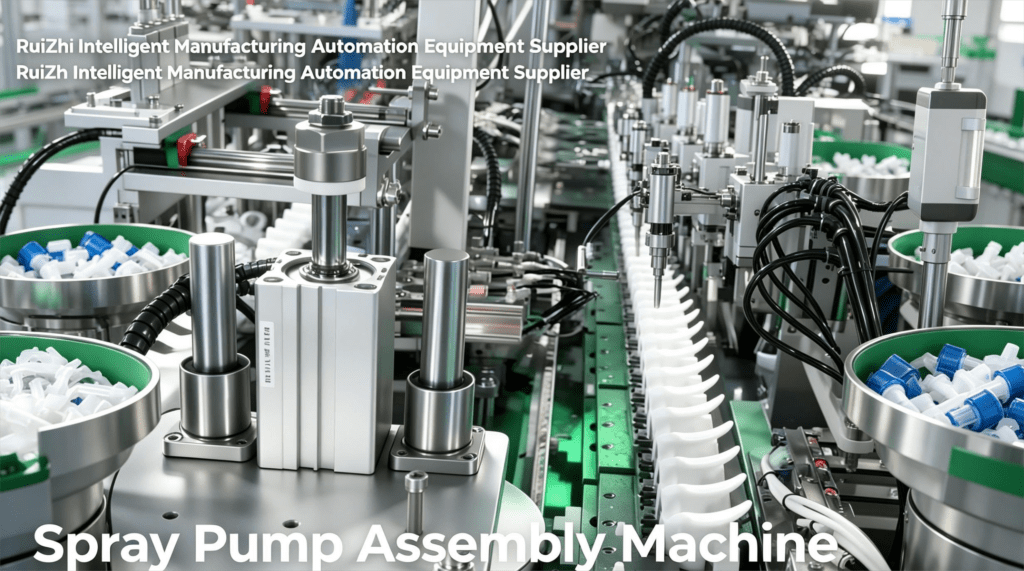
The numbers are staggering. The global pumps and dispensers market hit $17.79 billion in 2025 and is climbing toward $26.41 billion by 2034 at a CAGR of 4.58% [8†L11-L14]. Mist spray pumps alone are expected to reach $7.1 billion by 2031 [0†L18-L21]. Every hand soap, facial mist, sunscreen, household cleaner, and fragrance relies on one thing: a pump that works. Perfectly. Every time. Here is the problem. Most pumps are still assembled by hand. A typical manual line runs 30 to 40 pumps per minute. Workers insert springs, seat gaskets, align nozzles, and crimp caps — repeating the same motions thousands of times a shift. Fatigue sets in. Defects accumulate. Air leaks go unnoticed. Reject rates […]
One Bottle, Five Components. Done in Three Seconds.
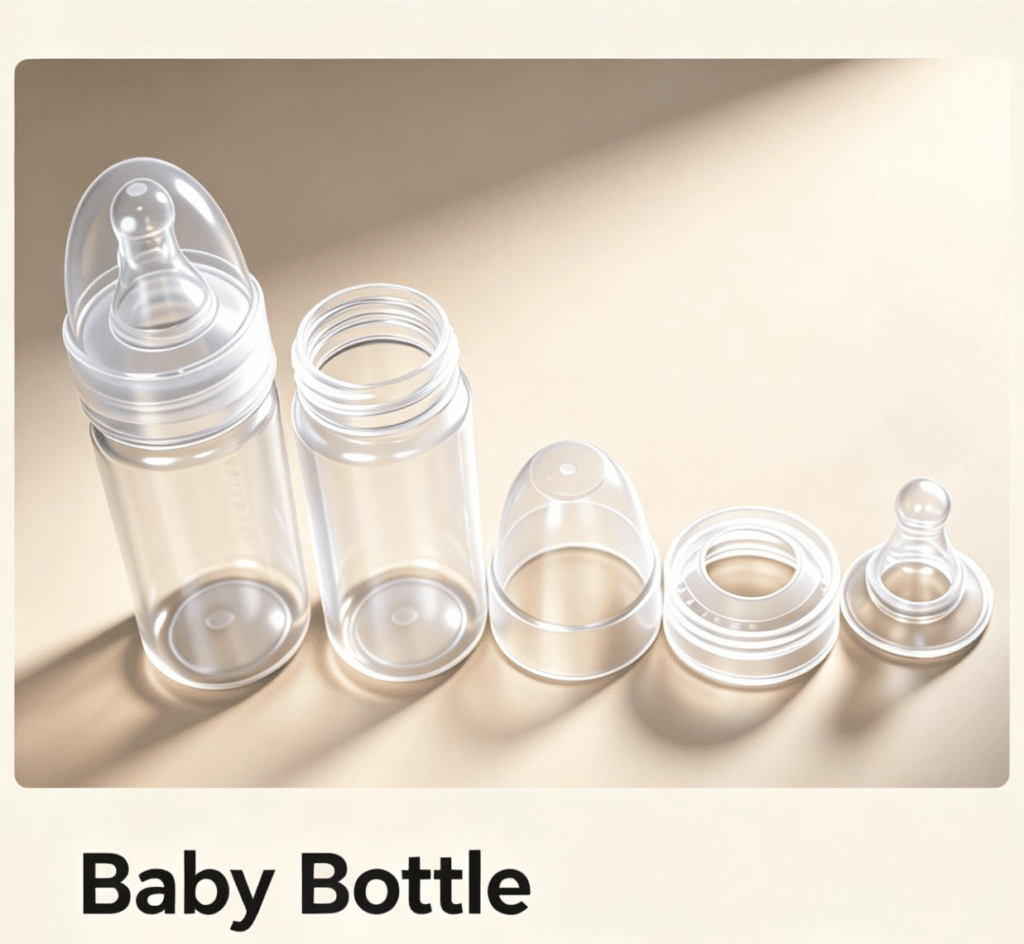
A baby bottle looks simple. But assembling one perfectly — that is another story. You have the bottle body, the nipple, the cap ring, the sealing disc, and sometimes handles or anti-colic vents. Each piece must fit precisely. No gaps. No leaks. No wobble. And with global safety standards tightening — from BPA-free compliance to ISO 10993 — manual assembly just cannot keep up. Most manufacturers still rely on hand assembly lines. Operators pick parts, fit nipples into rings, press caps onto bottles, and check for leaks. The result: around 400–600 units per hour per line, with 2–4% defect rates. Misaligned nipples. Loose caps. Leaking seals. Each […]