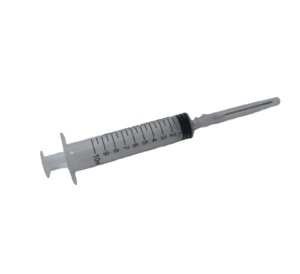
However, surging demand brings a hidden crisis: manual assembly lines cannot keep pace.
A typical manual syringe line requires six to eight operators, produces 800–1,200 units per hour, and suffers from defect rates of 3–5%. Each misaligned plunger, poorly seated gasket, or improperly capped syringe means rework, waste, and compliance risk. For manufacturers already struggling to meet orders, every defective unit is a missed opportunity.
This is where syringe automatic assembly equipment transforms the game.
Below is a side-by-side comparison. The “Old Way” sits on the left, where manual assembly still feels like the ’90s. The “RuiZhi Way” sits on the right, powered by intelligent automation.
⚖️ The Assembly Line Showdown: Old vs. RuiZhi
| Parameter | ❌ The “Old” Way (Manual/Semi-Auto) | ✅ The “RuiZhi” Way (Fully Automated) |
|---|---|---|
| Throughput | 800–1,200 units/hour | 2,000–3,000 units/hour (up to 24,000/hour) |
| Operators | 6–8 people | 1–2 people |
| Defect Rate | 3–5% | <0.5% (99.5%+ first-pass yield) |
| Lønomkostninger | Baseline | ↓ 70% |
| Changeover Time | Hours | < 20 minutes (modular tooling) |
| Compliance | Manual logs, spot checks | MES-integrated, audit trails for every batch |
| ROI Payback | N/A | 12–18 months |
🔧 What Powers the Automated Difference?
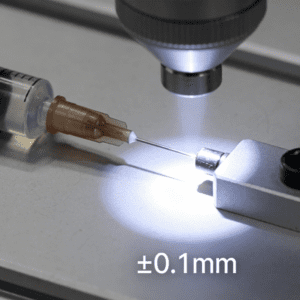
1. AI-Powered Visual Inspection & Servo Precision — The equipment integrates PLC-based control systems, servo-driven positioning, and AI-powered visual inspection into one seamless workflow. Assembly error is controlled within ±0.02 mm, detecting needle deviation, poor piston sealing, and shell cracks in real time.
2. Regulatory-Ready from Day One — Fully compliant with FDA 21 CFR Part 11, EU MDR, and GMP standards. Every assembly parameter — insertion force, torque, seal integrity — is logged and retrievable.
3. Flexibility for Any Syringe Type — Luer slip, luer lock, safety syringes, auto-disable, prefilled — changeovers that once took hours are reduced to under 20 minutes with modular tooling systems. Parameter memory stores configurations for multiple SKUs, allowing manufacturers to shift production on demand.
4. Built for Cleanroom Environments — Constructed with 316L stainless steel and food-grade materials, designed specifically for sterile medical manufacturing environments.
📈 The ROI That Matters
-
Manual line: 6–8 operators, 800–1,200 units/hour, 3–5% defect rate.
-
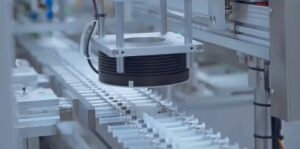
Automated line: 1–2 operators, 2,000–3,000 units/hour, >99.5% yield.
-
Payback period: 12–18 months. After that, every shift delivers higher output at lower unit cost — with zero traceability gaps and fewer quality complaints.
No matter which type of syringe you require — insulin syringes, vaccine syringes, different sizes of disposable syringes, or specialty syringes for clinical fields — our adapted equipment handles them with ease. Choose from High-Precision Non-Standard models for custom sizes ranging from 1ml to 50ml, or the Standard Series for cost-effective high-volume staple production.
For contract manufacturers expanding into prefilled syringes, this level of output and consistency is no longer optional — it is survival.
🌍 Market Insight: Why Now?
The global automatic syringe assembly machine market was valued at approximately 1.2 billion in 2024,and is anticipated to reach around 2.5 billion by 2033, reflecting a CAGR of 9.2%. Meanwhile, the broader medical device assembly automation equipment market — valued at 1235millionin2025—isforecasttohit1649 million by 2032 at a 4.2% CAGR.
Beyond the numbers: according to MD&M West 2026, medtech is scaling faster, getting smaller, and becoming more complex to manufacture. One of the strongest themes at the show was the continued acceleration of manufacturing automation. Manufacturers who have invested in customizable automation and a skilled workforce for microscopic components are the ones scaling successfully.
Asia-Pacific remains the fastest-growing regional market, driven by healthcare and pharmaceutical expansion in China and India. For global OEMs, the question has shifted from “How much should we produce?” to “Where — and how efficiently — should we produce?”
🤖 What’s Next? The 2026 Automation Horizon
Looking ahead to 2026, four key trends are reshaping medical manufacturing:
-
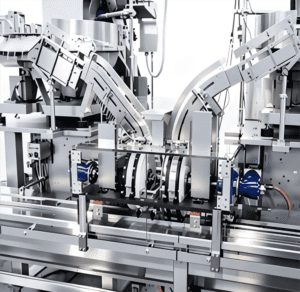
Microautomation — Compact six-axis robots and SCARA arms are replacing bulky gantry systems, saving cleanroom space and enabling micron-level precision.
-
Practical AI — Beyond buzzwords, AI is now actively detecting minute defects and optimizing vision-based inspection in real-time assembly lines.
-
Modular Manufacturing Systems — The shift toward flexible, fast-changeover systems allows manufacturers to align with variable production volumes without massive downtime.
-
Connected Compliance — With FDA QMSR now in full effect and EUDAMED entering its operational phase, digital traceability across design, manufacturing, and quality is no longer optional — it is expected.
RuiZhi Intelligent Manufacturing has been delivering custom automatic assembly solutions to the global medical device industry since 2014. Our syringe automatic assembly equipment is backed by on-site installation, training, and lifetime support.
Ready to scale your syringe production? Visit www.rzautoassembly.com or contact our team today to discuss your automation needs.
#SyringeAssemblyEquipment #MedicalDeviceAutomation #Industry40 #PrefilledSyringeProduction #FDACompliantManufacturing