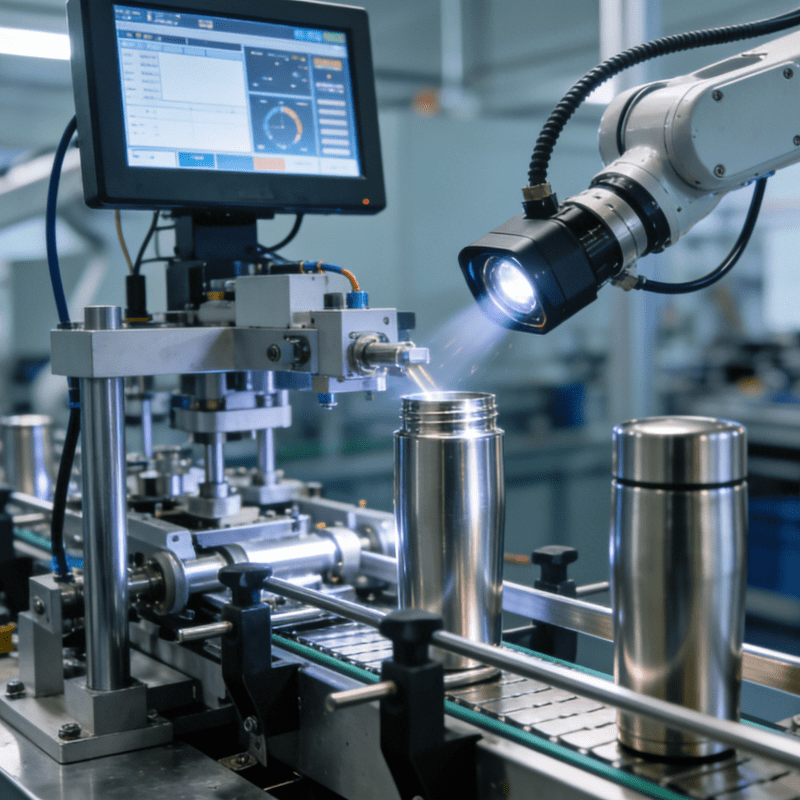
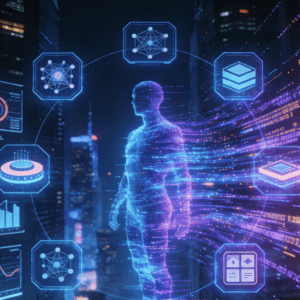
The 0.9 version of the planet-scale Climate Twin, released in December 2025 under the EU’s “Destination Earth” initiative, completed a 30-year global extreme weather backtest on a 1 km grid in just 48 hours, with a prediction error of ≤ 3%. Behind it lies no longer a traditional “static 3D model”, but an AI-Native Twin Engine featuring “self-learning, self-optimization, and self-decision-making” capabilities. In the same month, the Digital Twin Consortium (DTC) officially proposed the definition of “Digital Twin 3.0” in its updated Testbed White Paper: a verifiable system equipped with full-stack “cognition-decision-execution” capabilities, powered by generative AI as the brain, multi-agent systems as the limbs, and real-time data as the blood. Entering 2026, digital twins are evolving from “high-precision replicas” to “intelligent symbiotic entities”. Combining the latest practices from DTC, Siemens, BMW, Baoshan Iron & Steel Co., Ltd. (Shanghai Baosteel) and others, this article dissects its technological underpinnings, industrial applications, and governance challenges.
Technological Underpinnings: Three Leaps Empowering Twins with “Intelligence”
Real-Time Data: 5G/6G Reduces Latency from Seconds to Milliseconds
The uRLLC (Ultra-Reliable Low-Latency Communication) of 5G-Advanced cuts air interface latency to 4 ms, while early 6G test networks achieve an even lower 0.1 ms latency. Industrial field buses have been upgraded to TSN-2026 accordingly, boasting a synchronization accuracy of 50 ns. At BMW’s Leipzig plant, millisecond-level data streams enable the 1:1 production line twin to refresh at 2000 Hz, reducing robot trajectory errors to < 30 μm and lowering weld defect rates by 27%.
Generative AI: Diffusion + RL Enables Twins to “Anticipate” the Future
Traditional twins rely on “physical equations + calibration” for predictions, with accuracy drifting over time. Siemens Industrial Copilot integrates a Diffusion model into its twin engine, generating 1000 “10-minute-ahead equipment temperature trajectories” in real time, and then using Reinforcement Learning (RL) to select the optimal control strategy. This has boosted gas turbine combustion efficiency by 1.8%, translating to annual fuel cost savings of USD 36 million.
Multi-Agent Systems (MAS): From “Individual Optimization” to “Collective Optimization”
Mainstream architectures in 2026 abstract each physical device as an “Agent”, with the twin serving as the Agent’s “digital sidecar”. The DTC testbed deployed 120 terminal Agents at the Port of Rotterdam in the Netherlands, using game theory algorithms to dynamically negotiate berthing sequences. As a result, the average waiting time for container ships dropped from 38 hours to 19 hours, and port carbon emissions decreased by 12%.
Industrial Applications: Four Key Scenarios Enter “Autonomous Operation” Mode
Autonomous Manufacturing: Process Parameters “Self-Optimize”
Shanghai Baosteel implemented a hot rolling mill twin that predicts strip crown deviations 5 minutes in advance. RL algorithms automatically adjust roll bending forces, increasing the hit rate of 1.2 mm ultra-thin strip crown accuracy from 82% to 96%, improving yield by 2.1%, and generating an additional annual profit of RMB 180 million.
Smart Hospitals: Surgical Processes Optimized in Seconds
The Shanghai Intelligent Medical Center has created digital twins for operating rooms, surgeons, instruments, and patients, with AI completing device coordination responses in 0.01 seconds. During surgeries, a Diffusion model generates real-time dual-axis trajectories of “bleeding volume-anesthesia depth”, issuing early warnings for hypoperfusion events 3 minutes in advance. This has reduced single-surgery energy consumption by 19% and equipment operation and maintenance costs by 17%.
Digital Thread
BMW uses a “single digital thread” to connect design, manufacturing, and operation phases: CAD design changes → automatic generation of process twins → issuance of instructions to production line Agents → real-time yield data feedback → triggering design re-optimization. This has shortened the closed-loop cycle from 6 weeks to 3 days.
Planet-Scale Twins: Global Climate “Simulation”
The EU’s “Destination Earth” project will launch Version 1.0 in 2026, integrating four major sub-twins for oceans, atmosphere, land, and ice sheets. It supports completing a 30-year global extreme climate backtest within 48 hours, providing governments worldwide with a real-time sandbox for “carbon neutrality pathways”, with an error target locked at < 2%.
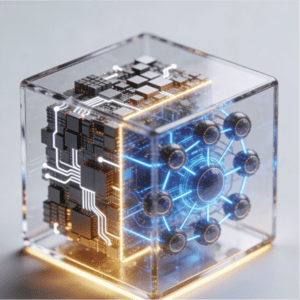
Edge AI: Millisecond-Level Closed Loops Relegate the “Cloud” to a Secondary Role
Architecture Downshifting
In 2026, 40% of industrial twins deploy inference engines on edge gateways, reducing Mean Time To Repair (MTTR) from hours to minutes.
Computing-Energy Synergy
Edge GPUs are directly connected to photovoltaic DC busbars, with photovoltaics powering inference during the day and batteries supplementing energy at night. This has reduced the Power Usage Effectiveness (PUE) to 1.05, resulting in annual electricity cost savings of RMB 1.2 million per site.
Real-Time Control
The TSN-2026 network’s 50 ns synchronization accuracy enables robots to perform “online compensation” under twin guidance—detecting a 0.1 mm positioning deviation and immediately correcting the trajectory without halting production for calibration.
Governance and Ethics: When Twins Start to “Make Their Own Decisions”
Data Sovereignty and Privacy
The 2026 January Digital Twin Conference hosted by the Hong Kong Polytechnic University listed “Trusted Twins” as its top agenda item: the EU mandates that any cross-continental data transmission must “retain model parameters locally and only transmit gradients”; China’s Digital Twin City Data Regulations (Draft) proposes the principle of “raw data not leaving the domain, usable but not visible”.
Model Interpretability
If an aero-engine twin causes an unplanned engine change due to an AI decision, a traceable explanation must be provided. GE adopts a dual-track approach of “causal graphs + counterfactual analysis”: causal graphs identify key sensors, while counterfactual analysis generates reports such as “if the temperature had been 5 °C lower, the service life could have been extended by 200 hours”, meeting FAA audit requirements.
Liability Attribution
When a terminal scheduling accident occurs due to multi-agent negotiation, the liable parties form a triangle of “Agent developer-operator-data provider”. The DTC is drafting the Agent Liability Insurance Framework, scheduled for release in Q3 2026, with insurance coverage automatically allocated in proportion to the “weight of Agent decisions”.
Conclusion: Letting Cities Evolve on Their Own
Digital twins in 2026 are no longer “flashy 3D big screens”, but an intelligent network that “breathes, thinks, and acts”:
It uses 5G/6G as capillaries to sense the city’s pulse in real time;
It leverages generative AI to “envision” countless parallel futures and select the optimal solution;
It uses a multi-agent grid to distribute decisions to every robot, traffic light, and surgical scalpel.
When twins start to “make their own decisions”, the only thing humans need to do is set ethical boundaries, then step back and let cities, factories, and the planet evolve on their own. The endpoint of Digital Twin 3.0 is not to “copy the physical world”, but to “co-evolve with the physical world”.