
As artificial intelligence (AI) becomes fully integrated into social operation and economic systems, 2026 will mark a critical juncture for AI to transition from an “advanced technology” to a “systemic infrastructure”. The focus of AI development will no longer be limited to technological breakthroughs, but will instead place greater emphasis on improving governance systems, deepening human-AI collaboration models, and the safe deployment of multi-agent systems in complex scenarios. The following trends reflect the profound reshaping of organizational structures, governance methods, and talent systems by AI.
Human-AI Collaboration Enters a Stage of Deep Integration
AI is no longer merely an auxiliary tool, but an autonomous agent capable of undertaking decision-making, execution, and collaboration tasks. In 2026, organizations across all sectors will enter a period of structured exploration of “human-AI coexistence”, with key focuses including:
– Defining the functional boundaries of AI agents: Specifying which tasks AI agents execute, how they collaborate with human employees, and when human intervention is required.
– Establishing performance and behavior evaluation mechanisms: Implementing quantitative monitoring of AI agent behavior to ensure output is interpretable and auditable.
– Deploying secure testing environments (AI sandboxes): Simulating real-world conditions prior to production to verify behavioral stability and controllability through stress testing.
The key to this phase lies in building an operational system that enables both humans and AI agents to work efficiently and reliably. This will position AI as a “responsible entity” within organizational processes, rather than just a single functional module.
Vibe Coding Drives the Restructuring of Software Engineering Systems
The rapid maturation of Vibe Coding will bring about a fundamental shift in software delivery models:
– Automated restructuring of traditional systems becomes feasible: AI can rewrite code and modernize fragile legacy systems, significantly reducing technical debt.
– Development efficiency is drastically improved: Creating an automated pipeline from requirement generation to code output.
– The importance of engineering governance is amplified: Traceability, source control, automated testing, and security assurance will become mandatory requirements to ensure the maintainability and long-term stability of new codebases.
By 2030, the core value of software engineering will shift from “manual coding” to “governance and quality management”, with Vibe Coding emerging as a key driver of system updates and technological modernization.
Multi-Agent Systems Become the Mainstream of Organizational Automation
The single “copilot-style” AI model can no longer meet the demands of increasingly complex business processes. In 2026, multi-agent systems will gradually become the core solution for achieving highly complex, cross-stage automated tasks, such as:
– Cross-departmental information flow integration
– Task decomposition and collaborative planning
– Multi-stage approval, monitoring, and feedback
– Automated resource scheduling and optimization
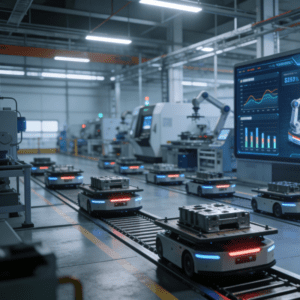
– In the manufacturing sector, Sheet automatic loading robot, as a typical execution unit in multi-agent systems, can collaborate with production scheduling agents, quality inspection agents, and warehouse management agents to realize fully automated operations from sheet material warehousing, precise loading to production line handover, greatly improving production efficiency and reducing manual intervention risks.
During this process, organizations will face the following core challenges:
– Consistency management across multiple agents
– System observability and behavioral transparency
– Unified governance rules and conflict resolution mechanisms
To successfully deploy such systems, institutions must build infrastructure with capabilities for secure isolation, behavioral monitoring, and auditing to support the safe operation of multi-agent systems within a controlled framework.
AI Governance Enters an Era of Rigor: Trust, Ethics, and Risk Prevention
Advancements in AI technology are accompanied by heightened potential risks, including erroneous decision-making, system abuse, and malicious attacks leveraging generative capabilities. Therefore, the focus in 2026 will be on:
– Strengthening accountability tracking and audit mechanisms
– Establishing transparent, interpretable model governance frameworks
– Ensuring irreplaceable human oversight in critical processes
– Improving cybersecurity and supply chain security management systems
New-generation governance requirements will drive organizations to abandon fragmented legacy information systems and transition to an infrastructure architecture centered on safety, ethics, and sustainability.
Reshaping the Talent System: Job Value and Competency Standards in the AI Era
The widespread application of AI is redefining labor value:
– Many traditional jobs considered “stable” will be highly automated, replaced or reshaped.
– Conversely, jobs targeting younger demographics will see increased value due to AI-enabled efficiency gains, such as in service, content creation, and data operations.
The talent system needs to shift from a “position-based” model to a “competency-based” one, emphasizing:
– Proficiency in using AI tools
– Rapid learning and adaptability
– Ability to execute and supervise AI agents
– Interdisciplinary skills for collaborating with AI
Educational systems, industrial institutions, and governments must work together to establish clear career paths. This will ensure the new generation of labor can adapt to the skill requirements of the AI era and enable AI to become a driver for improving labor quality and productivity.
Conclusion
2026 will serve as a critical watershed for AI development, shifting from “capability competition” to “responsibility governance”. The core tasks for organizations during this period include:
– Building controllable, transparent, and trustworthy human-AI collaboration models
– Establishing future-oriented infrastructure for multi-agent systems
– Strengthening ethical governance, risk management, and audit mechanisms
– Promoting AI literacy across society, particularly the reskilling of young labor forces
Future competitive advantages will belong to organizations that can balance technological innovation with governance responsibilities. AI is no longer a single technological choice, but a core force driving the comprehensive reshaping of organizational strategies, talent systems, and governance structures.