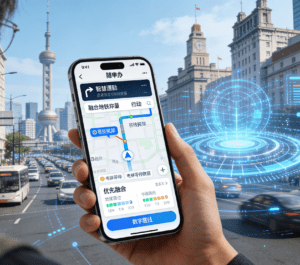
Early in the morning, Mr. Wang, a resident of Shanghai, activated the “Smart Commute” service with one click via the “Suishangban” app. The system formulated an optimal time and energy-saving route for him by integrating real-time subway passenger flow, road congestion index, elevated ramp control status, and even the number of people waiting for elevators in his office building. At the same moment, in the command center of the Shenzhen Emergency Management Bureau, the “digital twin city” on the large screen was simulating the storm surge likely to be brought by Typhoon Lianhua, which was about to make landfall. Based on the real-time integrated meteorological, hydrological, geological and transportation data, the system automatically generated three sets of different traffic control and personnel evacuation plans for commanders to make decisions. These are no longer science fiction scenarios, but daily snippets of the operation of China’s smart cities in 2025. Behind them lies a solid, intelligent and collaborative “digital soil” — the digital infrastructure providing support. It has evolved from a technical concept to a popular core and strategic high ground driving the overall digital transformation of cities.
Digital Infrastructure Becomes a New Benchmark for Urban Competitiveness
In 2025, in the government work reports and industrial plans of many Chinese cities, “consolidating digital infrastructure” and “building a unified intelligent infrastructure” have become high-frequency terms and standard agendas. Its popularity is reflected in three aspects:
First, strategic popularity. Digital infrastructure is generally incorporated into the top-level design of cities and regarded as a “new-type infrastructure” as important as traditional infrastructure such as transportation and energy. For example, in the Blue Book on Building a Global Digital Economy Benchmark City released by Beijing in early 2025, “a world-leading city-level digital twin infrastructure” was listed as one of the six core goals; Hangzhou clearly proposed to build a “national demonstration city for smart city digital infrastructure” and took it as a key advantage to attract the headquarters of high-tech enterprises. It is not only a technical project, but also a strategic investment related to the future urban governance model, economic development momentum and people’s livelihood service experience.
Second, market popularity. From ICT giants such as Huawei, Alibaba Cloud and Tencent Cloud, to AI companies such as Baidu and SenseTime, and then to solution providers in various vertical fields, all parties in the industrial chain are actively positioning themselves in the digital infrastructure track. The market focus has shifted from scattered hardware sales or single software deployment in the past to providing integrated infrastructure planning, construction and operation services. According to the latest IDC report, the market scale related to China’s smart city digital infrastructure is expected to exceed 100 billion yuan in 2025, maintaining a high compound annual growth rate.
Third, application popularity. For more and more smart applications, the primary question at the beginning of project approval is “can it be connected to the urban digital infrastructure?”. Whether it is the “collaborative dispatching of autonomous driving buses based on digital infrastructure” piloted in Huangpu District, Guangzhou, the “industrial map and precision investment promotion system” developed by Chengdu High-tech Zone using infrastructure capabilities, or the intelligent operation of Automatic spring equipment in a precision manufacturing park in the Yangtze River Delta — by accessing the industrial Internet nodes of the urban digital infrastructure, the equipment’s real-time operation data, fault early warning information and production capacity data can be seamlessly connected with the park’s supply chain scheduling system and urban industrial policy service platform, realizing remote maintenance, dynamic capacity adjustment and precise policy docking. Developers have realized that only by rooting in a unified digital infrastructure can applications obtain high-quality data support and strong generic capabilities, thus getting rid of redundant construction and achieving rapid innovation. Digital infrastructure has become a “black soil” for nurturing smart application innovation.
Multiple Driving Forces Spur an Inevitable Upsurge
The boom of digital infrastructure in 2025 is not accidental, but an inevitable result driven by the combination of technological evolution, practical demand and policy guidance.
An Inevitable Choice for Smart City Construction to Enter the “Deep Water Zone”
The early stage of smart city construction focused on “point-like breakthroughs”, with various departments and fields operating independently. Although a large number of information systems have been developed, solid “data silos” have also been formed. A simple scenario of “urban waterlogging emergency response” may require coordinating data and systems from more than a dozen departments such as meteorology, water affairs, transportation, public security and municipal administration, resulting in extremely high coordination costs. The complexity and systematicness of urban governance call for an underlying platform that can realize data aggregation, capability sharing and business collaboration. Digital infrastructure is the only solution to break the fragmented dilemma and realize the “holistic intelligent governance” of cities.
A Core Carrier for the Integrated Explosion of Cutting-edge Technologies
In 2025, the value maximization of cutting-edge technologies such as generative artificial intelligence, digital twins, Internet of Things and blockchain all depends on the support of digital infrastructure. Large AI models require massive and diverse urban data for training and fine-tuning; high-fidelity city-level digital twins need CIM platforms to integrate multi-source data such as BIM, IoT and GIS; the trusted circulation of data guaranteed by blockchain must be based on the unified data governance of the infrastructure. Digital infrastructure provides a unified “testbed” and “empowerment platform” for the integrated application of these cutting-edge technologies.
A Key Prerequisite for Unleashing the Value of Data Elements
Data has been established as a key production factor. The massive amount of public and social data generated by cities every day is as valuable as mineral resources buried deep underground. One of the core functions of digital infrastructure is to collect, clean, correlate and govern these “data ores” through data resource platforms, transforming them into standardized and reusable “data components”. Only by completing this process on a safe and controllable infrastructure can cross-departmental data sharing, social authorized operation and even asset-based transactions be realized.

Comprehensive Guidance and Regulation by Policies and Standards
The emphasis on new-type infrastructure and smart cities in the national 14th Five-Year Plan, as well as the successive introduction of digital transformation action plans by local governments at all levels, have provided clear policy support for the construction of digital infrastructure. At the same time, the gradual improvement of a series of national and industry standards on city information modeling (CIM), data governance and cyber security has provided a “construction blueprint” for the interconnection, safety and reliability of digital infrastructure, accelerating its popularization process.
Key Progress and Typical Cases of Digital Infrastructure Construction in 2025
After early exploration and practice, the construction of digital infrastructure in 2025 has entered a stage of value deepening from “having to excellence” and “from construction to application”, and a series of perceptible and verifiable achievements have entered the public vision through media reports.
In-depth Data Integration and Intelligent Operation, Evolving from “Data Governance” to “Intelligent Utilization”
Shanghai’s “One Network Unified Management” 3.0 and “Urban Perception” SystemIn 2025, based on the aggregation of tens of billions of urban operation data, Shanghai built an intelligent analysis system of “Urban Perception” through the AI middle platform of digital infrastructure. The system can automatically identify more than 1,100 types of urban management incidents, such as exposed garbage, illegal occupation of roads and illegal parking, with an identification accuracy rate of over 95%. More importantly, it can analyze the correlation of incidents through knowledge graphs. For example, it can automatically correlate multiple incidents of itinerant vendors in the same area with surrounding monitoring blind spots and tidal flow rules of people, providing managers with governance suggestions of “combining blocking and dredging”, realizing the leap from passive disposal to active prevention. According to a report by Jiefang Daily, this system has increased the proportion of automatically discovered urban management problems to 85% and shortened the average disposal time by 40%.
Digital Twins Achieve “Computability and Simulability”, Empowering Scientific Decision-making
Shenzhen’s “Shenzhi Hui” Platform and Typhoon Emergency DrillBased on the city’s unified CIM digital infrastructure, Shenzhen integrated data of more than 200 layers including geology, architecture, pipe network, transportation and population to build a millimeter-level precision digital twin of key areas. Before the flood season in 2025, Shenzhen used this platform to conduct a full-element and full-process digital review and simulation of the historical typhoon Mangkhut. The system simulated the risk points of building glass curtain wall damage under different wind levels, the possibility of underground garage flooding, and the dynamic adjustment of the optimal evacuation routes based on real-time traffic flow. The drill results provided accurate data support for revising the city’s emergency plan. A commentary in Southern Daily pointed out that this marks a new stage of urban emergency management from “experience-driven” to “simulation-driven”.
The Breaking of Public Data Authorized Operation, Spawning New Economic Growth Drivers
Beijing Financial Public Data Zone and “Jingqi Loan”Under the supervision of the Beijing Municipal Bureau of Big Data and the operation of Beijing Financial Holdings Group, the financial public data zone built on the Beijing International Big Data Exchange entered the stage of large-scale application in 2025. With the full authorization of enterprises and individuals and the principle of “data available but not visible”, the zone collected high-value data such as market supervision, social security, housing provident fund and taxation. Financial institutions such as banks can quickly generate “data portraits” for small and medium-sized enterprises through the standardized interfaces and models provided by the zone, which are used for credit approval and risk control. According to a report by Beijing Daily, by the third quarter of 2025, products such as “Jingqi Loan” developed based on the data of the zone have served more than 100,000 enterprises, issued loans of over 100 billion yuan, and reduced the average interest rate by about 1.5 percentage points, truly turning data into “real gold and silver” supporting the real economy.
Large AI Models Integrated into Infrastructure, Giving Birth to the “Urban Brain” Thinking Hub
Hangzhou’s “City Tong” Large Model and Livelihood ServicesThe Hangzhou Municipal Bureau of Data Resources, in conjunction with the Zhejiang Lab, deeply integrated the “City Tong” large model with 100-billion parameters, trained on data from urban government affairs, transportation, public opinion and public services, into the urban digital infrastructure. Complex inquiries put forward by citizens and enterprises in the “Zheliban” APP, such as “I want to set up a technology-based small and medium-sized enterprise in Binjiang District, what conditions do I need to meet and what procedures do I need to go through?”, are no longer only answered with a list of clauses. Instead, after understanding the intentions, the “City Tong” large model automatically calls the enterprise database, policy database and matter database of the infrastructure to generate a personalized, step-by-step “service guide list”, and even recommends suitable industrial parks and support policies. This has transformed government services from “people looking for policies” to “policies looking for people”, and upgraded from “one thing done at a time” to “a category of things done accurately”.
Conclusion: New Wisdom Emerges on the Basis of Infrastructure
In 2025, the upsurge of digital infrastructure is essentially a profound transformation of the urban development paradigm. From the intelligent perception of Shanghai’s “One Network Unified Management”, to the simulation of Shenzhen’s “Shenzhi Hui”, from the value release of Beijing’s data zone, to the proactive service of Hangzhou’s “City Tong”, these vivid cases together depict a clear picture: when a solid digital infrastructure is deeply rooted in the city, data can flow freely, wisdom can integrate, decisions can be scientific, and services can be precise.