The proposals for the 15th Five-Year Plan have explicitly listed Brain-Computer Interface (BCI) as one of the six future industries, marking its upgrade from cutting-edge technological exploration to a new engine of national economic growth. At present, China’s BCI industry is developing in a pattern of multi-point advancement and characteristic competition. Many regions are actively seizing this strategic emerging track through systematic policy guidan
ce, platform construction, and ecosystem cultivation. So, what types of machine tools and equipment are needed to support the industrialization of this emerging sector?
Major Breakthrough
According to Chinadaily.com.cn, a research team led by Chang Honglong and Ji Bowen at Northwestern Polytechnical University recently announced a key breakthrough in the 3D conical carbon-based flexible cerebral cortex electrode array they developed. It has successfully solved core problems that long constrained the industry, including brain tissue damage, signal attenuation, and poor biocompatibility. Meanwhile, it completed the world’s first technical verification in a space environment, opening a new path for the clinical translation and aerospace application of BCI, and demonstrating China’s top innovation capability in the field of Micro-Electro-Mechanical Systems (MEMS).
Targeting critical drawbacks of traditional minimally invasive implantable cortical electrodes—such as low flexibility, poor contact with brain tissue, and easy corrosion or even dissolution failure of metals after long-term implantation—the Northwestern Polytechnical University team has innovatively developed the 3D conical carbon-based flexible cerebral cortex electrode array after years of dedicated research.
Animal experiments show that the electrode provides more stable signal acquisition, with key performance hundreds of times higher than traditional metal electrodes. It enables safe long-term stimulation and regulation and can be safely used in ultra-high-field MRI examinations. The electrode has passed certification from a third-party medical device quality inspection institute, meeting medical standards in biocompatibility and long-term implantation stability, paving the way for subsequent long-term clinical applications.
Brain-Computer Interface establishes a direct communication channel between the brain and external devices. It is often used to assist, enhance, or restore human sensory-motor functions, or improve human-computer interaction, and is currently undergoing experimental applications in the medical field. According to implantation methods, BCIs can be divided into invasive, non-invasive, and semi-invasive types.
The year 2025 is known in the industry as the “first year” of China’s BCI development.
In May 2025, Shanghai Stepcare Medical Technology Co., Ltd. released prospective clinical trial progress of its ultra-flexible minimally invasive implantable BCI system.
In June, a team led by Professor Duan Feng at Nankai University completed the world’s first interventional BCI-assisted trial for restoring motor function of human affected limbs.
In November, Wuhan Zhonghua Brain-Computer Integration Technology Development Co., Ltd., in cooperation with Union Hospital Affiliated to Tongji Medical College of Huazhong University of Science and Technology, completed the first clinical implantation of a fully self-developed BCI chip.
BCI technological innovation is increasingly aligned with patient needs, with a series of clinical breakthroughs successively achieved.
More New Technologies Accelerate from Lab to Clinic
Recently, Mingshi BCI Technology (Suzhou) Co., Ltd. launched a self-developed implantable BCI visual reconstruction system, bringing new hope of vision recovery for patients with visual impairments.
The Center for Excellence in Brain Science and Intelligence Technology of the Chinese Academy of Sciences, together with partners, has made new progress in the second clinical trial of invasive BCI, achieving a major technological shift from 2D screen cursor control to 3D physical world interaction.
Shanghai NeuroXess Co., Ltd. announced that its self-developed fully implantable, fully wireless, full-function BCI product with built-in battery—the first in China and the second in the world—has successfully completed its first clinical trial. In a game match with a paraplegic patient implanted with the device, Tao Hu, the company’s founder and chief scientist, was unexpectedly defeated.“We firmly believe that BCI is not a tool for technical showmanship, but a bridge connecting life and hope,” Tao said.
Driven by technological implementation and favorable policies, capital investment in the BCI sector continues to rise. According to incomplete statistics from Artery Orange Database, from January to November 2025, China’s BCI industry saw 24 financing deals, a year-on-year increase of 30%. Over the past five years, there have been nearly 100 financing cases in the field, with a total financing volume exceeding 10 billion yuan.
Data from the China Electronics and Information Industry Development Institute shows that China’s BCI market scale reached 3.2 billion yuan in 2024, a year-on-year increase of 18.8%. It is expected to reach 5.58 billion yuan by 2027, growing at a rate of 20%.
Earlier this year, Elon Musk announced via social media that Neuralink, the BCI company he founded, plans to achieve mass production of BCI devices in 2026.
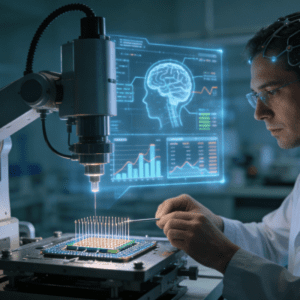
Machine Tools and Equipment Required for BCI Manufacturing
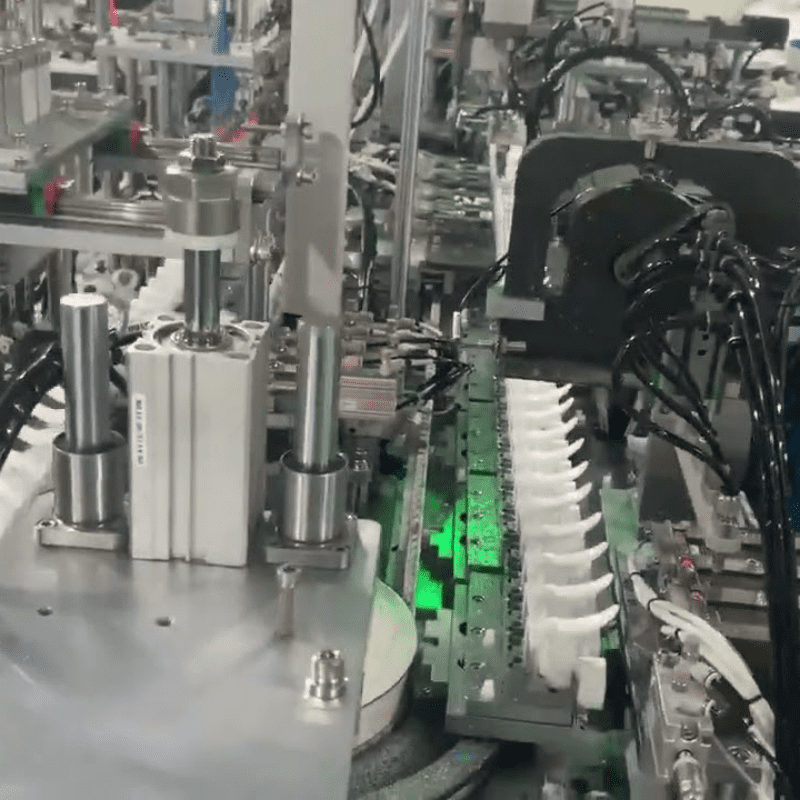
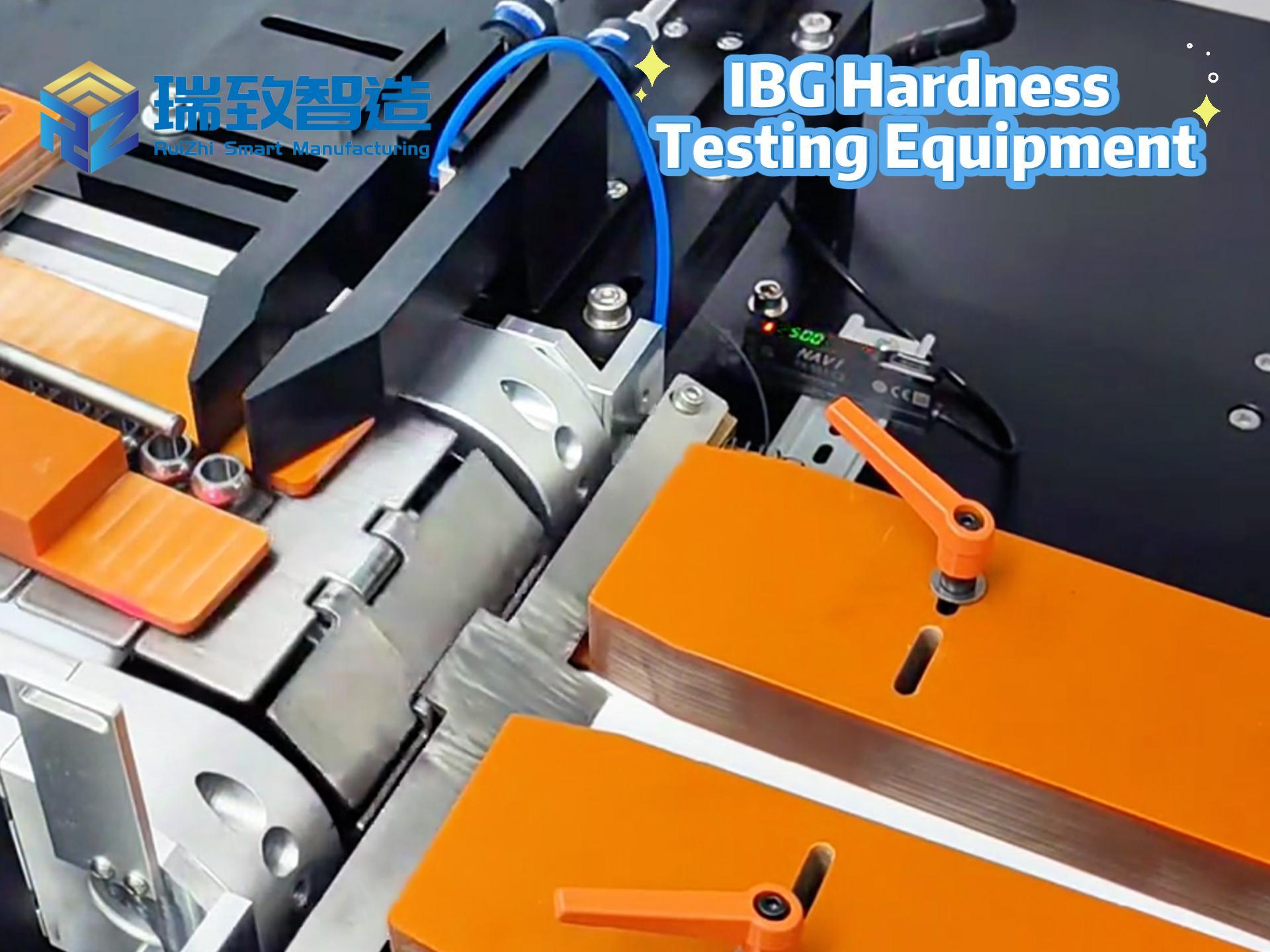
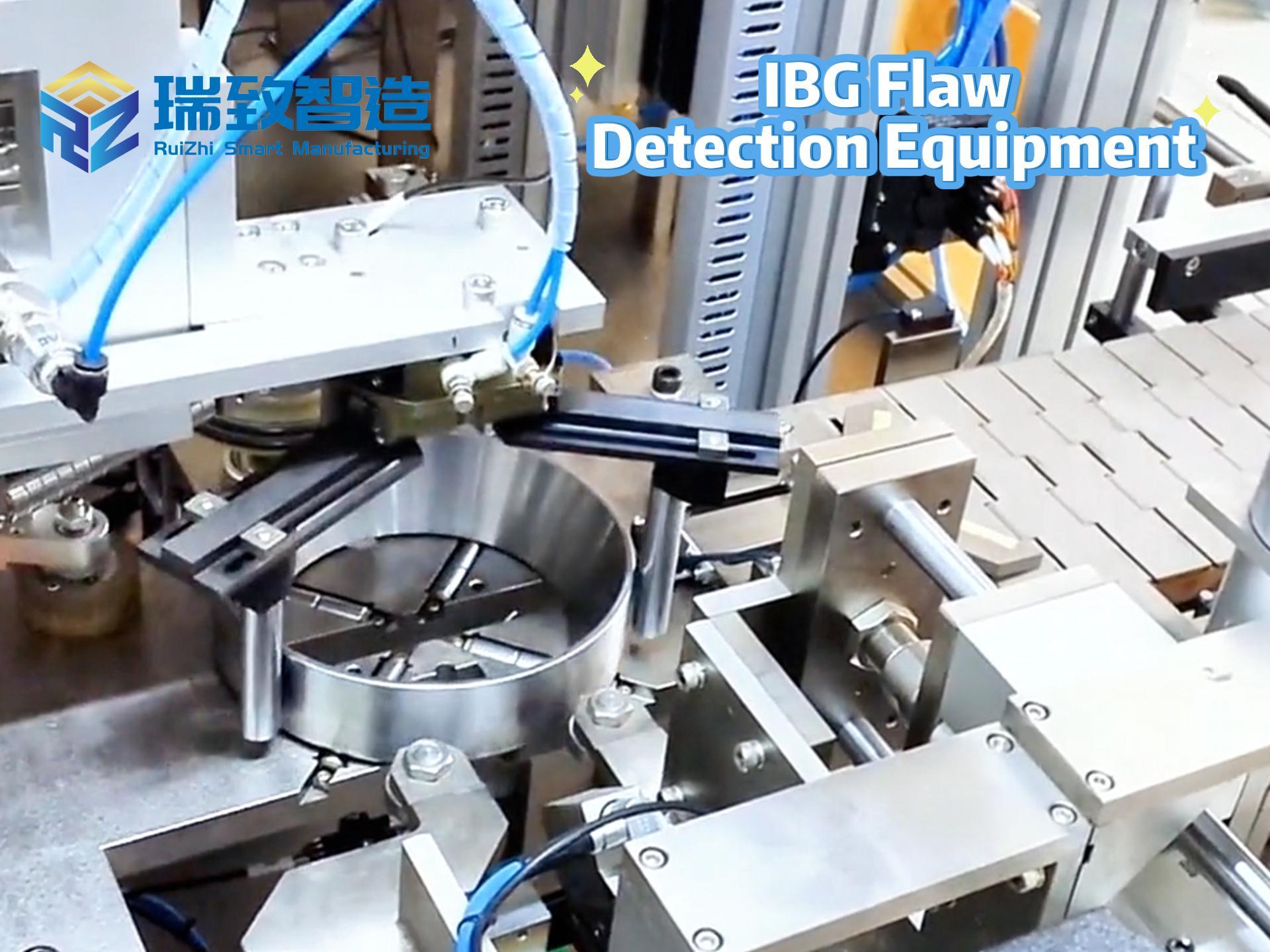
The manufacturing of BCI involves a variety of precision processing technologies and requires many types of processing equipment. Among the most widely used are:
Lithography machines: for fabricating patterned structures of microelectrode arrays and chips
Thin-film deposition equipment: for depositing biocompatible coatings on electrode surfaces
Micro-nano processing equipment: for precise etching and processing of micro-nano structures to achieve miniaturized electrodes and complex structures
The following categories of machine tools are also essential:
Precision Laser Processing Equipment
Laser cutters, laser welders, etc., used to process BCI shells, electrode leads, and other components. High-precision cutting and welding ensure sealing and reliability while reducing thermal damage to nerve tissue.
CNC Lathes and Milling Machines
Used to machine mechanical structural parts of BCIs, such as implant shells and brackets. They require high precision and surface quality to ensure stability and biocompatibility.
Grinding Machines
Used for fine grinding and polishing of electrode and chip surfaces, reducing surface roughness, improving electrical conductivity and biocompatibility, and ensuring flatness and precision.
Electrical Discharge Machining (EDM) Equipment
EDM machines can process electrodes and components made of high-hardness materials. They achieve high-precision machining of complex-shaped parts through electrical erosion, suitable for special material components in BCIs.
Precision Positioning and Motion Control Equipment
High-precision linear stages, multi-axis control systems, etc., used in BCI implantation surgical robots or experimental equipment to achieve sub-micron positioning accuracy and dynamic stability, ensuring electrodes can be accurately implanted into specific brain regions.
These equipment together form the core process equipment for BCI manufacturing, and their precision and performance directly determine the quality and reliability of brain-computer interfaces.