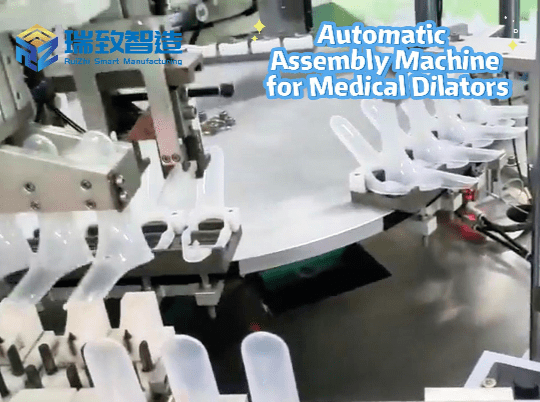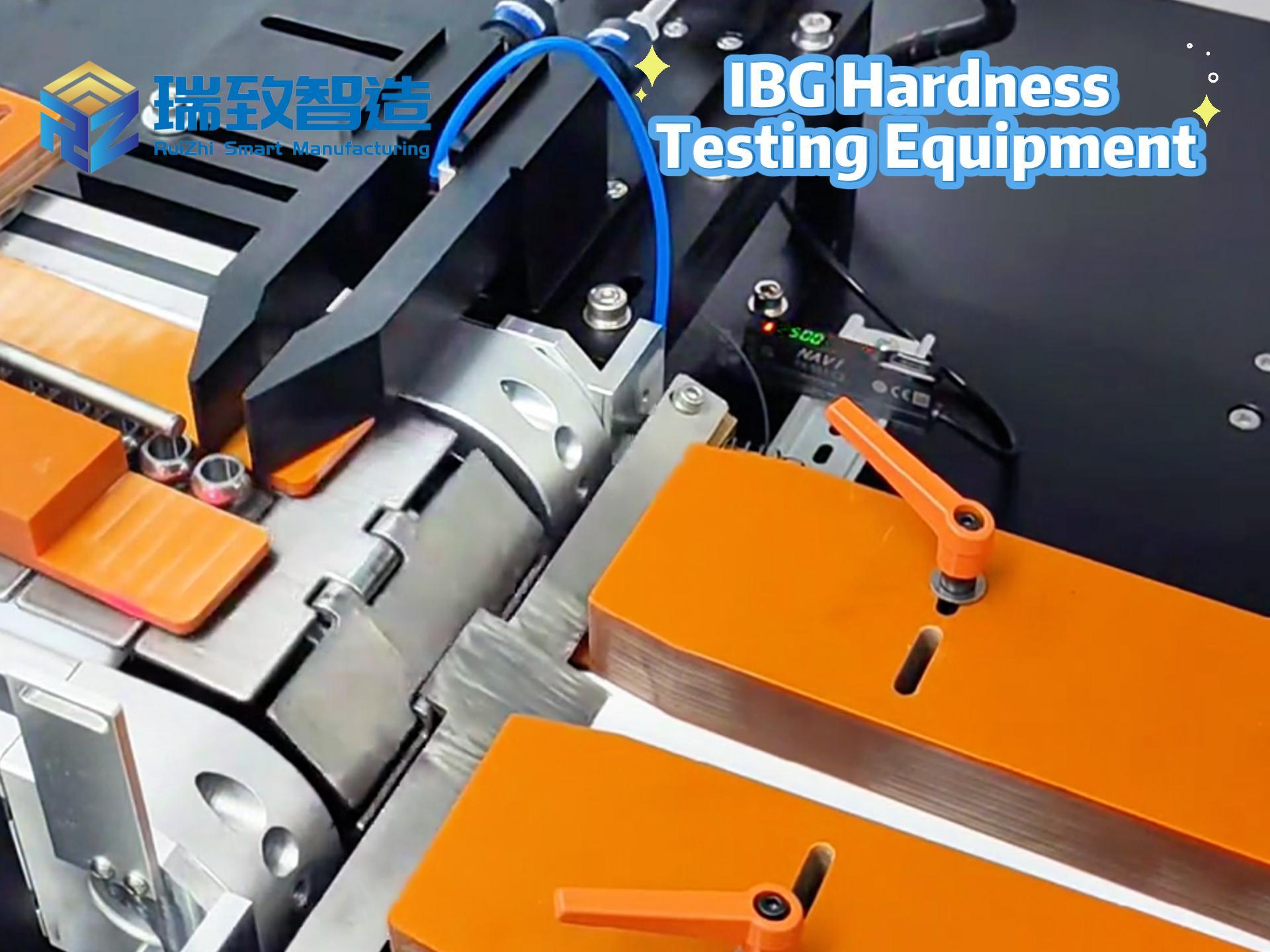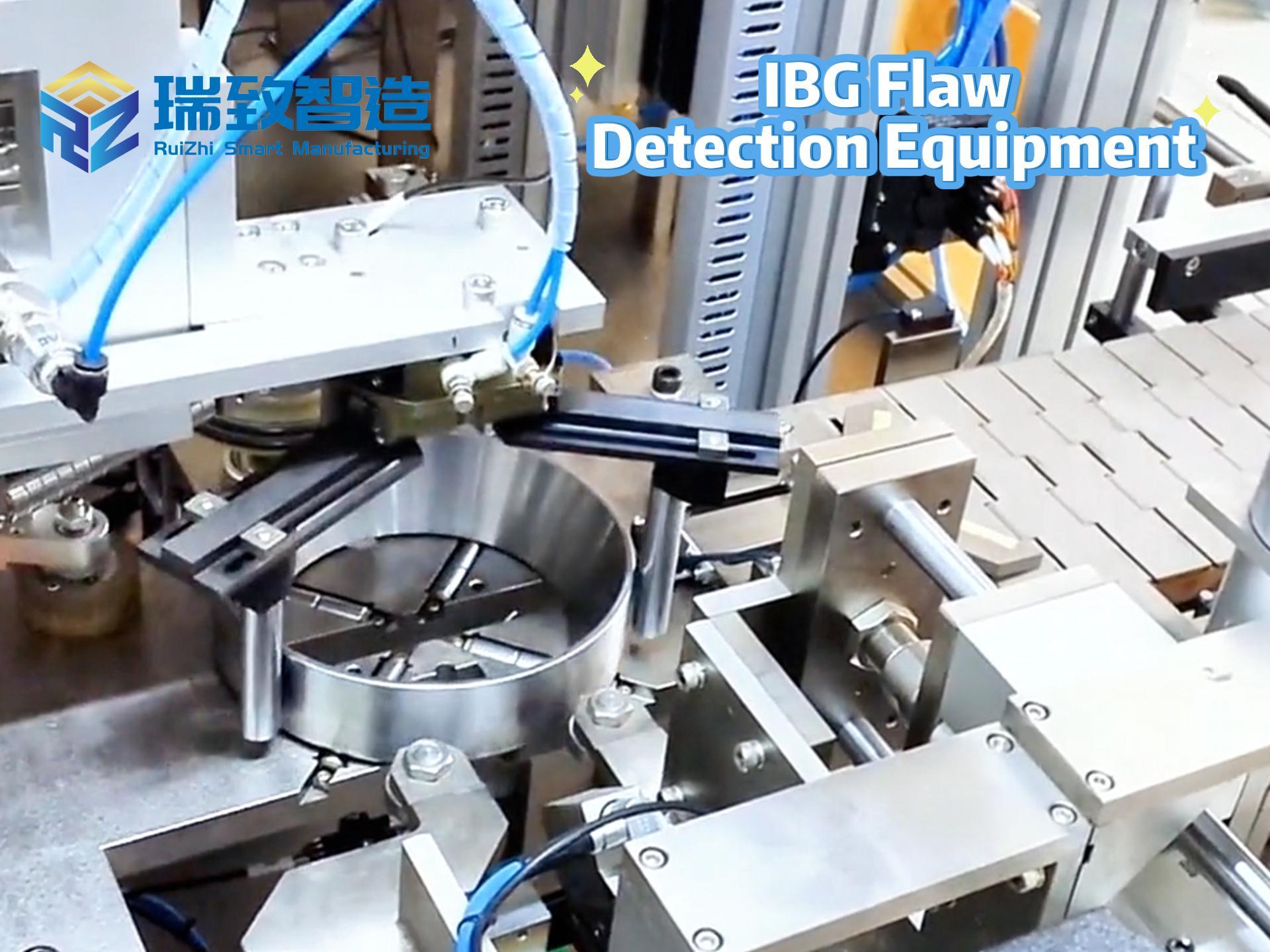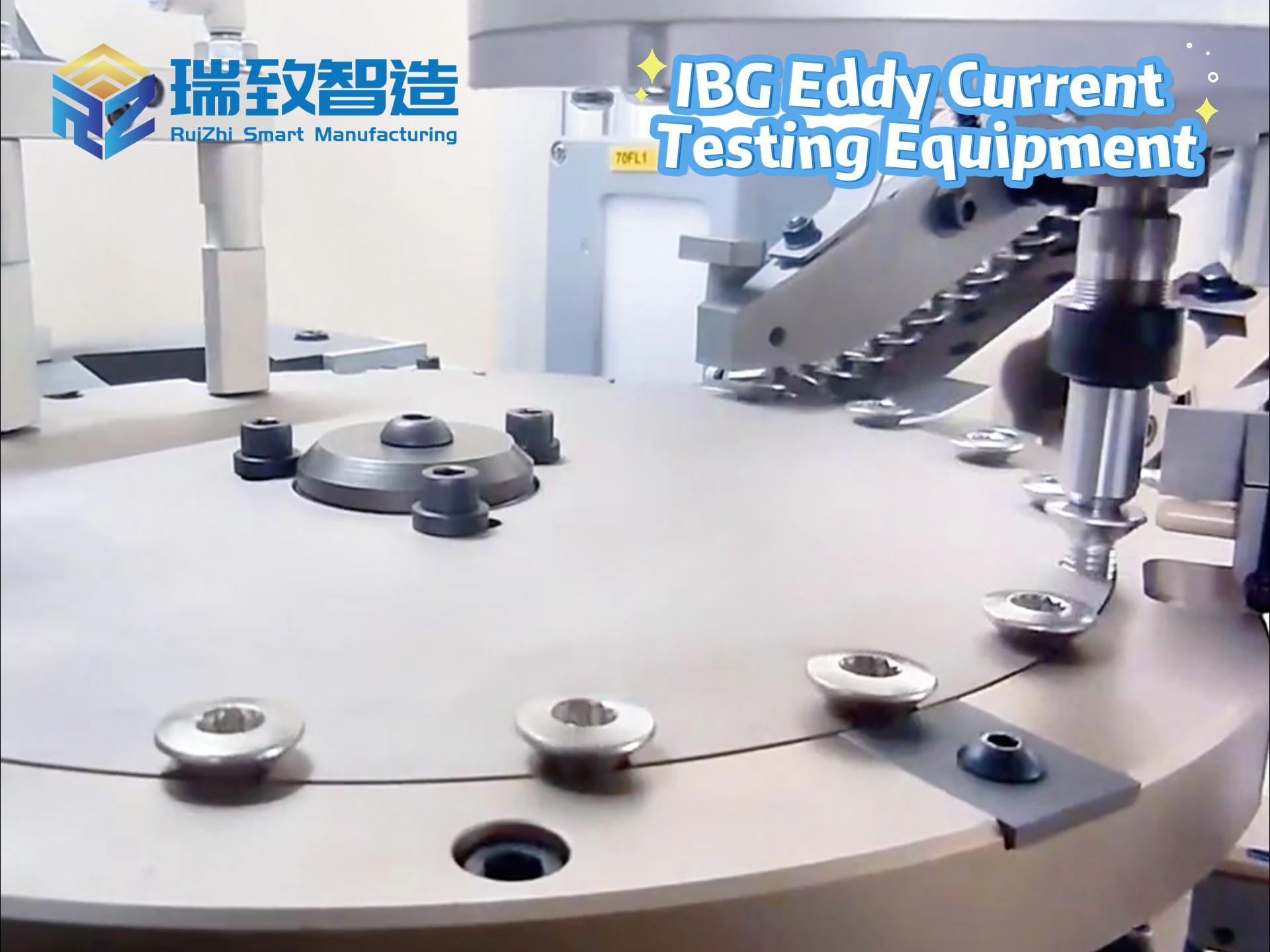
The global nebulizer market is accelerating — fast. Valued at USD 976 million in 2025, it is projected to reach USD 1.67 billion by 2034, growing at a CAGR of 6.3%. The medical-use nebulizer segment alone is expected to climb from USD 2.66 billion in 2025 to USD 4.65 billion by 2032, with a CAGR of 8.3%. Drivers include rising asthma and COPD prevalence, expansion of home healthcare, and post‑COVID pulmonary care demand. But for device manufacturers, growth brings a critical pressure point: assembly.
Here is the math most factories are living with. A typical manual nebulizer assembly line: eight to ten operators working eight hours, producing roughly 800 to 1,200 units per day. Defect rates run between 3% and 5% — nozzles misaligned, seals improperly seated, PCBA connections inconsistent. Rework consumes hours. Scrap eats margin. And every unit that ships with a latent defect is a regulatory risk waiting to happen, especially with FDA QMSR (effective 2026) and EU MDR tightening requirements around process validation and electronic records.
Now consider an automated alternative. A fully automatic nebulizer assembly machine, operating with two skilled technicians, delivers 3,000 to 5,000+ units per shift. First‑pass yield exceeds 99%. Material waste drops by 10‑15%. Investment recovery occurs within 12 to 24 months, followed by five to eight years of consistently lower unit costs.
The choice, from a purely operational standpoint, is not subtle.
Why Manual Assembly Struggles
Nebulizers are precision medical devices, not simple plastic enclosures. Performance hinges on nozzle alignment (±0.1 mm matters), reservoir seal integrity, and proper electronic connections for mesh‑driven or vibrating‑membrane circuits. Manual lines cannot maintain this consistency across shifts, operators, and fatigue cycles. Moreover, manual assembly lacks real‑time traceability — a critical gap when regulators ask for production data on a specific batch.
Servo‑Driven Precision: The Foundation
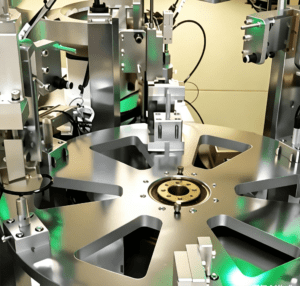
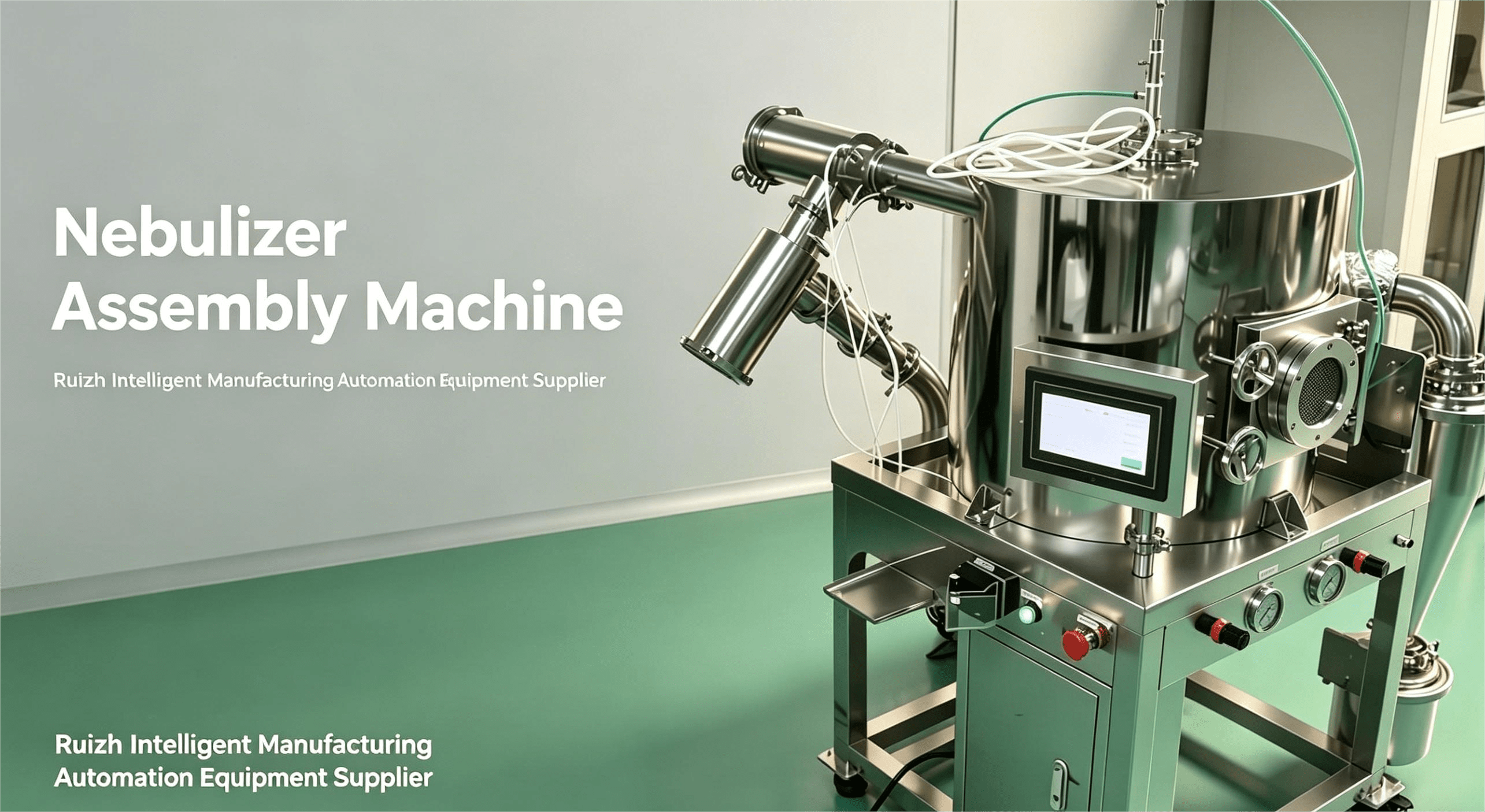
The Nebulizer Assembly Machine from RuiZhi Intelligent Manufacturing is engineered for exactly these demands. At its core: high‑response servo motors and smart sensors achieving ±0.15 mm positioning accuracy — the tolerance window required for reliable ultrasonic and mesh nebulizer assembly. For higher‑precision requirements, the platform can be configured to ±0.02 mm with real‑time force control.
Key processes — nozzle installation, sealing ring placement, reservoir assembly, PCBA docking, and shell fitting — are fully automated and continuously monitored. Smart sensors check component presence, orientation, and insertion force at every station, feeding data back to the adaptive control system in a closed‑loop configuration. If a parameter drifts, the system adjusts servo parameters or rejects the faulty component instantly.
Adaptive Quality Control with In‑Line Testing
Traditional end‑of‑line sampling catches defects after they have already been produced — often after significant material and labor have been invested. This machine integrates adaptive quality control at every stage, performing in‑line tests automatically: air leak tests to verify seal integrity, electrical continuity checks for PCBA connections, and assembly force verification for press‑fit components. The online pass rate consistently exceeds 99%, dramatically reducing rework and scrap.
For manufacturers subject to FDA QMSR and ISO 13485 audits, this real‑time, closed‑loop control provides an audit‑ready data trail — a significant compliance advantage that manual assembly cannot match.
Modular Tooling: One Line, Multiple Nebulizer Types
Nebulizers come in many configurations: jet nebulizers (still the largest segment by volume), ultrasonic nebulizers, and mesh nebulizers (the fastest‑growing segment due to portability and quiet operation). Reservoirs vary from 5mL to 10mL, with or without electronic controls. Manual changeovers between these variants are slow, error‑prone, and costly.
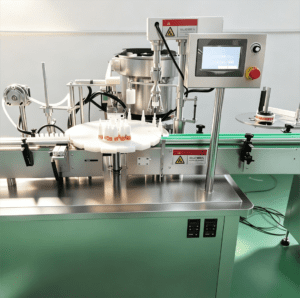
The machine employs modular tooling systems that enable full changeover between jet, ultrasonic, and mesh nebulizer specifications in under 30 minutes. Parameter memory stores setup data for multiple SKUs, allowing manufacturers to embrace high‑mix, small‑batch production without sacrificing efficiency.
Full Traceability: From Components to Finished Devices
Regulatory bodies increasingly demand end‑to‑end traceability. The machine integrates with Manufacturing Execution Systems (MES) through open communication interfaces, supporting FDA 21 CFR Part 11 and EUDAMED requirements for electronic records and audit trails. Every assembly parameter — force, torque, leak test results, component lot information — is logged and retrievable. This traceability layer is not optional for medical device manufacturers targeting regulated markets; it is a baseline requirement.
The ROI Equation
Let the numbers speak. A manual line: eight to ten operators, 800‑1,200 units per day, 3‑5% defect rate, high rework, significant scrap. An automated line with the Nebulizer Assembly Machine: two operators, 3,000‑5,000+ units per day, <1% defect rate, 10‑15% less material waste. Labor costs drop by 70‑80%. Most customers recover their capital investment within 12 to 24 months, after which per‑unit manufacturing costs fall substantially.
Regulatory Readiness as a Competitive Edge
With FDA QMSR taking full effect in 2026 and EU MDR enforcement already underway, manual assembly is becoming a regulatory liability. The QMSR’s emphasis on risk‑based process control and electronic documentation aligns directly with what an automated, sensor‑driven assembly line provides: adaptive control, real‑time monitoring, and complete data traceability. Manufacturers who automate now are not just improving efficiency — they are future‑proofing their regulatory compliance.
Designed for Medical‑Grade Production
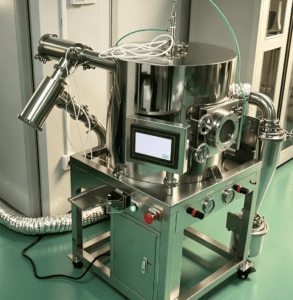
Every component of the machine meets medical device manufacturing standards. Core components are built from 316L stainless steel and food‑grade materials, compliant with GMP and ISO 13485 requirements. The machine supports 24‑hour continuous operation with intelligent fault self‑diagnosis, low failure rates, and straightforward maintenance. It integrates seamlessly with upstream filling equipment and downstream packaging lines for an end‑to‑end intelligent production ecosystem.
Why RuiZhi Intelligent Manufacturing
Since 2014, RuiZhi Intelligent Manufacturing has specialized in custom, non‑standard automation solutions for the global medical device industry. Our Nebulizer Assembly Machine is not an off‑the‑shelf product — it is engineered to match your specific product specifications, whether you manufacture jet, ultrasonic, or mesh nebulizers; portable or tabletop models; for hospitals or home healthcare. We design modular stations, adaptable tooling, and flexible transmission systems that support multi‑model production on a single line. From automatic feeding to leak testing to finished product sorting, we deliver turnkey solutions that reduce labor, improve quality, and accelerate regulatory compliance.
Ready to move beyond manual assembly? Contact RuiZhi Intelligent Manufacturing today.
#NebulizerAssembly
#MedicalDeviceAutomation
#RespiratoryCareManufacturing
#FDAQMSR2026
#SmartMedicalManufacturing