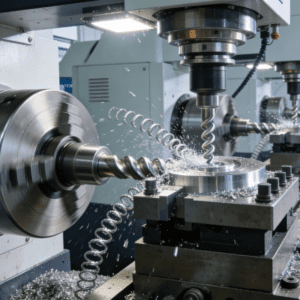
In the field of precision manufacturing, cutting is one of the core processing methods, applied across high-end sectors such as aerospace, semiconductors, medical devices, and automotive components. It is a critical technique for achieving micron and sub-micron level machining accuracy. By removing excess material and forming precise geometries through the relative motion between cutting tools and workpieces, cutting balances efficiency and precision. However, it also has certain limitations due to technical thresholds, cost control, and other constraints. This article comprehensively analyzes the strengths and weaknesses of cutting processes in precision manufacturing to clarify applicable scenarios and support production decision-making.
Core Advantages of Cutting Processes in Precision Manufacturing
Precision cutting has become the mainstream processing method thanks to its outstanding performance in accuracy, efficiency, and adaptability, meeting the strict requirements of high-end components and supporting multi-industry and multi-material applications.
High Machining Accuracy and Strong Dimensional Consistency
Supported by high-precision CNC equipment, specialized tools, and precise process control, precision cutting achieves micron and even sub-micron accuracy, with dimensional tolerances stably controlled within ±0.001 mm—far superior to traditional methods. It ensures consistent dimensions in mass production for complex surfaces, special-shaped structures, and miniature precision parts, effectively reducing scrap rates. It is especially suitable for semiconductor components and core medical device parts.
Wide Material Compatibility and Diverse Applications
Cutting processes feature strong material adaptability, efficiently processing metals (titanium alloy, stainless steel, aluminum alloy, copper alloy) and non-metals (engineering plastics, ceramics, composite materials). Unlike some precision processes limited to specific materials, precision cutting flexibly serves high-strength alloy machining in aerospace, lightweight components in automotive, and precision plastic parts in electronics.
High Efficiency and Excellent Mass Production Adaptability
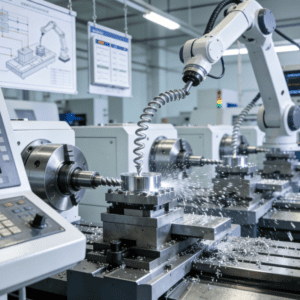
Compared with laser machining and EDM, precision cutting delivers higher efficiency, especially in batch production. Automated lines and multi-axis linkage equipment enable continuous and large-scale processing, greatly shortening production cycles. With mature workflows and flexible parameter adjustment, cutting supports both small-batch customization and large-scale standardized production.
Controllable Cost and Outstanding Cost-Effectiveness
Equipment, tools, and processes for precision cutting have formed a mature system, with transparent and controllable maintenance and tooling costs. For most precision parts, high-precision machining can be achieved without excessive investment in specialized equipment. Compared with high-end technologies such as nano-processing, it offers obvious cost advantages, especially for small and medium-sized precision manufacturers.
Excellent Surface Quality and Convenient Post-Processing
By optimizing tool angles, cutting speeds, and cooling methods, precision cutting produces smooth workpiece surfaces with roughness controlled between Ra 0.1–0.8 μm. Complex polishing is often unnecessary to meet assembly and performance requirements, reducing subsequent processes, lowering costs, and avoiding accuracy loss from secondary treatment.
Main Limitations of Cutting Processes in Precision Manufacturing
Despite significant advantages, cutting processes have unavoidable drawbacks due to technical characteristics, equipment demands, and application scenarios, often requiring complementary processes in extreme or specialized situations.
Extremely high requirements for equipment and tools, large upfront investment:High-precision machining depends on CNC centers (such as 5-axis machines) and specialized tools (diamond, CBN). These involve high purchase costs, difficult calibration, and high maintenance expenses, creating a high entry barrier for small and medium enterprises.
Limitations in processing complex and special-shaped structures:Cutting faces challenges with extremely complex shapes, deep cavities, and micro holes. Tool path constraints limit access to deep internal areas, often causing wear and reduced accuracy. Complementary processes such as 3D printing or EDM are usually required, increasing complexity.
Rapid tool wear affecting stability:Direct contact and high-speed friction generate high temperatures, accelerating tool wear—especially when machining high-strength, high-hardness materials like titanium alloy and ceramics. Frequent tool replacement raises consumable costs, interrupts production, and may reduce dimensional stability after recalibration.
High demand for professional operators:Performance relies heavily on skilled personnel capable of operating CNC systems, optimizing parameters, selecting tools, and troubleshooting anomalies. There is a shortage of qualified technicians and high training costs, restricting widespread application.
Material removal leads to relatively low utilization rate:As a material removal process, cutting inevitably produces waste, especially when processing expensive metals and high-end composites. Compared with additive manufacturing, it has lower material efficiency and weaker competitiveness in high-value material applications.
Rational Application of Cutting Processes for Scenario Matching
In summary, cutting processes in precision manufacturing are a double-edged sword: their high precision, efficiency, and adaptability make them the first choice for most precision parts, especially for mass production, multi-material machining, and high-accuracy conventional scenarios. However, their high investment, structural limitations, and tool wear mean they must be combined with other processes for extremely complex structures or high-value materials.
For precision manufacturing enterprises, the optimal strategy is to select processes based on product accuracy, material characteristics, production scale, and budget. Cutting remains highly cost-effective for most standard precision applications. For complex structures or valuable materials, combining cutting with 3D printing, EDM, and other technologies can maximize efficiency, accuracy, and economy.
Automated assembly mechanical connection equipment
Artificial intelligence automated assembly mechanical connection robot