According to media reports on March 1, the Langjiang Pumped Storage Power Station – a project tasked with achieving national breakthroughs in energy technology – is rapidly moving from blueprint to reality in Zhaoqing, Guangdong Province.
As a supporting project for the national key technical equipment program (the first set of its kind in China’s energy sector), the station will install China’s first large‑scale domestically built variable‑speed pumped storage unit, marking a major milestone in China’s high‑end equipment manufacturing industry.
Key Project Construction Enters Full Mechanical & Electrical Installation
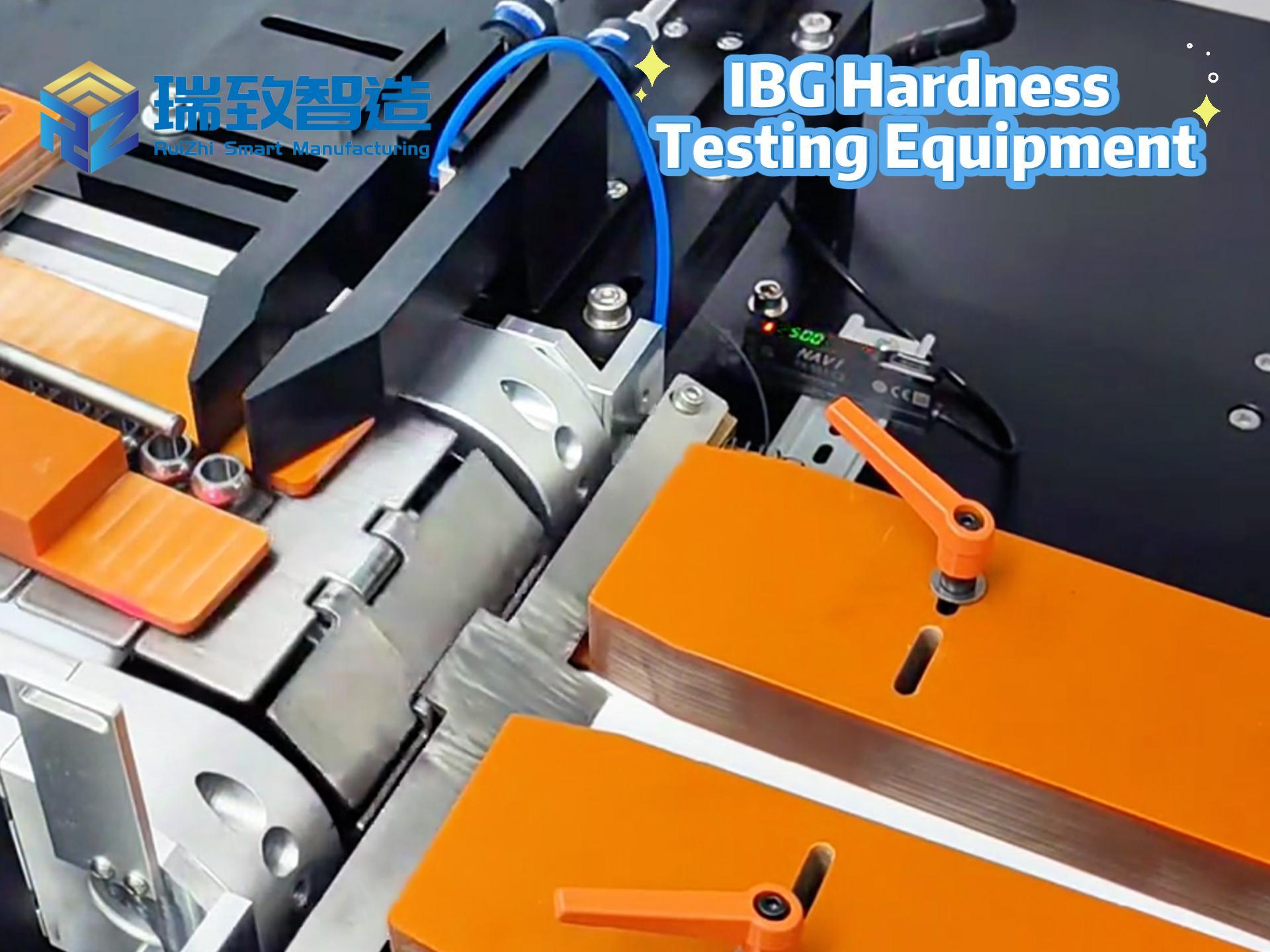
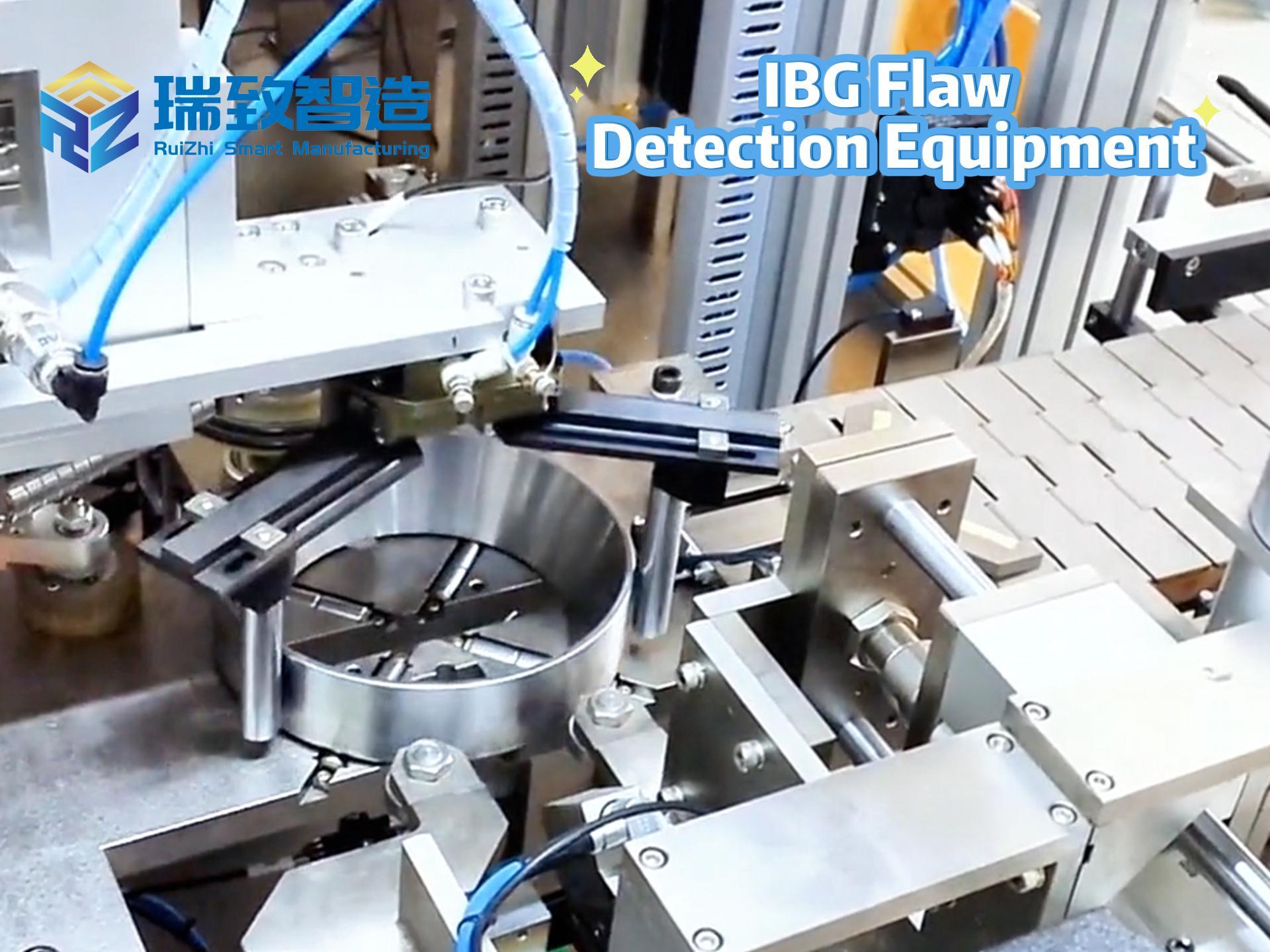
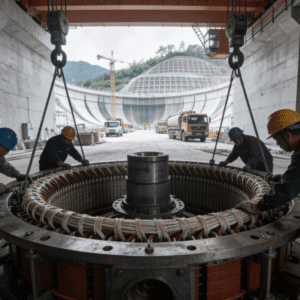
At present, the underground cavern complex of the power station has been fully excavated, and all structural concrete pouring has been completed. Mechanical and electrical installation is now proceeding at full speed. The rotor core, a core component of the variable‑speed pumped storage unit, is precisely stacked from more than 60,000 silicon steel sheets, each only 0.65 mm thick. This places extremely high demands on manufacturing processes, representing not only a technical difficulty in equipment production but also a top priority for domestic substitution.
Breakthroughs in Core Components End Foreign Technological Monopoly
Notably, core systems such as the excitation system of this large domestic variable‑speed unit have been independently developed. In particular, the ultra‑large‑diameter rotor retaining ring – made of material with a yield strength exceeding 750 MPa – is now 100% domestically manufactured. This achievement fills China’s manufacturing gap in ultra‑large‑diameter non‑magnetic metal retaining rings and has successfully broken the long‑term foreign technological monopoly.
A Clean Energy Hub to Power the Greater Bay Area’s Green Transition
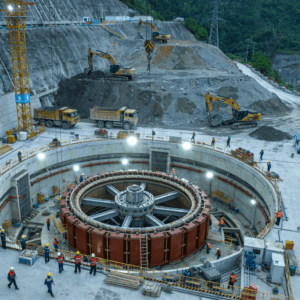
From an aerial view, two giant reservoirs with a height difference of more than 430 meters have taken shape. Excavators and loaders shuttle back and forth across the site, accompanied by the constant roar of machinery, painting a vibrant picture of intensive construction.
Once fully operational, the power station will be able to consume 2.16 billion kWh of clean energy annually, equivalent to meeting the annual electricity demand of about 980,000 residential users. The completion of this clean energy hub will provide strong momentum for the comprehensive green transition of economic and social development in the Guangdong‑Hong Kong‑Macao Greater Bay Area.