
MIIT Approves Two L3 Autonomous Driving Vehicle Models
On December 15, Gasgoo learned that the Ministry of Industry and Information Technology of the People’s Republic of China (MIIT) has officially approved two L3 autonomous driving vehicle models.
First is the Changan SC7000AAARBEV pure electric sedan, which can realize autonomous driving functions in single lanes of expressways and urban expressways under traffic congestion conditions (maximum speed 50 km/h). Currently, this function is only available on sections including the Inner Ring Expressway and New Inner Ring Expressway (Gaotan Yan Interchange – Laijiaqiao Interchange) as well as Yudu Avenue (Renhe Interchange – Airport Interchange) in Chongqing.
Second is the Arcfox BJ7001A61NBEV pure electric sedan, which supports autonomous driving in single lanes of expressways and urban expressways (maximum speed 80 km/h). At present, this function is restricted to sections such as the Beijing-Taipei Expressway (Jiugong New Bridge – Northern Airport Expressway), Northern Airport Expressway (Daqu South Bridge – Daxing Airport Expressway) and Daxing Airport Expressway (Southern Sixth Ring Road – Northern Airport Expressway) in Beijing.
Xiaozhi’s Comment: The approval of L3 autonomous driving seems like a big step forward, but in reality, key issues such as restricted driving sections and take-over liability have just come to the surface.
XPeng Motors Executive: Second-Generation VLA Expected to Be Fully Equipped on Vehicles in Q1 Next Year
On December 16, media reports stated that XPeng Motors has obtained an L3 autonomous driving road test license in Guangzhou and launched regular L3 road tests. The license is mainly for conducting conditional autonomous driving tests on high-speed and expressway sections designated for intelligent connected vehicle testing in Guangzhou.
The report pointed out that at the 2025 Technology Day, XPeng Motors officially released the second-generation VLA with L4-level capabilities, which is expected to be mass-produced and installed on vehicles in the first quarter of 2026. In 2026, XPeng Motors plans to launch models with both hardware and software reaching L4-level autonomous driving standards.
In response to this news, Vice President of XPeng Motors, known online as “Thomas Electric Train”, reposted the report and revealed: “Looking forward to the surprise in the first quarter of next year, when it will be fully equipped on our vehicles. In fact, some people can officially experience this version even earlier.”
It is reported that different from the traditional “Vision-Language-Action” architecture of VLA models, XPeng’s second-generation VLA eliminates the need for language translation and achieves end-to-end direct output from visual signals to action commands.
The second-generation VLA is also XPeng’s first mass-produced physical world large model. It is not only an action generation model, but also a physical world model for understanding and deduction, providing a unified intelligent base for AI-powered vehicles, humanoid robots and flying cars. XPeng Motors has successfully installed the second-generation VLA with billions of parameters on its Ultra-version models with 2250 TOPS computing power. Meanwhile, the data training volume for the second-generation VLA is close to 100 million clips.
In addition, based on the second-generation VLA, XPeng launched “Xiao Lu NGP”, which increased the average take-over mileage in complex narrow roads by 13 times; the mapless autonomous driving assistance function Super LCC and human-machine co-driving can be activated globally without relying on navigation, demonstrating the model’s generalization learning ability and intelligence level.
Xiaozhi’s Comment: Whether the “intelligent emergence” of the model can cover the extreme uncertainties of complex road conditions still needs to be tested through real-world road trials.

Daxiao Robotics Makes Official Debut and Secures Multiple Cooperation Agreements
On December 18, Daxiao Robotics held a brand launch conference and made its official debut.
In terms of core business, Daxiao Robotics mainly focuses on using an innovative R&D paradigm, an innovative data collection paradigm, and the “Kairos” World Model 3.0 to accurately analyze and respond to the dual demands of the robotics industry for technological breakthroughs and commercial implementation at the current stage, accelerating the transformation of cutting-edge technologies into implementable and reusable solutions.
Specifically, at this launch conference, Daxiao Robotics unveiled several cutting-edge technologies, including the Embodied Super Brain Module A1 that enables embodied agents to possess autonomous spatial intelligence, the ACE embodied R&D paradigm, and the first open-source and commercially applicable Kairos World Model 3.0. Among them, the Embodied Super Brain Module A1 is equipped with an innovative vision-only mapless end-to-end VLA embodied intelligence model, enabling embodied intelligence to break free from the reliance on pre-collected maps and quickly adapt to complex unfamiliar environments.
Daxiao’s environmental data collection technology adopts a first-person perspective combined with a third-person perspective to build a “human-centric” efficient and high-quality data collection model—the ACE technology paradigm. It aims to solve the difficulty that traditional real-robot data collection cannot support large-scale training, providing a sufficient data foundation for model training.
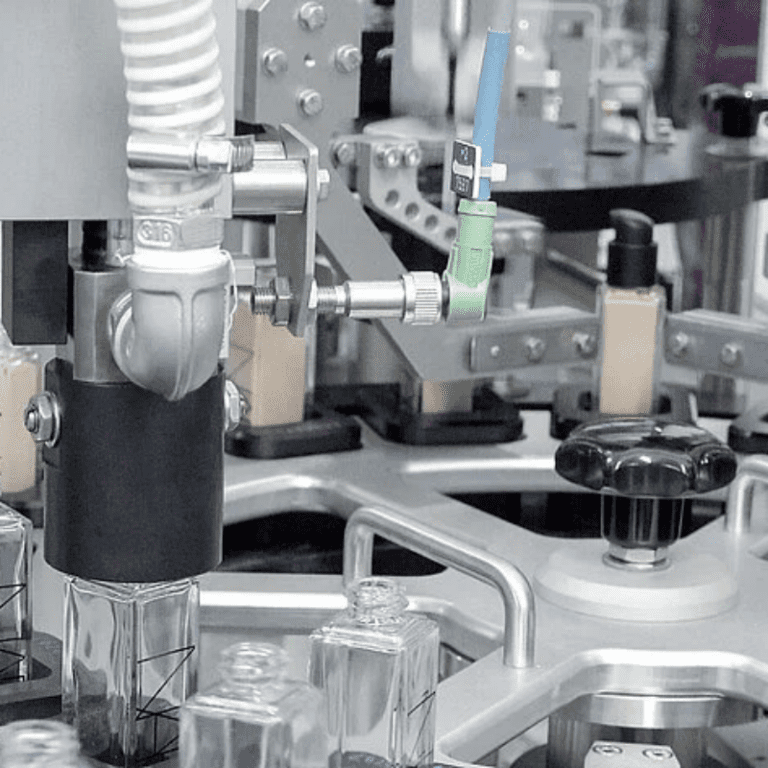
The new-generation “Kairos” World Model (Kairos 3.0) has built integrated capabilities of “multimodal understanding-generation-prediction” for embodied intelligence scenarios, supporting scene modeling and interaction generation in multi-view, long-time-sequence and complex dynamic environments. For instance, in industrial scenarios where robots collaborate with flexible vibratory feeders, Kairos 3.0 can accurately simulate the dynamic material conveying process of the feeder and optimize the robot’s grasping and coordination strategies, effectively enhancing the operational efficiency of automated production lines.
Along with the release of the above new technologies, Daxiao Robotics also announced cooperation agreements with Agibot and Biren Technology respectively.
Xiaozhi’s Comment: By investing in Daxiao, SenseTime Group is not only betting on a new company, but also fighting a key battle to maintain its leading position in the AI 3.0 era.
Songyan Power’s “Bumi” Secures 1,000-Unit Order
Recently, Songyan Power announced the signing of a strategic cooperation agreement with Huichen Co., Ltd., along with a 1,000-unit order for its newly launched Bumi humanoid robot. At the same time, the two parties also declared that they will carry out in-depth business cooperation to jointly build an intelligent ecosystem for industry applications.
As a high-performance humanoid robot priced at around 10,000 yuan, “Bumi” was officially released at the end of October. With a height of 94 cm and a weight of only 12 kg, the product supports graphical programming and voice interaction, featuring flexibility, ease of use, compactness, light weight, safety and strong interactivity.
According to official introduction, “Bumi” is mainly targeted at technology enthusiasts, teenage programming learners and family users, while also providing kit and curriculum solutions for educational institutions and maker spaces. To this end, “Bumi” is designed with an open motion control interface and a graphical programming platform, deeply integrating hardware and content ecology to bring users a more creative learning and interactive experience.
Despite being positioned as a high-performance humanoid robot, “Bumi” is priced at only 9,998 yuan. Songyan Power pointed out that the disruptive pricing of “Bumi” is attributed to the company’s efforts in independent R&D, material application and supply chain management. “Bumi” not only adopts composite materials to achieve lightweight design and optimizes structural design, but also has a high proportion of independent R&D and localized production for core components.
Thanks to these multiple advantages, “Bumi” has quickly received positive market feedback since its launch. According to official data released earlier, sales of “Bumi” exceeded 200 units within 3 hours after pre-sales officially opened on the evening of October 23. Up to now, the cumulative online and offline orders for “Bumi” have reached several thousand units. Among them, the first batch of orders from this cooperation will be delivered on March 1, 2026.