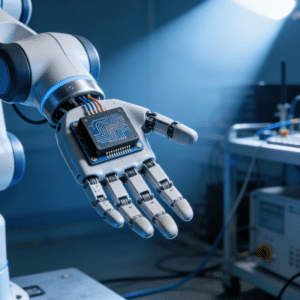
From laboratory prototypes to gradual commercial mass production, humanoid robots are emerging as a core track in global high-end manufacturing and artificial intelligence, sparking a new round of technological and industrial revolution. As the ultimate carrier of embodied intelligence, for humanoid robots to achieve human-like walking, manipulation, interaction, and environmental adaptability, they rely on a comprehensive, high-precision, and highly stable perception system. Sensors serve as the “neural tentacles” connecting robots to the physical world, and are core components that determine a robot’s level of intelligence, operational precision, and application scenarios.
As the mass production of humanoid robots accelerates and application scenarios continue to expand, the sensor industry has completely broken through traditional application boundaries. It now faces all-round opportunities including market scale expansion, accelerated technological iteration, and deepened domestic substitution, making it the most promising incremental track in the high-end sensor sector.
The Cornerstone of Humanoid Robot Industrialization
Compared with traditional industrial robots and service robots, the “human-like” nature of humanoid robots imposes far stricter requirements on perception systems than ever before. Traditional robots only need to perform single, repetitive positioning tasks with simple perception needs and low precision demands. In contrast, humanoid robots must simulate multiple human sensory functions such as vision, touch, force perception, hearing, and posture sensing. They need to accurately perceive their own joint positions, motion postures, and force states, while also capturing real-time external environmental data including terrain, obstacles, material properties, and contact force, to achieve compliant control, precise operation, and safe interaction.
In terms of cost structure, sensors have become one of the highest-cost core components in humanoid robots. Authoritative industry data shows that sensors account for up to 33.4% of the BOM cost in mainstream humanoid robots, far exceeding core transmission components such as motors and reducers. A single robot can be equipped with dozens or even hundreds of sensors, covering the entire body including joints, torso, limbs, and head. It can be said that the technological maturity, cost controllability, and supply stability of sensors directly determine whether humanoid robots can achieve large-scale mass production and commercial deployment. Consequently, the sensor industry stands at the forefront of the humanoid robot boom, becoming an indispensable core link in the industrial chain.
Unlocking a 100-Billion-Level Incremental Market Space
The accelerated industrialization of humanoid robots has directly driven incremental demand in the sensor industry, completely reshaping the traditional market landscape of consumer electronics, automotive electronics, and industrial control, and opening up a new growth pole. Data estimates from multiple securities firms and industry institutions indicate that the global humanoid robot sensor market is on the eve of rapid growth and will experience exponential growth over the next five years.
The industry widely predicts that by 2030, the global mass production scale of humanoid robots will exceed one million units, with the corresponding overall sensor market size expected to surpass 100 billion yuan. As a core region for global humanoid robot industry layout, China’s related sensor market will exceed 10 billion yuan, with an average annual compound growth rate far exceeding that of the traditional sensor market. At present, humanoid robots are still in the stage of small-batch trial production and scenario verification, and sensor demand is already rising rapidly. With subsequent reductions in mass production costs and the penetration of application scenarios from industrial and special fields to consumer and service sectors, the number of sensors per robot and overall market demand will continue to climb, forming sustained and stable growth momentum and fully revitalizing the entire sensor industry.
In contrast to the saturated competition in the traditional sensor market, the humanoid robot track represents a brand-new blue ocean without excessive internal competition in the stock market, accompanied by extremely rigid demand. Both leading manufacturers’ mass production layouts and small and medium-sized enterprises’ R&D iterations rely on the support of high-performance sensors. This brings stable order demand and profit margins to sensor enterprises, driving the rapid growth of the overall industry scale.
Core Sensor Categories Witness Explosive Demand
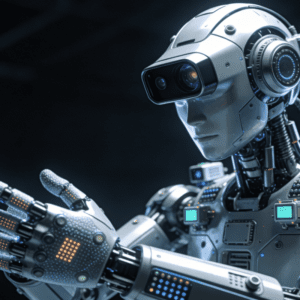
The perception system of humanoid robots is divided into two major systems: internal state perception and external environment perception, giving rise to multiple core sensor segments including vision, force, touch, posture, and position. Each segment features unique technical requirements and vast market space, pushing the sensor industry to upgrade from single-category competition to diversification and specialization.
The Core of Perception Systems, with 3D Upgrading as the Mainstream
Vision sensors act as the “eyes” of humanoid robots, responsible for core functions such as environmental recognition, obstacle avoidance, object positioning, and face recognition, contributing over 70% of external perception information, making it the most market-elastic segment. Traditional 2D vision can no longer meet the 3D spatial operation needs of humanoid robots. 3D vision sensors (stereo vision, ToF, structured light, LiDAR) have become the mainstream configuration, offering advantages such as depth perception, high-precision positioning, and low-light environment adaptability.
Currently, leading humanoid robot manufacturers generally adopt a combined solution of multi-eye vision and depth cameras, driving a surge in demand for 3D vision sensors. With technological iteration, vision sensors are upgrading toward miniaturization, low power consumption, and high resolution, while costs continue to drop from the thousand-yuan level to the hundred-yuan level, further promoting large-scale applications and bringing massive orders and technological upgrading opportunities for vision sensor enterprises.
The Core of Precision Force Control, with Domestic Breakthroughs in the High-End Track
Force sensors are core components for humanoid robots to achieve compliant operation and precise work. Among them, six-axis force sensors, which can measure three-dimensional forces and three-dimensional torques simultaneously, are standard configurations in key parts such as joints, wrists, and ankles. They feature extremely high technical barriers and are among the highest value-added sensor categories. For humanoid robots to complete precise operations such as grasping, assembly, and grinding, they must rely on force sensors to provide real-time force feedback for flexible control, avoiding damage to objects or their own components.
Previously, the global six-axis force sensor market was long monopolized by overseas enterprises, with foreign brands accounting for nearly 70% of the domestic market. With the accelerated localized layout of the humanoid robot industry, domestic force sensor enterprises have accelerated technological breakthroughs, catching up in core areas such as elastomer structure design, calibration, and decoupling algorithms, and gradually entering the supply chains of leading manufacturers, representing huge potential for domestic substitution. By 2030, the six-axis force sensor market is expected to exceed 10 billion yuan, becoming a core track for high-end breakthroughs in the sensor industry.
Tactile Sensors: Empowered by Electronic Skin, a New Blue Ocean for Flexible Perception
Tactile sensors are known as the “electronic skin” of humanoid robots, mainly used to perceive subtle information such as contact pressure, temperature, and material texture, enhancing the robot’s interaction safety and operational precision, and are key to achieving human-like interaction. Compared with traditional rigid sensors, flexible tactile sensors can fit the robot’s limbs and palms, adapt to complex curved surfaces, and feature high sensitivity, flexibility, stretchability, and anti-interference capabilities, widely used in dexterous hands and torso.
At present, the technical route of tactile sensors has not yet been fully finalized, with multiple routes such as piezoresistive, capacitive, and piezoelectric running in parallel, and the industry pattern remains undetermined, providing opportunities for domestic enterprises to overtake in curves. With the maturity of electronic skin technology, the number of tactile sensors per robot will continue to increase, and the market size is expected to exceed 10 billion yuan by 2030, becoming a new growth engine for the sensor industry.
Rigid Demand for Posture Control, with Large-Scale Volume Growth Expected
Posture and position sensors such as Inertial Measurement Units (IMUs) and encoders are mainly used to monitor the humanoid robot’s own motion posture, joint position, and speed, ensuring walking balance and posture stability, and are core components for bipedal locomotion. These sensors feature miniaturization, low power consumption, and high reliability, belonging to rigid-demand categories with a large number per unit. With the large-scale mass production of humanoid robots, they will usher in sustained volume growth and steady market expansion.
Driving the High-End and Intelligent Transformation of the Sensor Industry
The stringent application requirements of humanoid robots have forced the sensor industry to accelerate technological iteration, break away from homogeneous competition in traditional low-end products, and upgrade toward high precision, miniaturization, flexibility, integration, low power consumption, and anti-interference, driving the entire industry toward high-end transformation.
In the past, the domestic sensor industry long focused on the low-end market, relying on imports for high-end products and facing shortcomings in core technologies and processes. The rise of the humanoid robot track has provided sensor enterprises with application scenarios and financial support for R&D. Enterprises have increased R&D investment to tackle key problems in core materials, chip design, manufacturing processes, and algorithm integration, continuously improving sensor performance. Meanwhile, the demand for multi-sensor fusion perception in humanoid robots has driven sensors to evolve from single-function to multi-functional integration, enabling collaborative processing of vision, force, touch, and other data, further enhancing product added value and core competitiveness.
This technological iteration not only meets the application needs of humanoid robots but also feeds back into the traditional sensor market, the overall technical level of the domestic sensor industry, breaking the overseas high-end monopoly, and achieving a shift from “low-end volume” to “high-end success”.
Local Sensor Enterprises Embark on a Golden Period of Development
With the accelerated concentration of core production capacity and R&D resources of the global humanoid robot industry in China, coupled with the strategic demand for independent control of the domestic supply chain, local sensor enterprises face unprecedented opportunities for domestic substitution. Compared with overseas sensor enterprises, domestic enterprises boast advantages such as fast response speed, cost controllability, strong customized service capabilities, and supply chains close to manufacturers, making them more adaptable to the R&D iteration and mass production needs of humanoid robots.
At present, a number of domestic sensor enterprises have achieved technological breakthroughs in segments such as vision, force, touch, and inertial sensing, successfully entering the supply chain systems of humanoid robot manufacturers and achieving small-batch supply. With the expansion of humanoid robot mass production scale, local sensor enterprises will deeply bind with leading customers, achieve synchronous improvement in technology, production capacity, and market, and gradually seize market share from overseas enterprises. Especially in the middle and high-end sensor fields, the process of domestic substitution will continue to accelerate, penetrating from low-end supporting to core components, and building an independently controllable humanoid robot sensor supply chain.
Driving the Coordinated Development of Upstream and Downstream
The opportunities brought by humanoid robots to the sensor industry are not limited to the sensor manufacturing link, but extend to the entire industrial chain including upstream core materials, chips, manufacturing equipment, and downstream system integration, algorithm optimization, and scenario adaptation, forming a synergistically developed industrial ecosystem.
In the upstream sector, demand for core components such as flexible materials, high-precision strain gauges, sensor chips, and MEMS devices has surged, driving technological upgrading and capacity expansion of related enterprises. In the midstream sector, sensor enterprises accelerate large-scale production, process optimization, and cost control to enhance product competitiveness. In the downstream sector, system integration enterprises focus on the development of multi-sensor fusion algorithms to improve the overall performance of perception systems, adapting to diversified scenarios such as industry, medical treatment, housekeeping, and special operations. This whole-industry-chain coordinated development will further amplify the opportunities in the sensor industry, form industrial agglomeration effects, and foster a group of globally competitive sensor leading enterprises.
Core Directions for Industry Development
Although humanoid robots have brought huge opportunities to the sensor industry, the sector still faces challenges such as certain core technical barriers, high mass production costs, unproven reliability and stability, and an imperfect standard system. For sensor enterprises to seize this round of industrial dividends, they need to focus on three core directions: first, deepen segmentation tracks, tackle core technologies, and improve product precision and reliability; second, accelerate large-scale mass production, optimize manufacturing processes, drive cost reduction, and adapt to the mass production needs of manufacturers; third, strengthen cooperation with manufacturers and research institutions, focus on scenario-based customized R&D, and achieve deep integration of technology and application.
Conclusion
As the next generation of intelligent terminals, the industrialization of humanoid robots has entered a critical window period. As a core supporting industry, the sensor sector is embracing a 100-billion-level market blue ocean. This is not only an expansion of market scale, but also an all-round opportunity for technological upgrading, domestic substitution, and ecological construction, which will completely reshape the global sensor industry landscape. For local sensor enterprises, seizing the boom of the humanoid robot industry, focusing on core technological breakthroughs and market layout, is expected to achieve a leap from follower to leader, propelling China’s sensor industry into the global high-end array and becoming a core growth pole in the high-end manufacturing sector.