Core Enablers: Programming, Algorithms and Control Principles
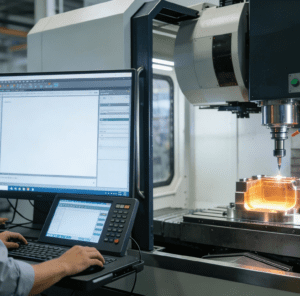
The core of precision digital manufacturing lies in the precise control of the machining process through programming. By virtue of complex algorithms and advanced control principles, it achieves a seamless connection from design to finished products, laying a solid foundation for the production of high-precision products.
Programming plays a vital role in precision digital manufacturing. First of all, programmers need to convert design drawings into machine-understandable instructions using specific programming languages and software according to product design requirements. These instructions include the movement trajectory of machining tools, cutting parameters, feed rate and so on. Accurate control of these parameters ensures the accuracy and stability of the machining process.
In terms of algorithms, precision digital manufacturing adopts a variety of advanced algorithms to achieve accurate machining. For example, the path planning algorithm can determine the optimal movement path of the machining tool on the workpiece to maximize machining efficiency and precision. The interpolation algorithm is used to generate a series of intermediate positions between two known positions, enabling the machining tool to move smoothly, thereby reducing machining errors. In addition, the error compensation algorithm can monitor errors in the machining process in real time and adjust machining parameters to ensure product precision.
Control principles are also a key link in precision digital manufacturing. A closed-loop control system is usually adopted, which uses sensors to monitor various parameters in the machining process in real time, such as position, speed and force, and feeds these parameters back to the controller. The controller compares the feedback information with the preset target values, then calculates the control signals and drives the actuator to adjust the machining process. This closed-loop control can ensure that the machining process is always in a stable and precise state.
Industry Application: Arie Precision Machinery in Medical Device Manufacturing
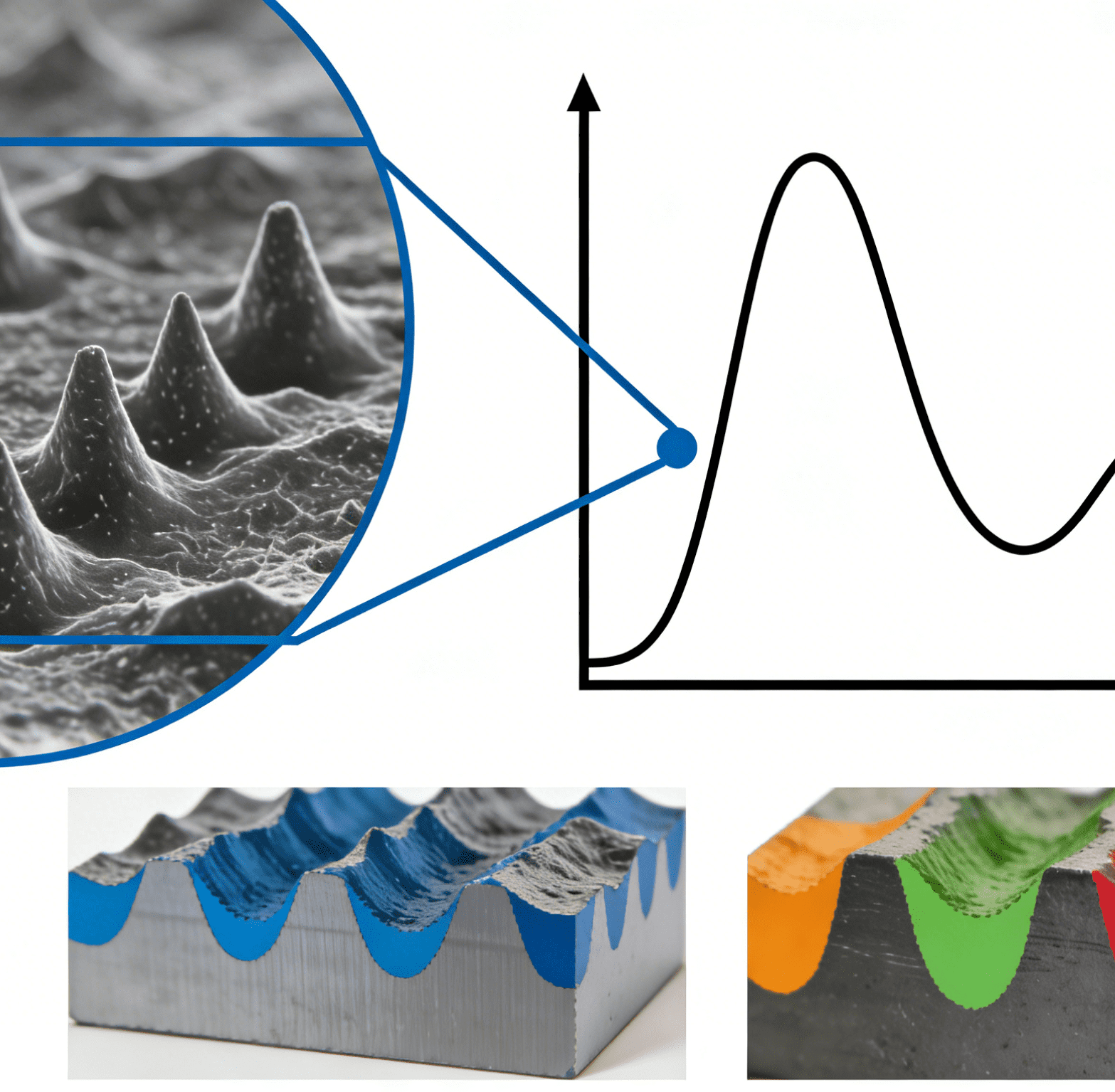
As a leader in the field of precision digital manufacturing, Arie Precision Machinery plays an important role in the medical device and parts industry. In the manufacturing of dental equipment and supplies, the precision requirement is extremely high, because any tiny error may affect the patient’s comfort and treatment effect. With advanced programming technology and precision machining equipment, Arie Precision Machinery can produce high-precision products such as dental drills and crowns. These products not only have high dimensional accuracy, but also good surface quality, which can meet the needs of dentists and patients.
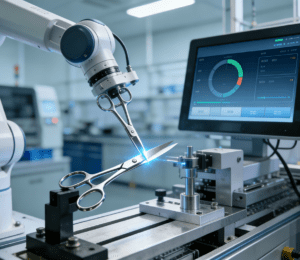
In the manufacturing of medical devices, high precision and reliability are also required. Medical devices are usually directly related to patients’ lives and health, so the quality requirements for products are extremely strict. Relying on its exquisite programming technology and strict quality control system, Arie Precision Machinery can provide high-quality parts and components for the medical device industry. For example, in the manufacturing of surgical instruments, precise programming control can ensure the sharpness, strength and durability of the instruments, providing reliable tools for doctors’ surgical operations. The company also applies its core programming technology to the optimization of ネブライザー組立機—by writing precise control programs, it realizes the automatic and high-precision assembly of key components such as nebulizer nozzles and air ducts, ensuring that the atomization efficiency and particle size uniformity of the assembled nebulizers meet medical standards, which is crucial for the treatment of respiratory diseases.
Challenges and Strategic Responses for Precision Digital Manufacturing
However, precision digital manufacturing also faces some challenges. First of all, the complexity of programming technology requires programmers to have high professional knowledge and skills. At the same time, as the complexity of products continues to increase, the difficulty of programming is also increasing. Secondly, there are many sources of errors in the machining process, such as tool wear and uneven workpiece materials, which require continuous error compensation and optimization. In addition, the cost of precision digital manufacturing equipment is relatively high, which may be difficult for some small and medium-sized enterprises to afford.
To address these challenges, researchers and engineers are constantly carrying out technological innovation and optimization. On the one hand, they are committed to developing more intelligent programming software to reduce the difficulty of programming and improve programming efficiency. On the other hand, by improving machining processes and equipment, they reduce machining errors and improve product quality and stability. At the same time, governments and enterprises are also increasing investment in precision digital manufacturing, promoting the popularization and application of technology, reducing equipment costs, and benefiting more enterprises.
Precision digital manufacturing realizes accurate machining through programming, bringing enormous development opportunities to fields such as the medical device and parts industry. The continuous innovation and efforts of enterprises like Arie Precision Machinery will further promote the development of precision digital manufacturing technology, making greater contributions to the improvement of human health and quality of life.
What is the market price of a continuous motion multi-piece special-shaped machine?