Recently, the topic of “How far is it for industrial robots to become ‘workshop directors'” has trended on social media, attracting widespread attention. It is not difficult to see that an era is quietly changing: in the past, we focused on “machines replacing humans”, and now we have moved towards in-depth discussions on “machines managing factories”. As machines begin to possess the ability to “think” and coordinate, factories are ushering in a quiet and profound transformation.
China’s Leading Position
According to the 2025 World Robotics Report, the global industrial robot market continued its steady growth in 2024, with China playing an especially prominent role. China’s industrial robot stock has broken the 2 million mark, reaching 2.027 million units, and the country remains the world’s largest industrial robot market. China accounted for 295,000 of the 542,000 new industrial robots installed worldwide in the year, making up more than half of the total and highlighting China’s strong strength.
In today’s factories, intelligent machines are no longer just “tools” that replace manual labor, but are gradually evolving into “roles” that participate in management and scheduling.
Intelligent Robots in Production
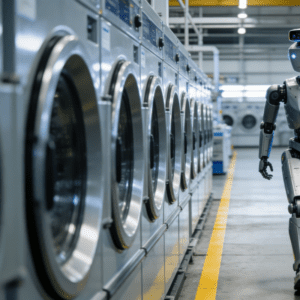
At Midea’s washing machine factory in Jingzhou, a humanoid robot named “Meiluo” has been “in office” for more than half a year. This special “employee” receives no salary and never tires, independently performing fire patrols, noise detection and product quality inspection tasks in the injection molding workshop, and monitoring the operation status of the production line 24 hours a day. Behind it is an intelligent command system known as the “factory brain”.
It is understood that “Meiluo” is the first humanoid robot independently developed by Midea and applied in actual production in the smart home appliance industry. Adopting a wheel-leg hybrid design, its chassis is based on heavy-duty AGV technology, and its upper body is equipped with a seven-degree-of-freedom bionic robotic arm, which significantly reduces energy consumption while maintaining a 60% load-bearing capacity.
In the chemical fiber workshop of Zhejiang Tongkun Group, there is a post-2000s intelligent supervisor known as the “Tongkun Brain”. This post-2000s supervisor boasts ultra-high computing and coordination capabilities.
Its “subordinates” all have unique skills – the doffing robots are the “Hercules Brothers”, capable of lifting 180 kilograms of silk cakes at a time; the robotic arms in the packaging area are the “Skillful Young Men”, gripping silk cakes as steadily as picking up peanuts with chopsticks. It also has the ability to arrange production schedules and allocate resources. In the past, a worker needed 1.5 hours to check data and arrange the daily production plan for every two production lines based on experience; now the “supervisor” can work out the optimal plan in just one minute.
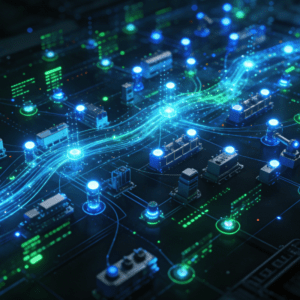
More importantly, the post-2000s supervisor’s capabilities extend far beyond managing a single workshop. Its system is connected to 28,000 pieces of equipment and more than 1.5 million data collection points across the group, processing over 12 billion production data entries every day. It realizes intelligent scheduling of the entire chain from raw materials to finished products, truly achieving “global visibility, global analyzability and global intelligence”.
Reshaping Manufacturing Logic
The evolution from “machines replacing humans” to “machines managing factories” is not only a technological upgrade, but also a fundamental shift in the logic of industrial production. With the in-depth integration of artificial intelligence, the Internet of Things and big data, factories of the future will no longer be simple spaces where humans and machines coexist, but will gradually evolve into an organic ecosystem with overall regulation by intelligent systems and a high degree of autonomous collaboration. Industrial robots acting as “workshop directors” may no longer be a distant topic, but a reality that is taking place. This quiet revolution is quietly reshaping the form and future of manufacturing.
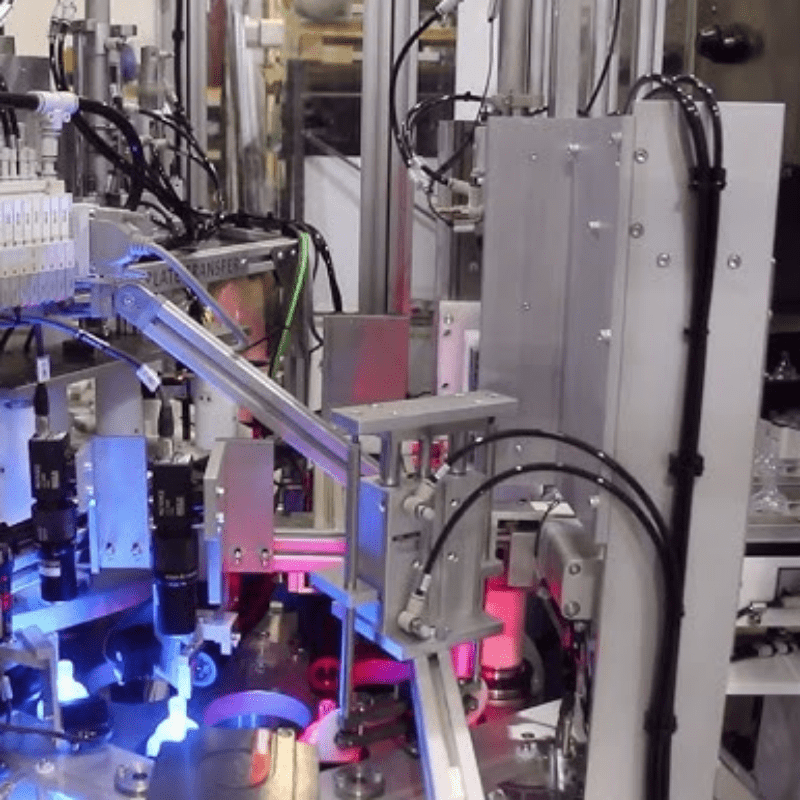
Automation engineering of production lines in the automotive industry
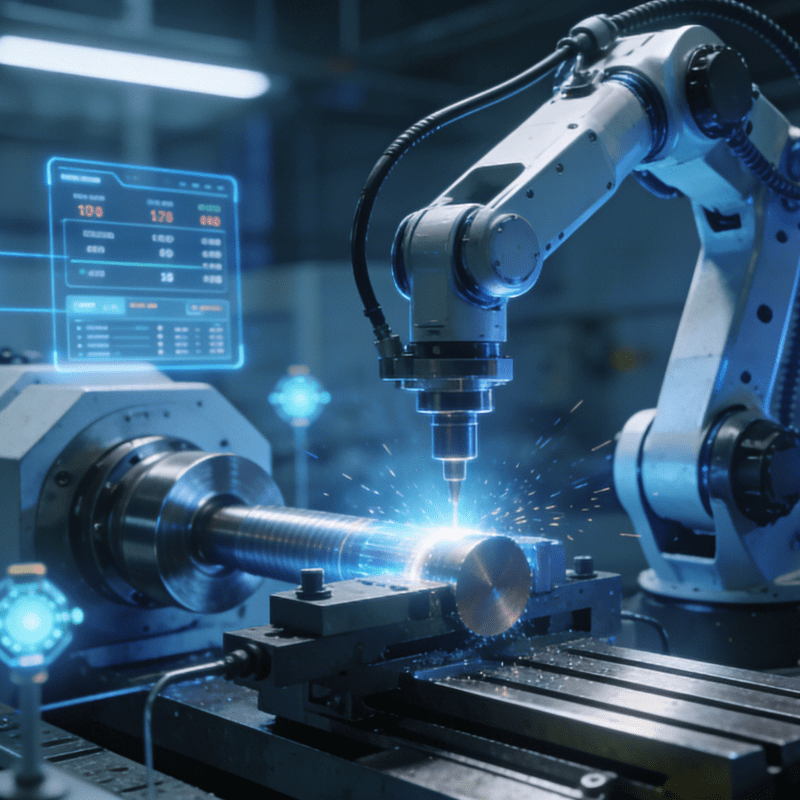
AI production line automation robots in the automotive industry