
Digital transformation has become an inherent need for enterprise development. Its core objectives are to reshape business processes, strengthen operational resilience, improve decision-making quality, and form new value growth models through digital technologies. Among various digital technologies, Artificial Intelligence (AI) and Internet of Things (IoT) play a critical role, jointly forming an important technological foundation for enterprises to achieve intelligence and modernization.
Why AI and IoT Become Core Technologies for Digital Transformation
AI as a Strategic Capability Rather Than a Single-Point Tool
AI is no longer just an auxiliary technology, but a vital capability that influences corporate strategic goals, business planning, and organizational operations. By adopting AI, enterprises can achieve significant improvements in efficiency and quality across data analysis, process optimization, customer service, supply chain management, and other fields. As enterprises gradually expand AI application scenarios, its role shifts from local optimization to organization-wide empowerment.
Synergistic Value of AI and IoT (AIoT)
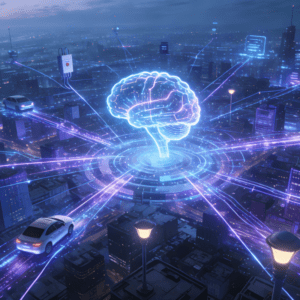
AI and IoT do not operate in isolation. IoT devices continuously generate massive structured and unstructured data, while AI extracts patterns from such data to generate predictions, judgments, or automated decisions.
The core value of AIoT lies in:
Collecting real-time data through intelligent sensors
Conducting real-time analysis and prediction using AI
Achieving rapid response and process optimization via automated systems
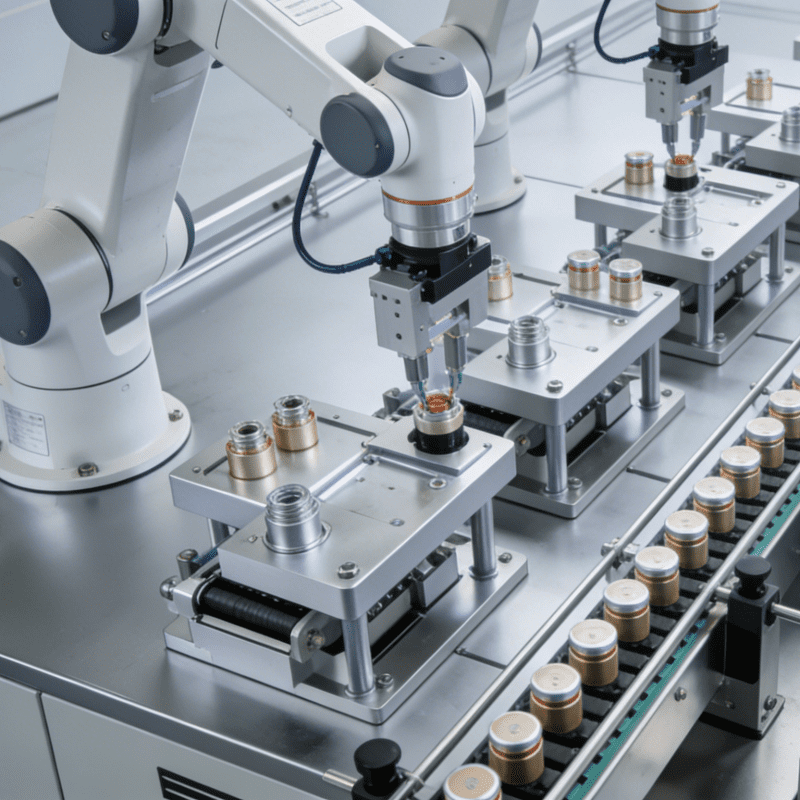
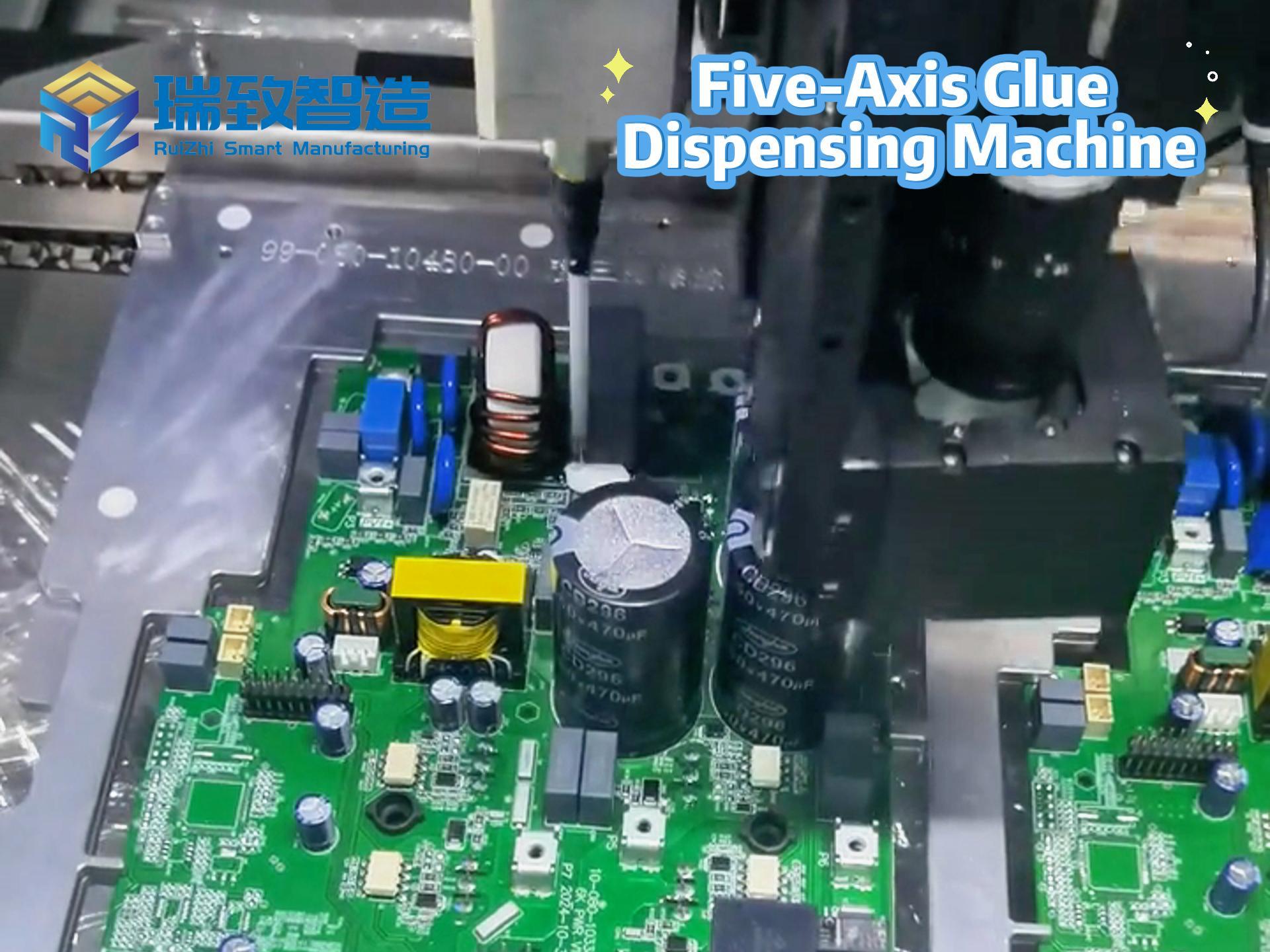
In manufacturing, energy, logistics, healthcare, and other industries, this integration greatly enhances operational efficiency, asset transparency, and predictive capabilities, thereby strengthening business resilience.
Building an AI and IoT-Driven Digital Transformation Strategy
A comprehensive transformation strategy relies not only on technology adoption but also on supporting adjustments to organizational structure, governance systems, and talent systems.
Integrate Digitalization into Organizational Vision and Leadership
Leadership must clarify digital development goals and regard AI and IoT as key directions for upgrading business models. Through strategic planning, resource allocation, and cross-departmental collaboration, a unified digital innovation path is formed to ensure consistent and sustainable technology implementation.
Strengthen Data Infrastructure for AI and IoT
The operation of AI and IoT is based on data quality and availability. Enterprises must focus on building:
Data governance systems
Data integration platforms
Real-time data processing capabilities
to ensure data consistency, accuracy, and security during collection, transmission, storage, and analysis, supporting reliable operation of intelligent systems.
Develop Scalable Digital Application Scenarios
Digital transformation should start with controllable pilot projects, verifying technical feasibility through specific scenarios before gradually expanding to enterprise-wide applications.
Examples include:
AI-powered automated customer service
IoT-based asset management and equipment monitoring
Predictive analysis for optimized maintenance and cost control
ROI is evaluated based on pilot results, followed by large-scale promotion aligned with organizational needs.
Cultivate a Talent Capability System to Support Transformation
The widespread application of AI and IoT demands higher skills in data science, algorithms, system architecture, equipment management, etc. Organizations need to establish a new talent system integrating technology and business through training, career development, and external cooperation to ensure strategy implementation at the operational level.
Governance and Risk Prevention in Digital Transformation
With the in-depth application of AI and IoT, data volume grows sharply and systems become highly interconnected, bringing new governance requirements and potential risks including data privacy protection, algorithm reliability, cybersecurity, and compliance.
Establish an AI Governance Framework
Enterprises should formulate internal rules for AI applications, ensuring intelligent models meet business requirements in transparency, interpretability, accuracy, and fairness, avoiding wrong decisions or bias risks.
Strengthen IoT Ecosystem Security
IoT devices are numerous and diverse, with each new device potentially creating new attack entry points. Therefore, the following are required:
Security-by-design principles
Identity authentication mechanisms
Data encryption and communication protection
Continuous monitoring and risk early warning systems
to ensure the IoT system remains secure and controllable throughout its lifecycle.
Improve Data Compliance and Cross-Departmental Risk Management
Enterprises must conduct data processing in accordance with current data protection regulations and strengthen collaboration among legal, IT, operations, and management departments to ensure compliance and risk control of AI and IoT systems across the organization.
Realizing True Enterprise-Level Transformation
Although many enterprises have launched AI or IoT pilots, achieving large-scale value still requires solving system integration, architectural capability, and organizational collaboration issues.
Break Decentralized Pilots and Achieve System Integration
The value of AI and IoT can only be realized at the organizational level when integrated with core platforms such as ERP, CRM, and supply chain systems. Enterprises need to integrate pilot results into overall business processes and mechanisms.
Adopt Cloud-Native and Edge Computing Architectures
Cloud platforms support large-scale model training and deployment
Edge computing enables on-site real-time data analysis and rapid response
Their combination improves system elasticity, reduces latency, and supports real-time decision-making.
Establish an ROI-Oriented Indicator System
Evaluate transformation effects through quantitative indicators, such as:
Reduction in operating costs
Effectiveness of predictive maintenance
Improvement in customer retention rate
Revenue contribution from new digital services
Clear indicators drive the translation of technology investment into business outcomes.
Build an Ecological Cooperation Network
By cooperating with universities, research institutions, technology suppliers, and industrial partners, enterprises can improve efficiency in technology roadmap, experimental verification, and scenario innovation, accelerating the implementation of results.
Economic and Business Impacts of Digital Transformation
Extensive industry data shows that digital transformation not only brings technological upgrading but also significantly improves business performance:
Enterprises adopting digital transformation strategies are more likely to gain growth advantages
IoT applications significantly enhance production efficiency and asset utilization
Technology-driven enterprises have obvious advantages in profit growth
These results indicate that digital transformation has become a critical path for sustainable organizational development.
Conclusion
In the digital economy era, AI and IoT have become foundational capabilities for enterprises to achieve high-quality and modern development. A successful digital transformation strategy must be built on:
Strategic vision as the guide
Data capability as the foundation
Scenario application as the driver
Governance system as the guarantee
Talent system as the support
In the future, manufacturing, logistics, healthcare, service, and other industries will enter a new stage of development driven by intelligent technologies. Only by deeply integrating AI and IoT into their business structure and innovation models can enterprises maintain sustainable competitiveness in the digital era.