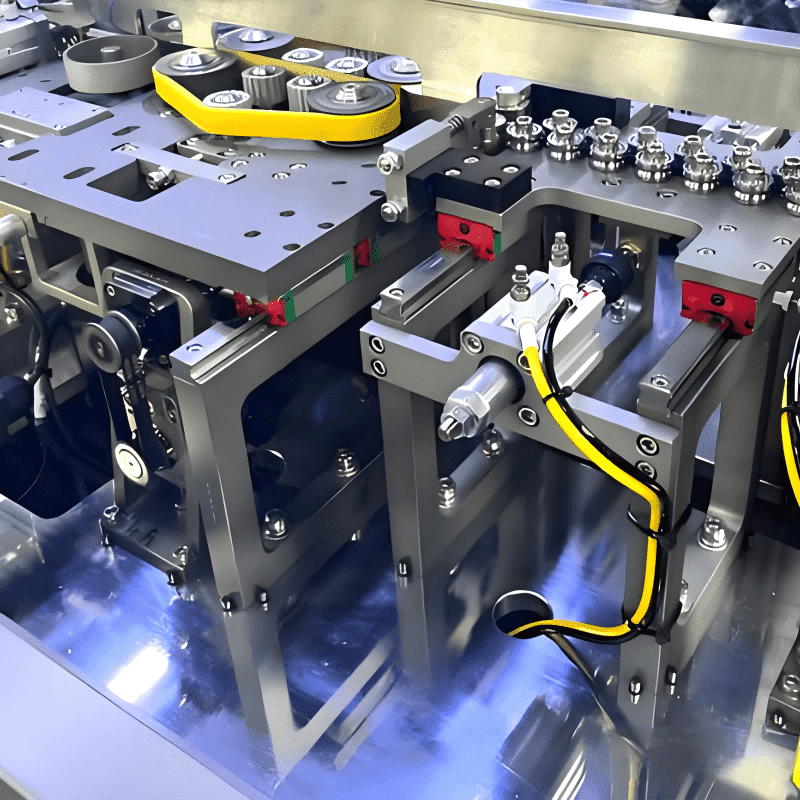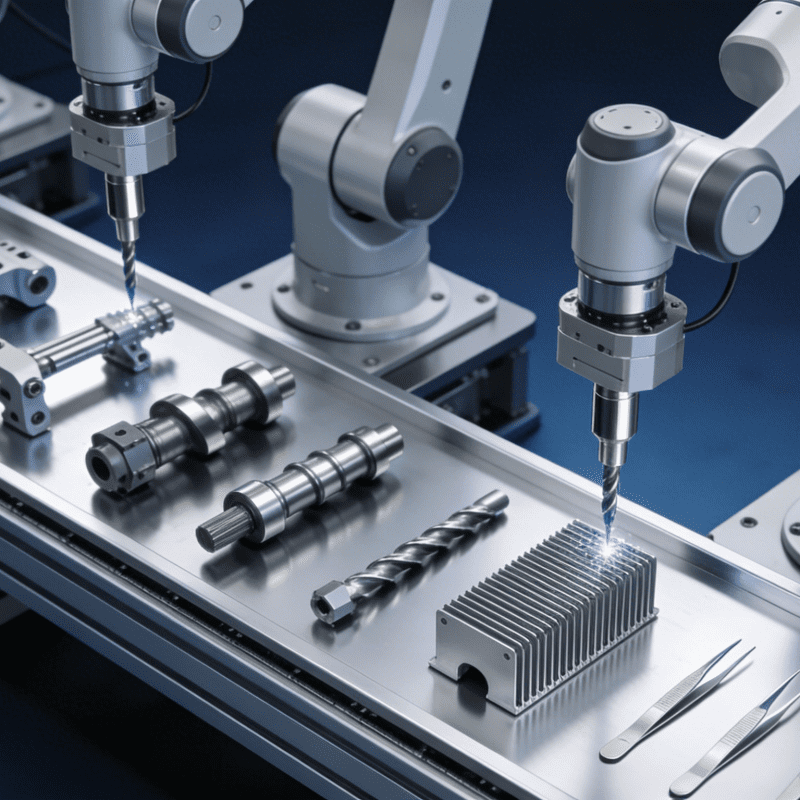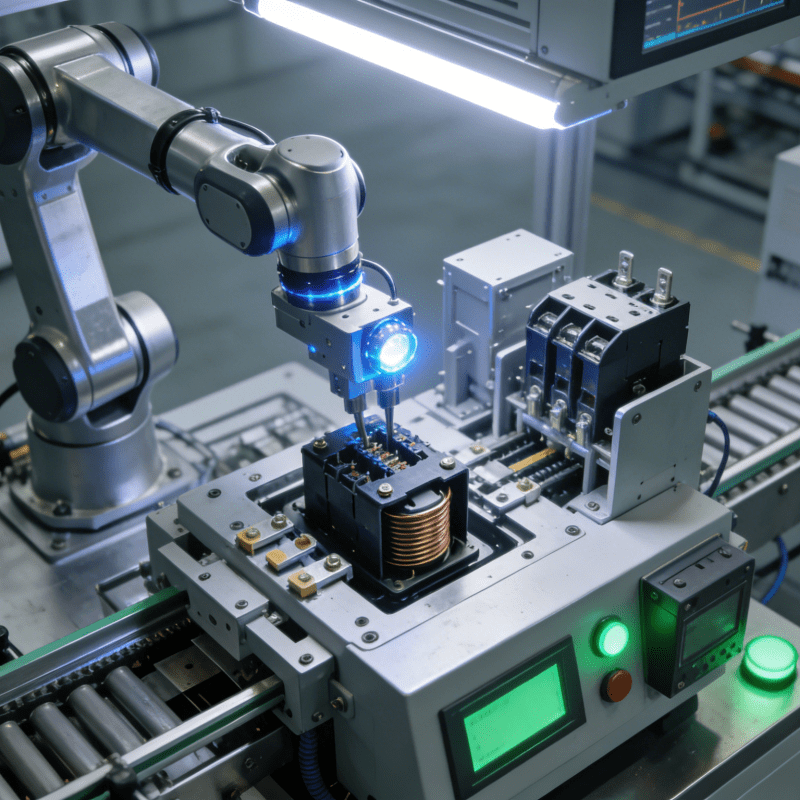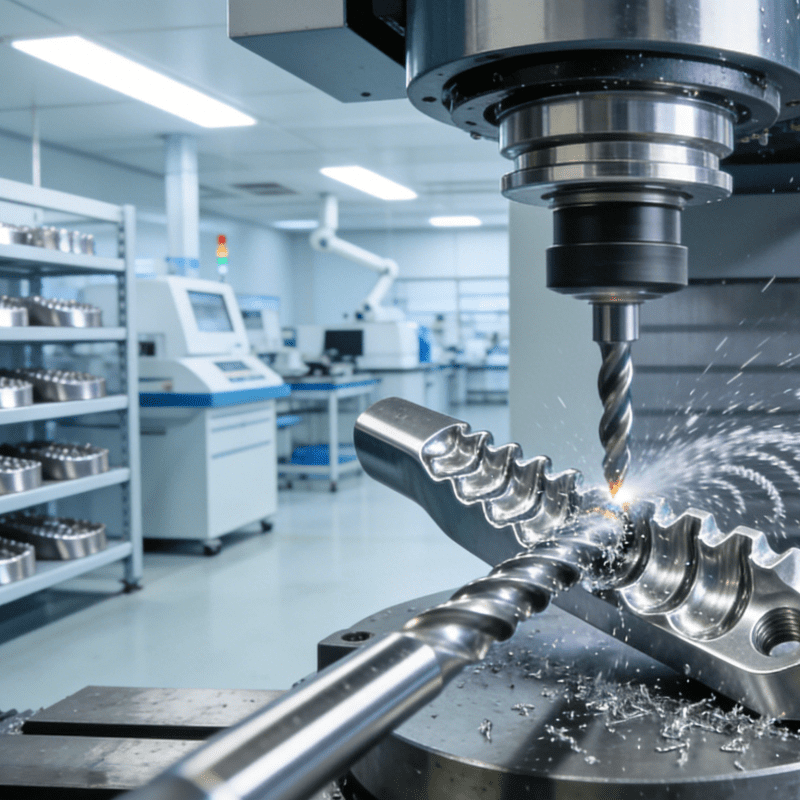
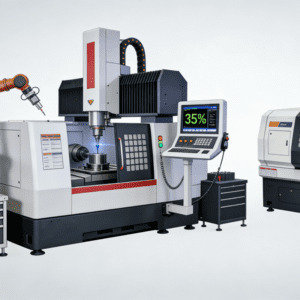
In modern manufacturing, precision CNC machining centers are highly favored for their high-efficiency and high-precision machining capabilities. Today, the functions of machining centers available on the market are constantly expanding—ranging from basic milling and drilling to complex multi-axis linkage machining, automatic tool changing, and in-process inspection, among others. Then, is more functional integration really always a better choice?
Functional Integration Advantages: Enhancing Efficiency, Precision and Flexibility
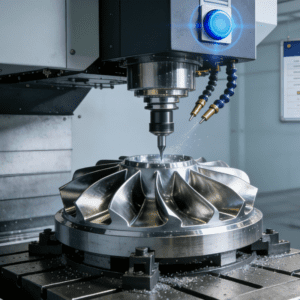
On the positive side, functional integration does bring a host of notable advantages. First and foremost, multi-functional integration significantly boosts machining efficiency. For instance, an automatic tool changing system enables a machining center to complete multiple different processes in a single workpiece clamping, eliminating the need for frequent tool changes and workpiece reclamping, which greatly cuts down on auxiliary machining time. The integration of Sheet automatic loading robot further amplifies this efficiency advantage: this robot can realize continuous, high-precision automatic loading and unloading of sheet materials, avoiding the delay and error caused by manual feeding, and ensuring the uninterrupted operation of the machining line, which is particularly effective for improving the production efficiency of batch sheet parts. For the production of complex components—such as aero-engine blades that require milling, drilling, boring and other procedures—a multi-functional machining center can finish the entire task in one go, effectively shortening the machining cycle and improving production efficiency.
Second, functional integration helps enhance machining accuracy. The multi-axis linkage function allows for the machining of more complex curved surfaces, making the shape of the finished parts closer to design specifications and reducing cumulative errors caused by multiple clamping and process transitions. The in-process inspection function can monitor the dimensional and geometric accuracy of workpieces in real time during machining; if any deviation is detected, machining parameters can be adjusted promptly to ensure the stability and reliability of machining accuracy. This is particularly crucial in high-precision fields such as precision mold manufacturing, as it can effectively improve product quality and qualification rates.
Furthermore, machining centers with integrated functions offer stronger adaptability and flexibility. They can flexibly configure various functional modules and quickly switch machining modes according to different machining tasks and part requirements, satisfying diversified production needs. Whether for single-piece, small-batch production or large-scale mass production, such machining centers can deliver excellent performance, reducing enterprises’ equipment procurement costs and production management costs while enhancing their market competitiveness.
Drawbacks of Excessive Integration: Rising Costs and Redundancy Risks
However, functional integration is not without its drawbacks. On one hand, the richer the functions, the more complex the structure of the machining center, which will also lead to a substantial increase in the costs of equipment R&D, design, manufacturing and maintenance. A complex structure may compromise equipment reliability and increase potential failure points; once a breakdown occurs, the difficulty and cost of maintenance will rise accordingly. For example, the intricate electrical control systems and mechanical transmission systems of some highly integrated machining centers require professional technicians and a long time for troubleshooting and repair, which may cause production downtime and result in economic losses for enterprises.
On the other hand, excessive functions may be redundant for certain machining tasks or enterprises. If an enterprise mainly engages in the mass production of simple parts, some advanced functions like multi-axis linkage and other complex capabilities may rarely be used, yet their inclusion will drive up equipment purchase and operation costs. Moreover, excessive functional integration can complicate operations, imposing higher requirements on the technical proficiency and training of operators. If operators cannot proficiently master the operation and programming of various functions, it may instead negatively affect machining efficiency and quality.
Selection Suggestion: Pursuing Optimal Balance Based on Actual Needs
In conclusion, more functional integration is not always better for precision CNC machining centers. Instead, it requires a comprehensive consideration of multiple factors such as an enterprise’s actual machining needs, production scale, budget, and the technical proficiency of its operators. When selecting a machining center, enterprises should weigh the advantages and disadvantages brought by functional integration, and reasonably determine the required functional configuration. This approach can achieve an optimal balance among machining efficiency, machining accuracy, cost control and equipment reliability, thereby promoting the efficient and sustainable development of enterprises.