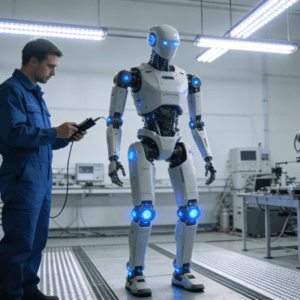
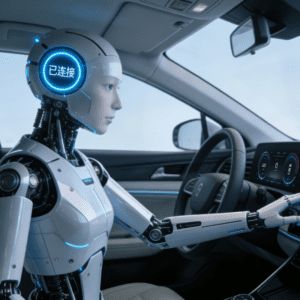
Recent reports indicate that Li Auto is developing its first humanoid robot, codenamed internally “Nexus”, with plans for both wheeled and bipedal versions. In fact, this trend is far from an isolated case. From Tesla’s Optimus and XPeng’s IRON to Hyundai, Toyota, BMW, and numerous other domestic automakers, humanoid robots are emerging as a new strategic and competitive focus in the automotive industry.
Automakers’ Collective Shift to Humanoid Robots: A Choice Driven by Pressure and Trends
Looking back at the development of the automotive industry over the past decade, a clear evolutionary logic emerges: cars are gradually transforming from mechanical products into intelligent terminals highly dependent on software and artificial intelligence. Especially with the continuous advancement of autonomous driving, large models, and AI computing power, an increasing number of companies have come to realize that the car is not the end point of artificial intelligence, but merely a phased carrier. Embodied intelligence—and humanoid robots in particular—represents the crucial next step for AI to enter the real physical world.
The question then arises: why are automakers flocking to humanoid robots?
First, from a technical perspective, intelligent vehicles and humanoid robots share a highly common underlying logic.
As we know, autonomous driving systems perceive the environment through sensors such as cameras and radars, make decisions and plans via algorithms, and finally control the vehicle to accelerate, steer, and perform other actions. Similarly, humanoid robots require multi-modal perception systems including vision and touch, make judgments through AI models, and drive motors and actuators to complete tasks.
More importantly, the automotive industry itself is in a phase of intense competition. A typical symptom is the rapid global adoption of new energy vehicles, paired with persistently shrinking industry profit margins. For many new-energy automakers especially, it is difficult to build a stable long-term growth curve relying solely on the automotive business. Against this backdrop, exploring new technological directions and industrial spaces has become an inevitable choice for many car companies.
In addition, the advent of the large-model era has pushed the robotics industry into a new stage. For decades, robots mostly executed fixed tasks through pre-programming. With the development of artificial intelligence, however, robots have begun to acquire certain learning and decision-making capabilities, greatly expanding their application boundaries. For automakers that have continued to invest in AI, humanoid robots have undoubtedly become an important terminal capable of carrying AI capabilities.
Technology, Supply Chain, and Scenarios: Automakers’ Natural Advantages in “Making Humans”
The reason automakers dare to crowd into the humanoid robot track is largely due to their inherent advantages across multiple dimensions. Compared with traditional robotics startups, automakers possess not only strong manufacturing capabilities but also mature supply chain systems and abundant application scenarios.
Take manufacturing and supply chain capabilities as an example. The automotive industry is one of the most complex and mature sectors in modern industry, with a fully integrated and highly coordinated supply chain network covering motors, batteries, sensors, reducers, and more. These components are precisely the core building blocks of humanoid robots. Industry insiders generally agree that more than half of the industrial chain links between intelligent vehicles and robots can be shared, including computing platforms, perception hardware, battery systems, and communication technologies.
Therefore, when automakers enter the robotics field, they can often quickly integrate existing resources and gain distinct advantages in core component procurement, complete machine manufacturing, and cost control. This is particularly critical for the robotics industry, which is still in its early stages. In reality, many robotics companies today remain in small-batch production; once automakers drive large-scale manufacturing, the pace of cost reduction could far exceed expectations.
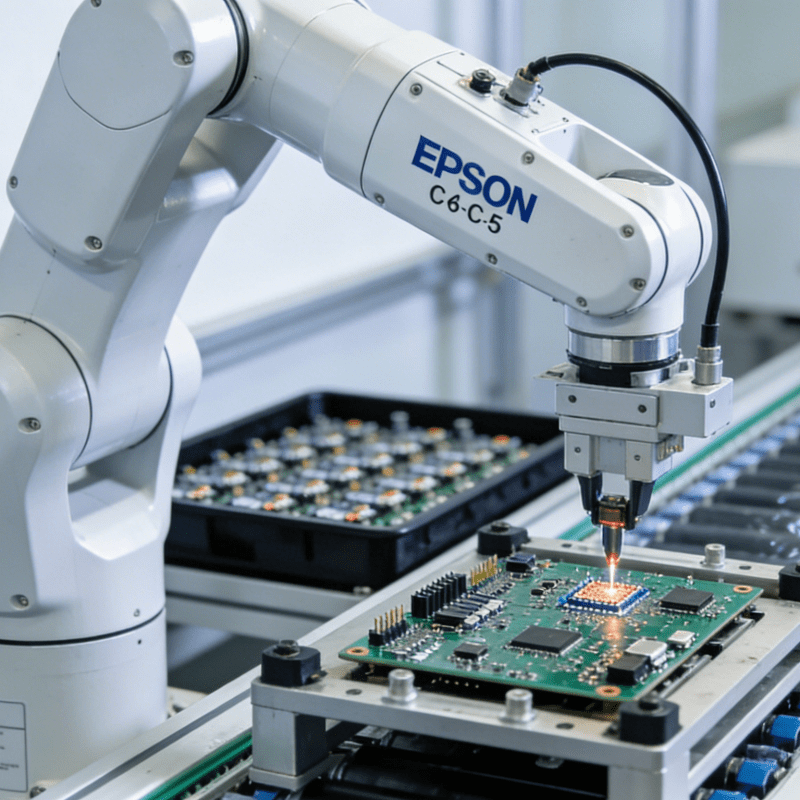
In terms of application scenarios, the humanoid robot industry has long faced a key challenge: a shortage of truly valuable use cases. Many robot products impress at exhibitions but struggle with various complexities in real-world environments. In contrast, automobile factories provide a natural training and testing ground for robots. Production line tasks such as handling, sorting, assembly, and quality inspection are highly repetitive and labor-intensive, making them ideal for robotic participation.
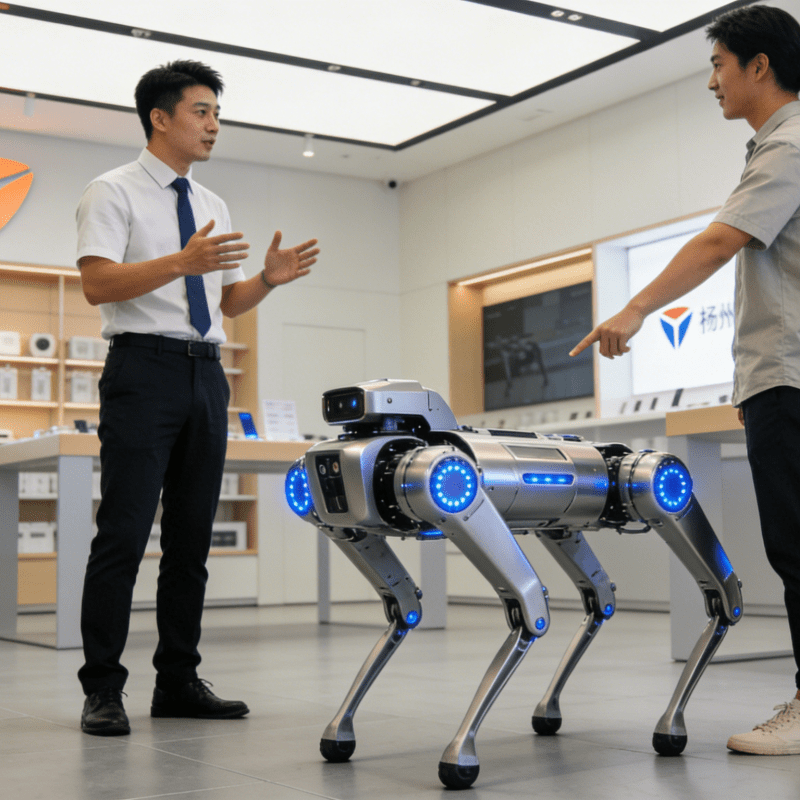
Against this backdrop, humanoid robots from some automakers have already begun trial operation in factories. From parts transportation to production inspection, robots are gradually taking on simple tasks and continuously accumulating data and experience through real-world work. This “iterate while applying” model helps robot technologies mature rapidly.
Furthermore, automakers’ accumulation in AI algorithms and data cannot be overlooked. Intelligent vehicles generate massive amounts of real-world data every day, which can be used not only for training autonomous driving algorithms but also to help robots understand complex environments.
Challenges Remain: Commercialization and Application Scenarios Urgently Need Implementation and Expansion
Although the entry of automakers has injected new momentum into the robotics industry and brought certain inherent advantages, humanoid robots as a whole are still in the early stages of industrial development. Achieving large-scale application will require crossing multiple technical and commercial thresholds.
The most prominent challenge comes from humanoid robot technology itself. For robots to perform tasks as flexibly as humans, high-level coordination is required across motion control, perception systems, and intelligent algorithms. For instance, a robot’s “dexterous hand” must balance flexibility and durability, yet current tactile sensors suffer from low yield rates and high costs. In terms of walking stability, humanoid robots still have a high risk of falling in real environments, with complex terrain and dynamic obstacles posing additional challenges. Meanwhile, robots executing complex tasks must simultaneously process visual recognition, motion control, force feedback, and other information, and existing AI algorithms remain insufficient in real-time collaboration.
Second is the cost issue. The current cost of a single humanoid robot remains high, far exceeding that of traditional industrial robotic arms. Only with substantial cost reductions and expanded production scales will humanoid robots become commercially competitive—a process that will still take time.
More importantly, the expansion of application scenarios. While humanoid robots can theoretically enter households, commerce, public services, and other fields, under current technical conditions, industrial scenarios are widely regarded as the most likely to achieve large-scale implementation first. Production line environments are relatively controlled and feature highly standardized tasks, making them more suitable for robots. In contrast, household environments are complex and variable, demanding higher levels of safety and intelligence from robots, and widespread adoption will take much longer.
Despite the challenges, as artificial intelligence gradually permeates the physical world, the boundaries between automobiles, robots, and AI are blurring. Future technology companies will likely produce both vehicles and intelligent robots, and even build complete AI ecosystems covering homes, industries, and cities. For automakers, therefore, whoever first achieves large-scale robot deployment in real-world scenarios may gain a stronger position in the next technological revolution.
In addition, according to forecasts by institutions including Morgan Stanley, the humanoid robot market could reach $5 trillion by 2050, with deployments reaching 1 billion units. This means that humanoid robots could one day be as ubiquitous as smartphones or cars are today. Faced with such a trillion-dollar blue-ocean market, it is only natural for automakers with deep manufacturing heritage and AI algorithm reserves to step in.