To accelerate the in-depth integration of artificial intelligence and transportation, and empower high-quality development of the transportation sector, the Municipal Transportation Bureau has conducted extensive preliminary research and solicited opinions from various parties. It has carefully sorted out 14 typical application scenarios of “AI + Transportation” across three major fields: transportation engineering construction, transportation services, and industry governance. These scenarios are hereby released.
2026 Typical Application Scenarios of “AI + Transportation”
- Wuxi MaaS Mobility Service Platform
(Wuxi Internet of Vehicles Industry Development Group Co., Ltd.)
Scenario OverviewIntegrate diverse travel modes such as public transport and taxis, break down relevant data barriers, and build a full-chain intelligent travel paradigm covering “planning – scheduling – service – payment”, to improve citizens’ travel efficiency and quality.
Expected OutcomesGradually connect and integrate real-time information of online car-hailing, cruising taxis, and buses. Based on commuting, tourism, major events and other demands, develop and launch featured scenario products such as “customized bus”, “scenic area smooth travel”, and “event combined ticket”. The MaaS (Mobility as a Service) index and user travel efficiency will be significantly optimized.
- AI Assistant for Wuxi Shuofang Airport Passenger Integrated Service Platform
(Wuxi Sunan International Airport Group Co., Ltd.)
Scenario OverviewDeploy a locally-run large AI model on the “Wuxi Shuofang Airport” WeChat Mini Program, collect multi-department service information to form a passenger service knowledge base, and create an AI intelligent assistant to ensure smooth travel and enhance passenger experience.
Expected OutcomesContinuously expand the coverage of the passenger service knowledge base, improve the accuracy of AI assistant responses, and provide passengers with an intelligent travel service experience featuring “instant inquiry and reply, precise and efficient”.
- Intelligent Cargo Handling Platform for General Cargo at Jiangyin Port Based on AI Vision and Data Fusion
(Jiangsu Jiangyin Port Group Co., Ltd.)
Scenario OverviewIntegrate computer vision and big data analysis technologies to build an “end + cloud + AI” integrated intelligent cargo handling system, realize digital, paperless and intelligent cargo handling processes, and improve port operation efficiency and cargo supervision accuracy.
Expected OutcomesComplete the development of the intelligent cargo handling platform and cover the whole cargo handling process; realize automatic counting and cargo status recognition for regular general cargo such as steel and steel coils. Complete data connection with the port production system, realize automatic verification of cargo handling instructions, synchronous upload of photo data and visual query. Build a cargo handling data center and initially realize dynamic analysis and visual display of cargo flow direction, volume and storage status.
- “Zhilian Xitu” AI-Driven Multimodal Transport and Autonomous Driving Flexible Distribution Network
(Jiangsu Digital Intelligent Multimodal Transport Co., Ltd.)
Scenario OverviewTake Wuxi’s unified multimodal transport and multi-port linkage platform as the “intelligent brain”, connect data of road, rail, water and air transport, realize route optimization and real-time price comparison through AI algorithms, and provide “one-doc” multimodal transport services. Seamlessly connect urban road autonomous driving last-mile delivery to form an integrated and intelligent transportation service closed loop from regional trunk lines to urban terminals. Coupling the “first kilometer” of the intelligent logistics system with the “last kilometer” of urban road autonomous driving to form a self-learning and dynamically optimized closed-loop system.
Expected OutcomesBuild a new urban intelligent logistics paradigm of “intelligent core, flexible terminals”, and create the nation’s first open service platform deeply integrating multimodal transport and urban autonomous driving distribution.
- Collaborative Control and Dynamic Decision-Making for Intelligent Beam Factory Based on DeepSeek Multi-Source Data Large Model
(Wuxi Transportation Construction Engineering Group Co., Ltd.)
Scenario OverviewDeeply apply AI and large model technologies to the whole process of precast beam and slab production, and build a comprehensive intelligent beam factory solution integrating intelligent control, efficient production and quality improvement. With the DeepSeek multi-source data large model as the core, establish an intelligent hub for collaborative control and dynamic decision-making. Integrate multi-source heterogeneous data, develop multi-agent optimal scheduling algorithms, connect material, equipment and structural data, realize collaborative control and dynamic scheduling of production equipment clusters, intelligent optimization of production processes and dynamic control of finished product quality.
Expected OutcomesEstablish an intelligent hub integrating multi-source heterogeneous data, realize efficient collaborative control and linkage of production equipment clusters, and improve production efficiency. Use multi-agent optimized intelligent scheduling algorithm to ensure rapid response to new plans and adjustment of production plans. Develop on-line monitoring technology and graph reasoning dynamic control method for prefabrication process, realize accurate early warning of key quality parameters, automatic diagnosis of quality problems and process adjustment, ensuring stable and controllable quality of precast components.
- AI Automatic Inspection System for Low-Altitude UAV Flight
(Zhicheng Future (Jiangsu) Digital Technology Co., Ltd.)
Scenario OverviewFocus on low-altitude technical applications in transportation engineering, solve problems of traditional manual mapping such as low efficiency, high safety risks, high costs and difficult construction progress and quality control. Realize low-altitude digital applications integrating data collection, processing, fusion, display and analysis, saving costs and improving efficiency.
Expected OutcomesSuccessfully complete core module development and system integration testing, and implement 3 pilot scenarios. The accuracy of oblique photography models meets standards upon third-party testing; the comparison accuracy between SLAM point cloud data and BIM models complies with technical specifications. Complete user training, document delivery and acceptance, empower construction management through digital applications, and lay a foundation for reducing control budgets.
- Research and Application of Digital Empowerment Technology for Intelligent Operation and Maintenance of Urban Tunnel Groups
(Wuxi Industrial Equipment Installation Co., Ltd.)
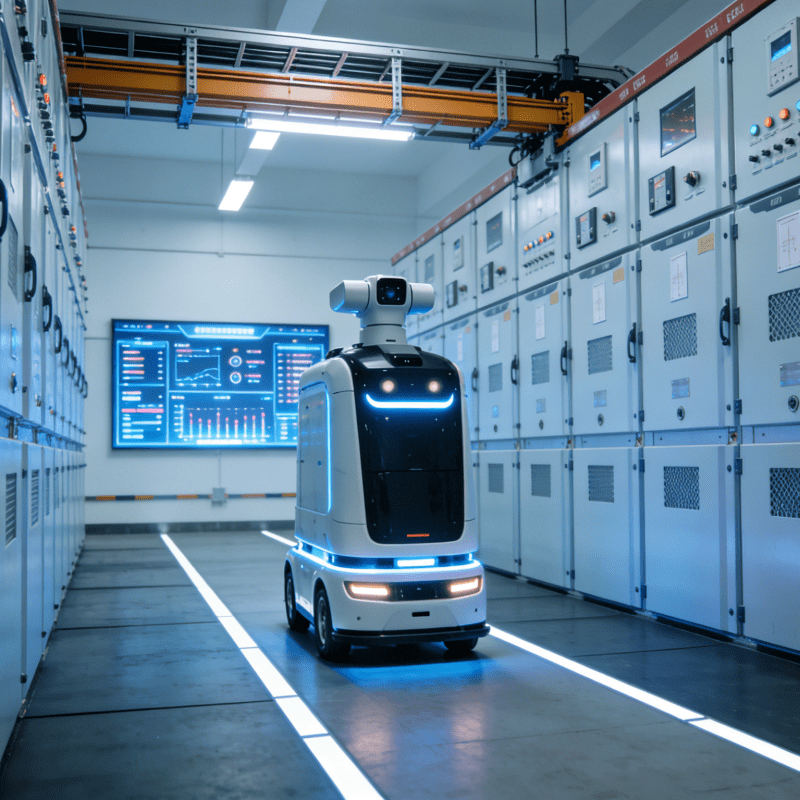
Scenario OverviewFocus on electromechanical operation and maintenance of traditional urban tunnels. Target daily inspection, fault handling, management of dispersed O&M teams and other scenarios, realize digital and intelligent O&M management, and empower tunnel O&M services through AI large models to improve overall operation efficiency.
Expected OutcomesBuild a complete digital twin system, establish 3D tunnel models, realize visual management and intelligent decision-making for tunnel O&M. Develop a multi-protocol IoT integration platform to realize comprehensive collection and system integration of tunnel operation data. Develop an intelligent inspection system to realize unmanned O&M in high-risk tunnel areas. Build a professional large language model system for tunnel O&M, and develop AI assistants and artificial intelligence agents.
- Automatic Dust Collection Workshop for Public Transport Vehicles
(Wuxi Public Transport Group Co., Ltd.)
Scenario OverviewFocus on the dust cleaning problem in equipment compartments brought by the development of new energy vehicles, and build an automatic dust collection workshop with intelligent dust removal robots. After vehicles enter the workshop, operators open the compartment covers; the workshop is then sealed, and the dust removal robot is started via the control panel to conduct fully automatic cleaning. Dust is collected by a dust collector, forming a closed operation loop.
Expected OutcomesGradually build 5 automatic dust collection workshops as planned, and finally realize full automatic dust removal coverage for 2,000 new energy buses. Greatly improve dust removal effect, ensure stable heat dissipation of new energy vehicle electrical systems, reduce dust inhalation hazards for manual operators, and further ensure safe vehicle operation.
- Bus Collision Mitigation Safety Driving Assistance System Based on AI + Multi-Sensor Fusion
(Wuxi Public Transport Group Co., Ltd.)
Scenario OverviewBased on the existing intelligent driving safety system, retrofit the brake control by installing millimeter-wave radar and microwave radar, and pilot the Bus Collision Mitigation Safety Assistance System (AEBS). Realize hazard warning, automatic deceleration and active braking, timely prevent and resolve dangerous driving accidents caused by blind spots, fatigue, physical discomfort of drivers, and reduce injuries to passengers caused by improper braking.
Expected OutcomesPilot the retrofit of 2 buses first, and gradually implement according to test results. Vehicles equipped with the system are expected to achieve zero fatal accidents, reduce accident rate by more than 40%, and direct economic loss by more than 60%.
- Smart Stations of Metro Line 4 Phase II
(Wuxi Metro Group Co., Ltd.)
Scenario OverviewFocus on AI-related service scenarios such as intelligent customer service and intelligent self-service terminals in metro stations, and build smart stations for Wuxi Metro Line 4 Phase II.
Expected OutcomesComplete 6 smart stations for Metro Line 4 Phase II with functions including intelligent customer service center, intelligent self-service terminals, face recognition gate access, intelligent and centralized security image screening, passenger flow monitoring, and intelligent equipment status monitoring.
- AI-Assisted Work Order Dispatch System
(Municipal Comprehensive Transportation Administrative Law Enforcement Detachment)
Scenario OverviewFocus on handling public complaints related to traffic management via hotlines 12345 and 12328. Based on large language models, build the “Work Order Intelligent Distribution System” to accurately identify the business line, nature, responsible department and handling level of issues. Through structured knowledge base guidance and hierarchical reasoning, realize accurate identification and automatic classification, and comprehensively improve the standardization, accuracy and efficiency of government work order distribution.
Expected OutcomesEstablish a grading and classification standard for work orders in traffic law enforcement. Reduce automatic classification time from “minute-level” to “second-level”, raise single-layer classification accuracy to over 90%, and reduce manual classification and distribution workload by no less than 40%.
- Digital Transformation and Upgrading Project of G312 Jiangsu Section Demonstration Corridor (Wuxi Section)
(Municipal Highway Development Center)
Scenario OverviewBased on AI, IoT, big data and other technologies, realize intelligent monitoring of road network operation and intelligent inspection of pavement diseases on the Wuxi section of G312, with early warning through sound and light. Achieve digital transformation goals: safe and controllable infrastructure, efficient and smooth road network operation, and comfortable and reassuring travel experience.
Expected OutcomesAfter project completion, all-day monitoring data will support the intrinsic safety of infrastructure and traffic operation. The traffic quality and service satisfaction of the Wuxi section of G312 will be comprehensively improved.
- Digital Transformation of Wuxi Main Navigation Channel Infrastructure
(Municipal Port and Navigation Development Center)
Scenario OverviewFocus on Wuxi’s key main navigation channels. Realize multi-dimensional evaluation of channel status by real-time processing of multi-source data collected by perception facilities. Ensure the monitoring system covers core links such as navigation safety, lock efficiency optimization and emergency response, fully supporting the goal of full-element real-time perception and dynamic management of Wuxi inland waterway operation.
Expected OutcomesDeploy surveillance cameras, enhanced AIS base stations, radar, identification and directional broadcasting and other field perception facilities along Wushen Line, Shenzhang Line, Xilicao River, Beijing-Hangzhou Grand Canal (Wuxi section) and Xicheng Canal. Build a full-coverage remote real-time monitoring system for channel operation, improve real-time monitoring of ship dynamics, and enhance navigation efficiency and safety of Wuxi’s main channels.
- Research and Demonstration of Intelligent Operation of Lockage at the Entrance Locks of the Yangtze River Jiangsu Section
(Municipal Port and Navigation Development Center)
Scenario OverviewFocus on complex hydrodynamic environments and ship safety under open-lock operation mode. Combine multi-source monitoring data and machine learning algorithms to realize dynamic prediction of water level difference and flow velocity in lock areas, and intelligent forecast of safe water level difference for open-lock operation, significantly improving lock operation efficiency and safety.
Expected OutcomesBuild a refined hydrodynamic model of lock areas integrating the Yellow Sea, Yangtze River tidal reach and canals, accurately predict and visually display water levels upstream and downstream of lock chambers. Construct a flow velocity attenuation model under different water level differences, integrate it with a ship maneuvering simulation platform, optimize the safe time window for open-lock operation. Build a digital twin platform for lock area hydrodynamics, complete key technical research and form an application demonstration for intelligent operation of entrance lock open-lock mode.