The start of 2026 has been dominated by buzz around Brain-Computer Interface (BCI). What’s behind this surge?
Elon Musk announced on social media that his BCI company Neuralink plans to shift to a more streamlined, fully automated surgical procedure in 2026. This marks a pivotal step in accelerating BCI technology from laboratory research to large-scale, commercial applications.
In China, the rapid development of BCI is driven by the multi-dimensional synergy of policies, capital, and industry.
First, Policy Support Provides Comprehensive Backing for BCI Industry Development
In February 2025, the National Medical Products Administration (NMPA) approved the initiation of a medical device industry standard revision project titled Quality Requirements and Evaluation Methods for Electroencephalogram (EEG) Datasets Used in Artificial Intelligence Algorithms of Medical Devices Adopting Brain-Computer Interface Technology. The accelerated establishment of a standard system has boosted the high-quality development of BCI-enabled medical devices.
In March 2025, the National Healthcare Security Administration (NHSA) established an independent charging item for BCI for the first time. Provinces and municipalities including Zhejiang, Jiangsu, Guangdong, Beijing, and Hubei have successively implemented price standards, laying an institutional foundation for BCI’s clinical application.
In July 2025, seven ministries and commissions including the Ministry of Industry and Information Technology (MIIT) and the National Health Commission (NHC) jointly issued the Implementation Opinions on Promoting the Innovative Development of the Brain-Computer Interface Industry (hereinafter referred to as the Opinions), charting the course for the industry’s medium- and long-term development. The Opinions noted that innovative BCI achievements are emerging continuously, the industry is expanding rapidly, disruptive breakthroughs are in the making, and BCI has become a key field for the in-depth integration of technological and industrial innovation. Furthermore, the Opinions clearly put forward a two-step overall goal and development path for 2027 and 2030: by 2027, breakthroughs will be made in core BCI technologies, and an advanced technological, industrial, and standard system will be initially established; by 2030, the innovative capacity of the BCI industry will be significantly enhanced.
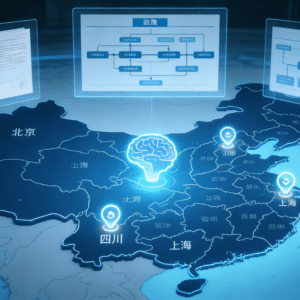
Notably, BCI has been included as a key supported area in the 15th Five-Year Plan, emerging as a new economic growth driver. Regions such as Beijing, Shanghai, and Sichuan are actively deploying BCI industries, forming distinctive development patterns and providing diversified support for the industry’s overall growth. For instance, Shanghai aims to achieve high-quality brain control by 2030, fully implement clinical applications of BCI products, build a global highland for BCI product innovation, and realize independent and controllable core links in the industrial chain.
Second, With Clear Policies and Promising Prospects, Capital Has Quickly Flocked to This “Future Industry”
According to IT Juzi statistics, there were 16 investment and financing events in China’s BCI sector in 2025, with a total value of 983 million yuan. Jieti Medical completed the largest domestic financing round for invasive BCI in 2025, raising approximately 350 million yuan; Beijing Zhiran Medical Technology Co., Ltd. secured over 300 million yuan in Series A financing in August; Shanghai Naoyun Technology obtained tens of millions of yuan in angel round funding in early September; and so on.
From national-level funds to market-oriented capital, from the primary market to listed companies, multiple sources of capital are accelerating their layout in the BCI track.

Third, China Achieved Multi-Faceted Technological Breakthroughs in BCI in 2025
In June 2025, China successfully conducted its first prospective clinical trial of invasive BCI, and the world’s first interventional BCI-assisted trial for motor function recovery of paralyzed limbs, led by a team from Nankai University, was completed; in October, “Beinao No.1”, independently developed by Beijing Xinzhida Neurotechnology Co., Ltd., launched multi-center clinical trials in compliance with Good Clinical Practice (GCP) standards; and more. Multiple technological routes are advancing in parallel, achieving remarkable progress.
Final Thoughts
Brain-Computer Interface is a highly interdisciplinary field, encompassing neuroscience, materials science, sensor hardware, artificial intelligence algorithms, and more. While its prospects are exciting, transitioning BCI from laboratory “demonstrations” to reliable, accessible “products” still requires overcoming numerous hurdles.
Blindly following the trend is inadvisable. Amid the overwhelming buzz, we should maintain cautious optimism.